

Best BILL.com Alternatives for European AP in 2026
BILL combines invoice processing, approvals and payments within one financial operations platform....
When evaluating Stampli alternatives, the question isn't simply which platform offers similar invoice automation features. It's which solution is best equipped to address the specific inefficiencies, integration requirements and operational demands of your accounts payable function.
Stampli combines AI-powered invoice processing with approval workflows, collaboration tools and broader procure-to-pay capabilities. However, organisations prioritising higher levels of touchless processing, complex ERP environments or international payment operations may find that other platforms offer a better fit for their requirements.
This guide examines seven Stampli alternatives in 2026, comparing their capabilities, strengths and ideal use cases to help finance teams identify the most suitable solution for their business.
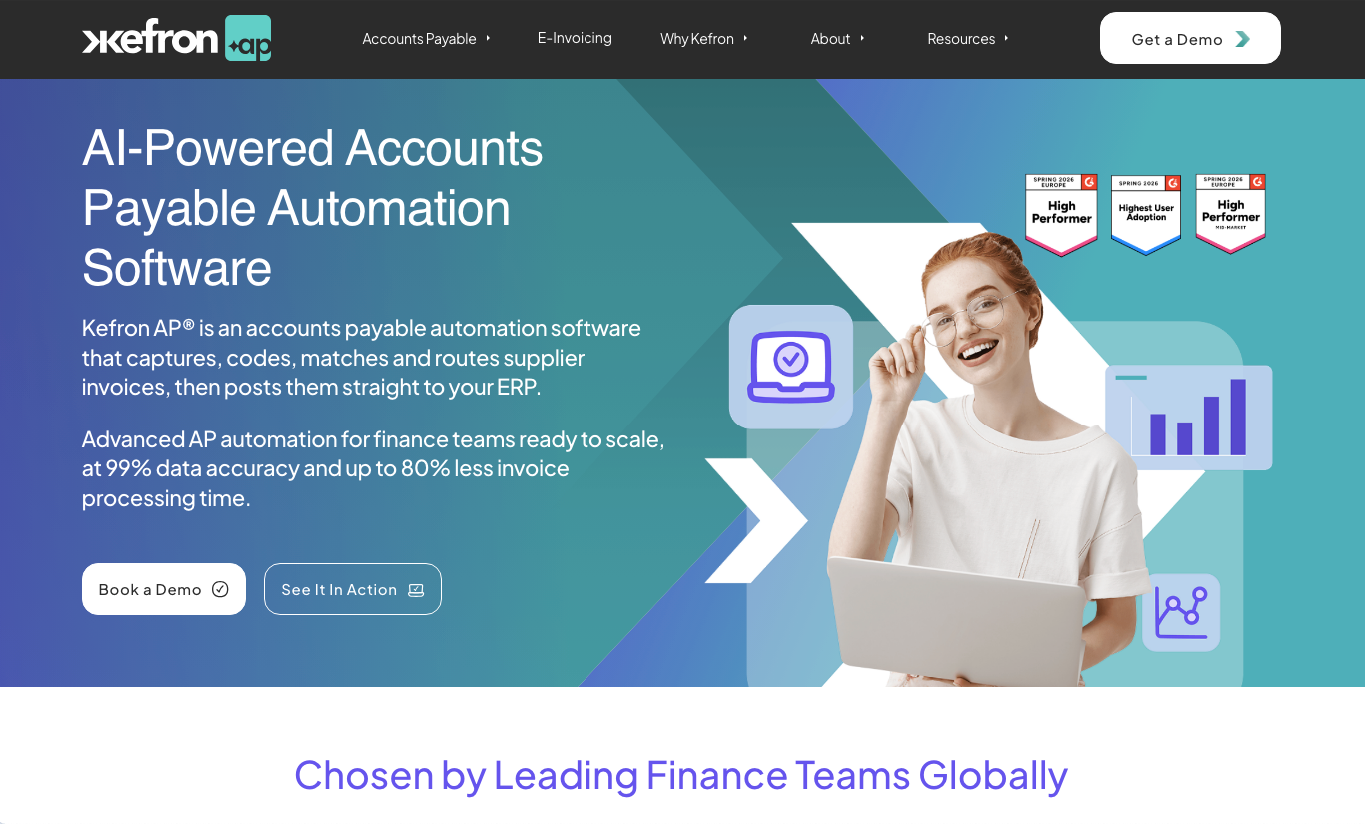
Best for: Finance teams focused on increasing touchless invoice processing through AI automation, human data assurance and continuous optimisation.
Kefron AP automates the invoice lifecycle, from data capture and validation to coding, PO matching, approvals and ERP synchronisation.
Its approach combines AI-powered processing with a dedicated Data Assurance Team that reviews invoice information the technology cannot confidently interpret. This helps Kefron deliver its reported 99%+ invoice data accuracy while reducing the corrections that would otherwise fall to the customer's AP team.
Beyond processing individual invoices, Kefron works with customers to establish a realistic touchless processing target based on their suppliers, invoice types, workflows and operational requirements. Its specialists then focus on addressing recurring exceptions and improving automation performance over time.
This makes Kefron particularly relevant to organisations that want to measure AP automation by the amount of manual work eliminated, rather than simply the number of activities the software can perform.
Key strengths
Worth shortlisting when: You want a dedicated approach to improving touchless invoice processing, with ongoing support to identify and reduce the manual work remaining in your AP operation.
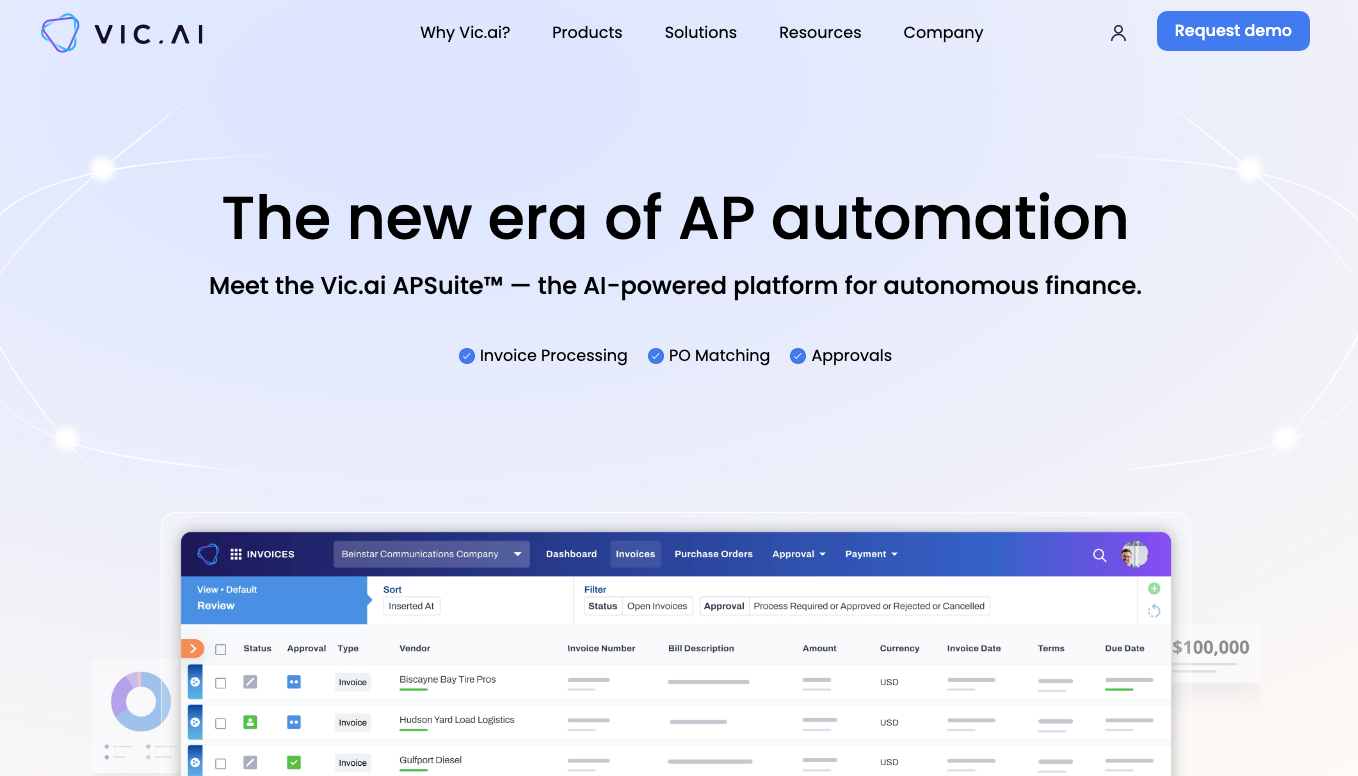
Best for: Finance teams seeking AI-driven automation of routine invoice processing and accounting decisions.
Vic.ai uses artificial intelligence to extract invoice information, predict accounting codes, match purchase orders and manage approval workflows. Its AI-first approach focuses on automating repetitive processing decisions while directing transactions requiring judgement to finance staff.
Key strengths
Worth shortlisting when: Your AP team spends significant time making recurring coding and processing decisions that could be automated.
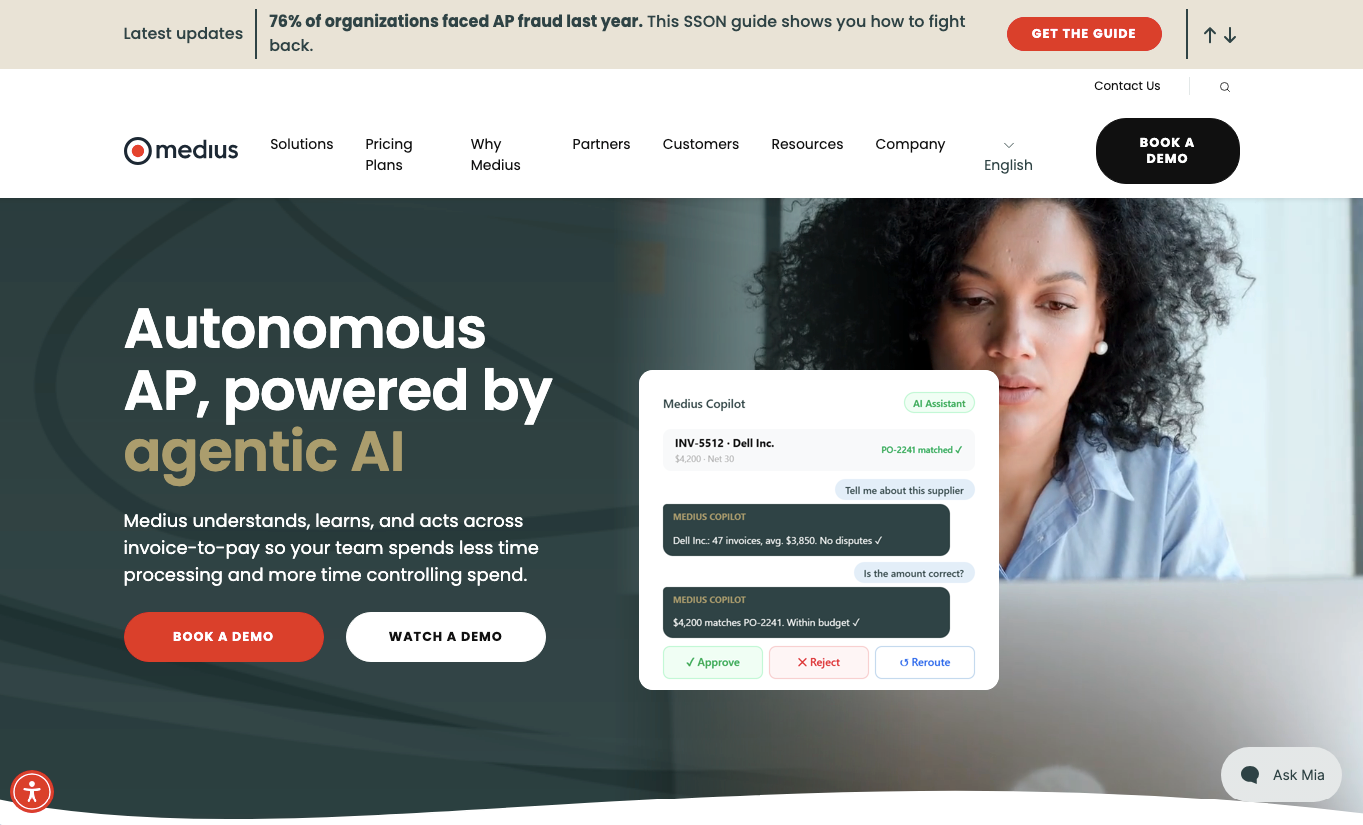
Best for: Larger organisations managing accounts payable across multiple entities and ERP environments.
Medius provides AI-powered invoice automation with ERP integrations, analytics and broader spend-management capabilities. Its platform supports organisations seeking greater consistency in invoice processing while maintaining visibility across different financial systems and business units.
Key strengths
Worth shortlisting when: You need to coordinate AP operations across a complex enterprise finance environment.
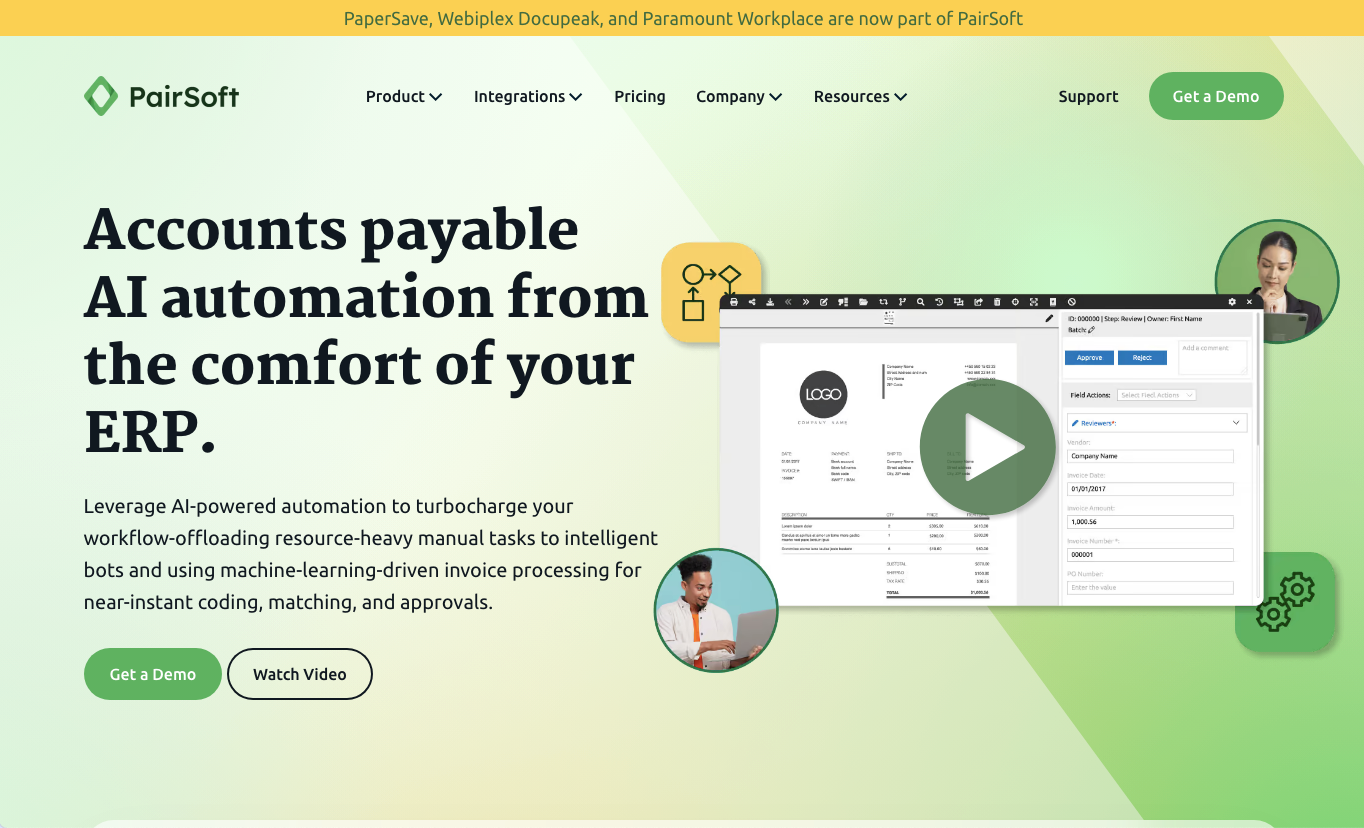
Best for: Businesses that want AP automation closely integrated with their existing ERP.
PairSoft provides AI-assisted invoice processing, coding, approval routing and document management within supported ERP environments. Its approach focuses on extending existing accounting systems with automated AP workflows, reducing the need to manage separate applications.
Key strengths
Worth shortlisting when: Maintaining an ERP-centred finance workflow is a priority and you want to automate AP without introducing a disconnected process.
Best for: Businesses connecting purchasing activities with cloud-based invoice automation.
Yooz provides purchase-to-pay automation covering purchase requests, invoice capture, coding, matching and approvals. Its cloud platform connects purchasing records with supplier invoices, helping finance teams manage transactions from initial purchasing activity through accounting-system integration.
Key strengths
Worth shortlisting when: You want to improve the connection between purchasing and invoice processing through a cloud-based system.
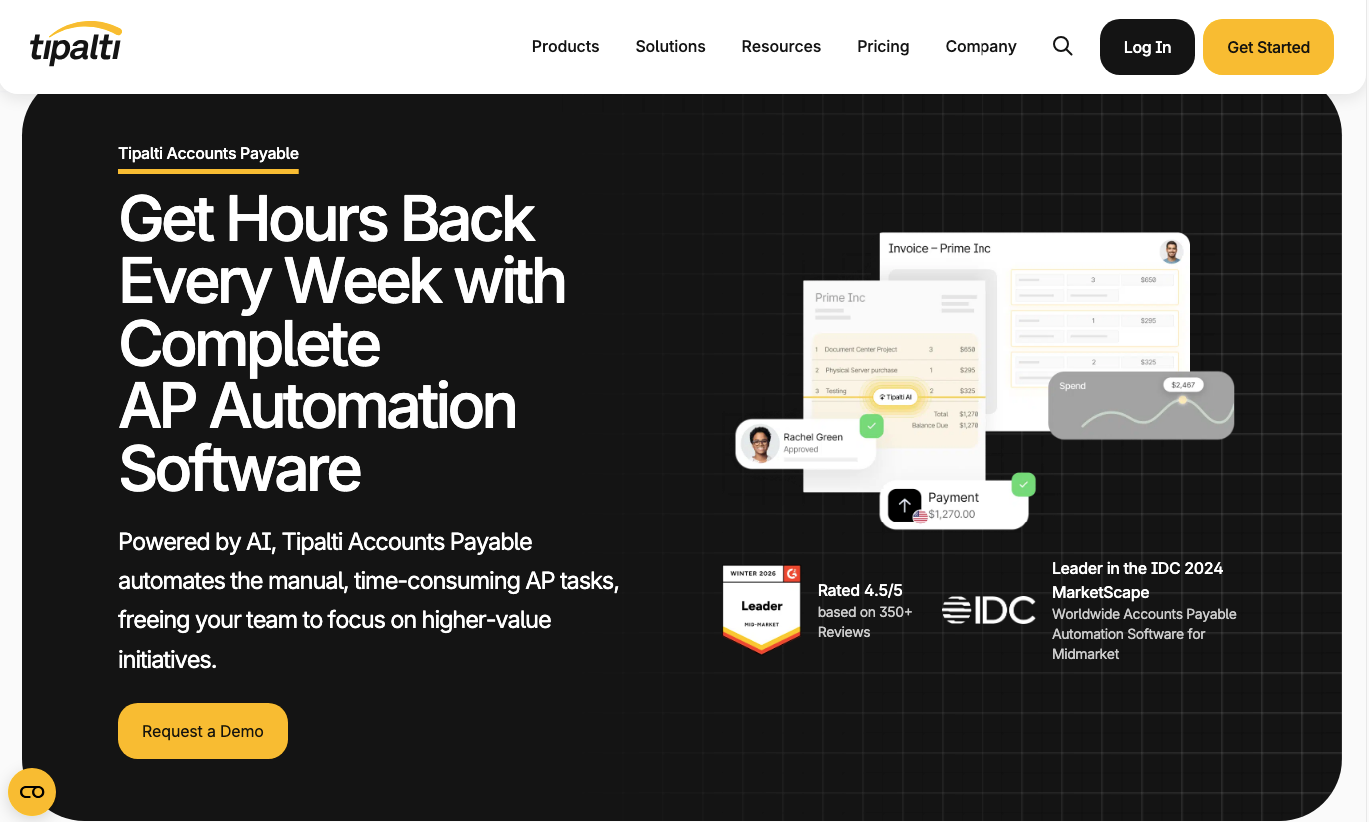
Best for: Businesses managing international supplier payments and complex payables operations.
Tipalti combines AP automation with supplier onboarding, tax-document management and global payment execution. Its platform supports finance teams dealing with international suppliers, different payment methods and multi-entity payment reconciliation.
Key strengths
Worth shortlisting when: Your AP requirements extend into managing international suppliers, cross-border payments and payment-related compliance.
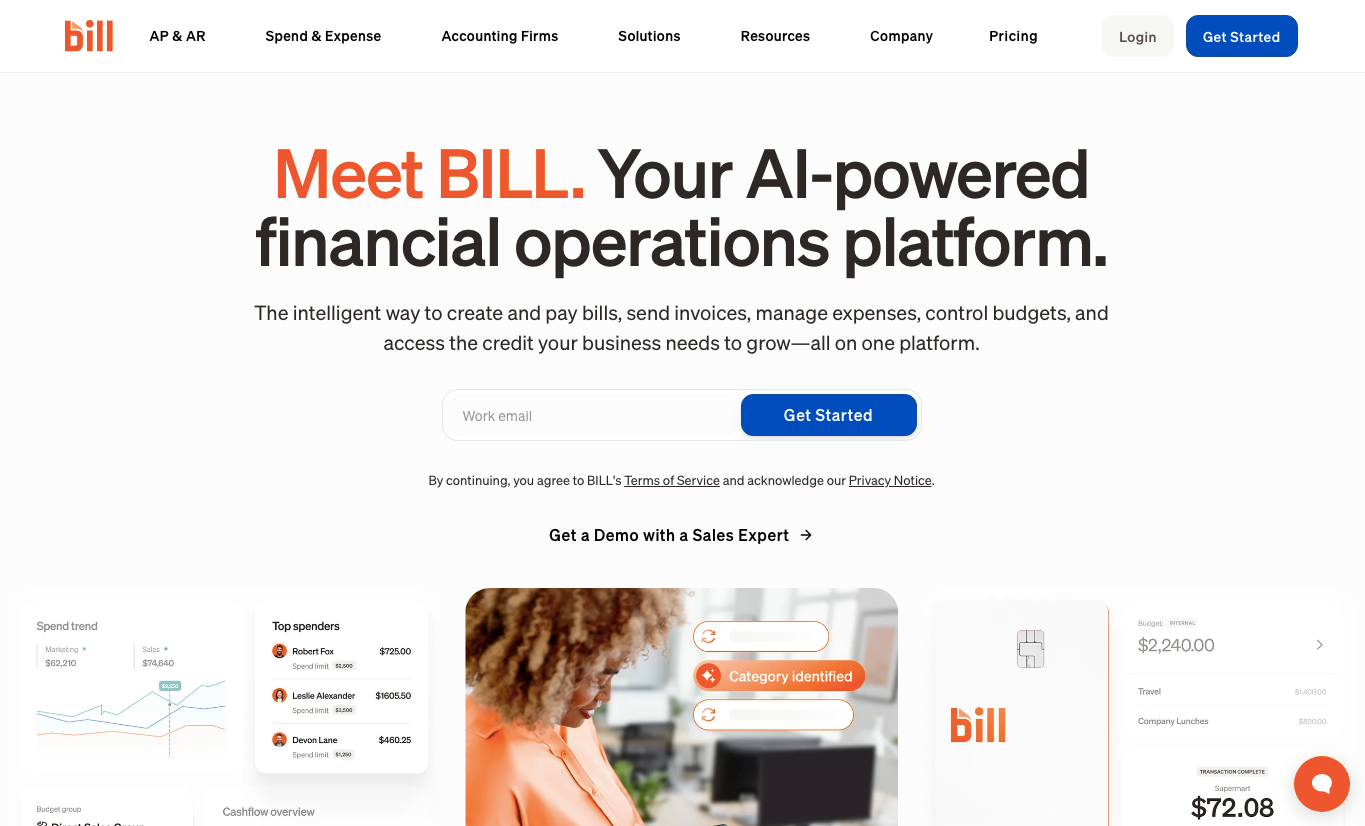
Best for: Small and mid-sized businesses seeking integrated payables, receivables and payment management.
BILL automates invoice capture, approval routing and supplier payments while connecting with accounting software. Its broader financial operations platform also includes accounts receivable and spend-management tools, making it relevant to businesses managing several everyday finance activities.
Key strengths
Worth shortlisting when: You want to bring everyday accounts payable and related financial operations into one accessible platform.
Choosing between AP automation platforms becomes easier when you separate the capabilities your organisation requires from the operational outcomes it expects to achieve.
For finance teams handling large volumes of routine invoices, the priority may be reducing manual corrections and increasing the proportion of transactions that progress without intervention. In this case, the depth of processing automation and the support available for continuous improvement deserve particular attention.
For businesses operating across several entities or accounting systems, integration requirements may carry greater weight. The software needs to accommodate existing financial controls, data structures and reporting responsibilities without introducing unnecessary reconciliation work.
Where purchasing and supplier payments are central to the project, a broader procure-to-pay or financial operations platform may offer greater value than a dedicated invoice-processing solution.
The distinction is between improving a specific AP process and consolidating several finance activities. Both can justify investment, but they require different evaluation criteria.
Before comparing vendors, establish which functions are essential, which processes are already working effectively and what measurable improvement the project needs to deliver.
Most established accounts payable automation platforms support invoice capture, approval routing and integration with accounting systems. The differences become clearer when you examine how those capabilities perform under real operating conditions.
Five measurements can help determine whether a Stampli competitor is likely to deliver meaningful improvements.
Automated data capture does not necessarily eliminate manual invoice processing. Employees may still need to correct accounting codes, investigate matching discrepancies or adjust information before posting.
Measure the proportion of invoices requiring employee intervention between receipt and ERP posting, alongside the number of actions involved.
For example, a platform that automatically captures 95% of invoice fields may still require extensive manual work if a large share of transactions needs coding corrections or approval-related intervention.
The more relevant question is how much work remains after the automation has performed its tasks.
Processing efficiency and invoice turnaround time are related, but they are not interchangeable.
An invoice might require five minutes of active processing yet remain outstanding for several days while awaiting approval. Automating data entry will not necessarily resolve that delay.
Measure the time employees spend actively processing invoices separately from the total time taken to complete approval.
This helps identify whether an improvement requires better processing automation, revised approval rules or changes to departmental responsibilities.
Without this distinction, organisations risk selecting software to address delays that originate elsewhere in the business.
Exception volumes alone do not explain their operational impact.
A missing cost code may take seconds to resolve, while an invoice involving disputed quantities or several purchase orders could require substantial investigation.
Review exceptions by type, frequency and average resolution time. Identify whether particular suppliers, invoice formats or purchasing processes account for a disproportionate share of the workload.
When comparing AP automation software, assess how effectively each platform identifies recurring problems and supports their resolution.
Reducing a relatively small group of time-consuming exceptions may deliver greater value than automating a much larger number of straightforward transactions.
An invoice may complete its approval workflow successfully but still require corrections once the transaction reaches the accounting system.
Incorrect entity assignments, GL codes, tax treatments or supplier references can create additional reconciliation work and affect the reliability of financial reporting.
Evaluate how each solution validates accounting information before posting and handles transactions that fail ERP checks.
It is also worth tracking adjustments made after posting, particularly where several business entities or reporting structures are involved.
Accurate invoice capture is valuable, but the quality of the resulting accounting record ultimately matters to the wider finance function.
A successful implementation does not guarantee consistent automation performance as an organisation changes.
New suppliers, additional entities and revised accounting requirements can introduce exceptions that were not present during the initial rollout.
Assess whether the platform provides the reporting and operational support needed to identify declining performance and address its causes.
Consider how easily existing rules can be adjusted, whether recurring exceptions are monitored and who takes responsibility for further optimisation.
The objective is to select a solution that can sustain improvements as invoice volumes and business requirements evolve, rather than one that performs well only during the initial implementation.
If your organisation already uses Stampli, evaluating an alternative requires more than comparing AP automation capabilities.
Stampli connects invoice processing with transaction-level communication and other procure-to-pay functions. The replacement needs to account for whichever of these capabilities your business currently relies on.
Four areas are particularly important.
Determine how the replacement will preserve supporting documents, approval decisions and invoice-related communication.
Where employees rely on historical conversations to understand why a transaction was changed or approved, that information may need to remain accessible for audit and operational purposes.
Confirm how supplier records, accounting dimensions, purchase orders and invoice statuses will move between the replacement platform and your ERP.
Integration depth can vary by ERP version and configuration, so testing should reflect your actual accounting environment.
Identify which Stampli modules are currently in use.
If procurement, vendor management or payments form part of the existing setup, determine whether the new solution will replace those functions or connect with another system that already supports them.
Establish how open invoices, pending approvals and unposted transactions will be managed during the changeover.
Clear responsibility for processing and posting helps prevent duplicate entries, missing records and interruptions to financial operations.
A well-defined transition plan should cover the operational dependencies of the existing system, not simply the installation of the replacement software.
The right Stampli alternative depends on which aspects of your accounts payable operation need to improve.
Organisations managing complex ERP environments, international payments or wider purchasing processes may benefit from platforms designed around those requirements. Where the main challenge is the amount of manual work involved in processing invoices, greater emphasis should be placed on automation performance, data accuracy and exception reduction.
For finance teams prioritising touchless invoice processing, Kefron AP combines AI-powered automation with human data assurance and ongoing optimisation. Its customer-specific approach is designed to establish realistic automation targets and improve performance as business requirements evolve.
Explore Kefron AP to learn how it can support your existing finance operations.
Which Stampli alternatives are worth considering for AP automation?
Kefron AP, Vic.ai, Medius, PairSoft and Yooz are among the options covered in this guide. Each serves different operational needs, from touchless invoice processing to ERP integration and purchasing workflows.
Can Stampli alternatives process credit notes?
Yes. Many AP automation platforms support credit notes, including matching them to original invoices and applying the appropriate accounting treatment. The exact capabilities vary by provider.
What is the difference between e-invoicing and AI invoice capture?
E-invoicing exchanges structured, machine-readable invoice data, while AI invoice capture extracts information from PDFs, scans and other documents.
Can AP automation software split invoices across multiple departments?
Many solutions support split coding, allowing costs to be distributed across departments, projects or cost centres. Some can also automate recurring allocations using predefined rules.
Can AP automation handle invoices in multiple languages?
Yes, although language support varies between providers. It's worth testing invoices with different tax formats, currencies and regional conventions to confirm accuracy.
Can AP automation handle seasonal increases in invoice volume?
Most cloud-based AP automation solutions are designed to accommodate changing transaction volumes. However, businesses experiencing significant seasonal peaks should confirm processing capacity and whether higher invoice volumes affect subscription costs.