Choosing AP automation software is rarely straightforward. When mid-market finance teams begin evaluating Medius alternatives, they quickly discover that feature lists tell only part of the story. The real challenge lies in understanding how different platforms handle your specific workflows, integration requirements, and growth trajectory.
Kefron helps finance leaders cut through the noise with AI-powered AP automation that delivers 99% data accuracy and reduces invoice processing time by up to 80%. This article shares nine lessons that separate informed buyers from those who end up switching platforms within two years.
Quick guide: 9 Medius alternative lessons for finance leaders
- Kefron AP: The AI-powered solution delivering 99% accuracy with human validation and ERP-agnostic integration
- Workflow flexibility matters more than feature count
- ERP integration depth determines long-term success
- Implementation timelines vary dramatically across vendors
- Data accuracy rates require independent verification
- Supplier adoption affects your touchless processing rates
- Multi-entity support needs testing before commitment
- Approval workflow customisation separates adequate from excellent
- Post-implementation support defines your ongoing experience
How we evaluated these AP automation lessons
These lessons come from analysing hundreds of AP automation implementations and conversations with finance leaders who have switched platforms. The focus is on what matters after the demo ends and real-world processing begins.
- Real-world accuracy rates rather than laboratory test results, because your invoices come in dozens of formats from suppliers with varying document quality
- Integration complexity with your specific ERP, not just whether a connector exists on paper
- Time-to-value metrics that account for configuration, testing, and team training alongside technical deployment
- Scalability evidence from organisations that have grown through the platform, not projected capacity figures
- Support responsiveness during exceptions and month-end crunch periods when you need answers quickly
- Total cost visibility including implementation, ongoing fees, and the hidden costs of manual exception handling
The 9 Medius alternatives for finance leaders
1. Kefron AP: AI-powered accuracy with human validation
Kefron AP combines machine learning with human data assurance to deliver consistent 99%+ invoice capture accuracy. This hybrid approach means your team spends time on strategic finance work rather than correcting extraction errors or rebuilding templates when suppliers change their invoice formats.
The platform connects to over 70 ERP systems through API integration or Kefron Konnect, a secure SFTP file transfer option. This flexibility matters because mid-market organisations often run ERPs that larger platforms treat as secondary priorities.
Finance teams typically go live within 6-8 weeks with guided onboarding. Unlike implementations that drag on for months, Kefron's approach focuses on getting your core invoice workflows running quickly, then expanding functionality based on actual usage patterns.
Kefron AP features
- AI-powered data capture extracts header and line-item details from PDFs, scans, XML, and EDI formats without manual template building
- 2-way and 3-way PO matching validates invoices against purchase orders and goods receipts at line-item level, flagging discrepancies before they cause payment errors
- Automated GL coding learns from your historical patterns to apply cost centres and allocation rules consistently across all invoice types
- Flexible approval workflows route invoices by vendor, value, department, or entity with automatic reminders that keep approvals moving
- Real-time dashboards show processing times, bottlenecks, and approval SLAs so finance leadership can spot issues before they affect month-end
- Document centre with full audit trail maintains a searchable archive of every invoice, approval, and correction for compliance and supplier queries
Kefron AP pros and cons
Pros:
- 99%+ data accuracy backed by human validation eliminates the manual correction work that plagues other platforms
- ERP-agnostic integration works with your existing systems rather than forcing you to adapt your processes
- Unlimited users across all roles means you can extend access to approvers, suppliers, and auditors without counting licenses
Cons:
- Organisations with extremely simple AP needs (under 100 invoices monthly) may find the full feature set more than required
- The dedicated account management approach works differently from self-service models some smaller teams prefer
2. Basware: E-invoicing compliance for large enterprises
Basware focuses on global e-invoicing compliance across more than 190 countries. The platform handles high invoice volumes with AI-powered touchless processing and connects to over 250 ERP systems for organisations with complex multi-national operations.
Finance teams managing VAT compliance requirements across multiple jurisdictions often evaluate Basware for its regulatory expertise. The platform's Peppol network connectivity supports structured electronic invoice exchange with suppliers already using e-invoicing standards.
Basware features
- Global e-invoicing network supporting 190+ countries with built-in compliance for regional regulations
- Touchless invoice processing using AI to capture, validate, and route invoices without manual intervention
- Four-way matching extending beyond standard PO matching to include contract validation for complex procurement scenarios
Basware pros and cons
Pros:
- Regulatory compliance depth across dozens of tax jurisdictions reduces legal risk for multinational operations
- High-volume processing capacity handles enterprise-scale invoice flows
- Supplier network connectivity simplifies electronic invoice exchange
Cons:
- Implementation complexity typically requires dedicated project resources over several months
- Custom reporting capabilities have limitations noted by some users on review platforms
- The breadth of features can create a learning curve for teams new to enterprise AP platforms
3. Coupa: Procurement-first spend management
Coupa approaches AP automation as part of a broader spend management suite covering procurement, invoicing, expenses, and payments. The platform uses AI trained on trillions of dollars in anonymised transaction data to benchmark performance and identify savings opportunities.
Organisations that want procurement and AP automation in a single platform often consider Coupa. The guided buying experience helps control spending at the point of purchase rather than only during invoice processing.
Coupa features
- Procure-to-pay automation connecting requisitions, purchase orders, invoices, and payments in unified workflows
- AI-powered spend analysis benchmarking your costs against anonymised community data
- Supplier management with onboarding, performance tracking, and compliance documentation
Coupa pros and cons
Pros:
- Unified procurement and AP reduces the need for separate systems and manual data transfer
- Community intelligence offers spending insights unavailable from standalone AP tools
- Contract lifecycle management automates compliance and renewal tracking
Cons:
- The interface complexity requires significant training investment for full adoption
- Customer support ratings on review sites trail behind some focused AP automation vendors
- Enterprise positioning means the platform scope exceeds what mid-market AP-only needs require
4. Esker: Source-to-pay with supplier collaboration
Esker offers AP automation alongside AR, procurement, and order management modules. The platform emphasises supplier collaboration features that give vendors visibility into invoice and payment status, reducing the query volume that lands on your AP team.
Finance teams dealing with high supplier inquiry volumes often appreciate Esker's portal approach. Vendors can check payment timelines and submit invoices directly, which cuts down on phone calls and emails asking about outstanding payments.
Esker features
- Supplier portal giving vendors self-service access to invoice status, payment timelines, and document submission
- Mobile approval workflows enabling approvers to review and authorise invoices from any device
- AI-powered data capture extracting invoice details with machine learning that improves over time
Esker pros and cons
Pros:
- Supplier self-service reduces the administrative burden of payment status inquiries
- Combined AR and AP modules appeal to teams wanting both functions automated
- Mobile access supports approval workflows for distributed finance teams
Cons:
- The broader source-to-pay scope may include modules organisations do not require
- Implementation timelines depend heavily on which modules you deploy
- Integration depth varies across different ERP platforms
Comparison table: The top Medius alternatives for AP automation
| Platform |
Data Capture Accuracy |
ERP Integrations |
Implementation Timeline |
Unlimited Users |
| Kefron AP |
AI Powered + with human validation |
70+ |
6-8 weeks |
✓ |
| Basware |
AI-powered touchless |
250+ |
3-6 months |
✗ |
| Coupa |
AI-assisted |
Enterprise ERPs |
3-6 months |
✗ |
| Esker |
ML-powered |
Major platforms |
2-4 months |
✗ |
What should finance leaders prioritise when evaluating AP automation vendors?
The evaluation process often focuses heavily on features and overlooks the factors that determine whether a platform actually delivers value. Finance leaders who have been through multiple implementations consistently point to three areas that matter more than demo impressions.
First, test invoice data capture with your actual documents. Accuracy rates quoted in marketing materials come from controlled environments. Your invoices include handwritten notes, poor scan quality, and formats that have evolved over years of supplier relationships. Run a pilot with your messiest invoices.
Second, map your approval workflows before evaluating platforms. Many organisations discover their approval logic includes exceptions that standard workflow builders cannot handle. Document who approves what, under which conditions, and what happens when approvers are unavailable. Then test whether each platform can replicate your rules without workarounds.
Third, talk to references at organisations similar to yours. A platform that works brilliantly for a 50,000-invoice enterprise may stumble with a 5,000-invoice mid-market operation. Ask about implementation timelines, ongoing support quality, and what they would do differently.
How does ERP integration complexity affect AP automation success?
Integration depth separates platforms that automate AP from those that simply digitise documents. A connector that pushes invoice images into your ERP differs fundamentally from bidirectional integration that syncs supplier masters, PO data, GL codes, and payment status in real time.
Kefron AP offers flexible integration options recognising that mid-market organisations often run ERPs that receive less attention from larger vendors. The API integration delivers real-time synchronisation, while Kefron Konnect offers secure file transfer for systems where API access is limited or controlled by IT governance policies.
Before committing to any platform, map every data point that needs to flow between systems. Include supplier records, purchase orders, goods receipts, GL codes, cost centres, tax codes, and payment confirmations. Test the integration with your actual data during evaluation, not just sample files from the vendor.
Why Kefron AP delivers reliable Medius alternative results
Kefron AP stands apart by combining AI accuracy with human validation. This means your team receives clean, ERP-ready data without spending hours correcting extraction errors or managing supplier complaints about payment delays caused by processing backlogs.
The quick implementation timeline reflects a focused approach to getting value quickly. Rather than attempting to configure every possible scenario before go-live, Kefron's team prioritises your core invoice workflows and expands functionality based on real usage patterns. This approach gets your team processing invoices faster while reducing the implementation risk that comes with extended project timelines.
Finance leaders evaluating Medius alternatives should request a demo using their actual invoices. Kefron's accuracy claims are testable against your documents, your formats, and your edge cases. That transparency reflects confidence in delivering the results your AP operation requires.
FAQs about Medius alternatives for AP automation
What makes Kefron AP different from other Medius alternatives?
Kefron AP combines AI-powered data capture with human validation to achieve 99%+ accuracy consistently. This hybrid approach eliminates the extraction errors that create manual correction work on other platforms. The dedicated data assurance team reviews uncertain fields in real time, ensuring clean data flows to your ERP without requiring your team to manage exceptions.
How long does AP automation implementation typically take?
Implementation timelines vary significantly across vendors. Kefron AP typically goes live within 6-8 weeks with guided onboarding, while enterprise platforms often require 3-6 months. The difference comes from complexity and scope. Mid-market teams generally achieve faster implementations because their workflows, while sophisticated, have fewer integration points than global enterprise operations.
Can AP automation handle both PO and non-PO invoices?
Kefron AP processes both invoice types effectively. For PO invoices, the platform performs 2-way and 3-way matching against purchase orders and goods receipts at line-item level. Non-PO invoices route through configurable approval workflows based on vendor, amount, department, or cost centre. This flexibility matters because most organisations have a mix of procurement approaches across different spend categories.
What ERP systems integrate with Kefron AP?
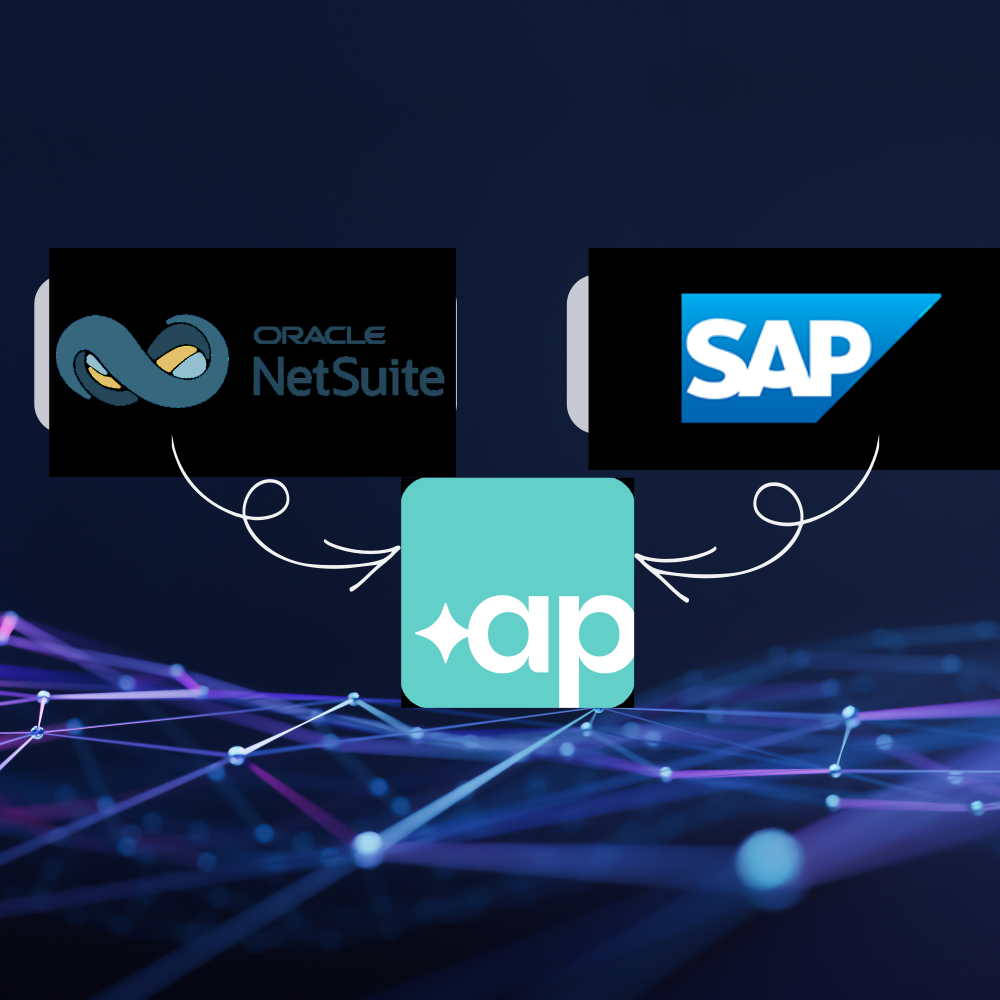
Kefron AP connects to over 70 ERP systems through API integration or secure file transfer. This includes major platforms like SAP, Oracle, Microsoft Dynamics, and Sage, plus mid-market systems that larger vendors often treat as secondary priorities. The ERP-agnostic approach means your choice of finance system does not limit your AP automation options.
How does AI improve invoice processing accuracy?
AI enhances accuracy by learning from historical invoice patterns to extract data more reliably over time. Kefron AP's machine learning adapts to new invoice formats and suppliers automatically, without requiring manual template configuration. Combined with human validation of uncertain fields, this delivers the consistency finance teams need for clean month-end closes and audit readiness.