
Basware Alternatives for 2026: 5 Ways to Rethink AP Automation
Basware is designed for complex invoice environments, with capabilities spanning accounts payable...

BILL combines invoice processing, approvals and payments within one financial operations platform. It can also send international payments to vendors in more than 130 countries and supports over 100 currencies.
That makes the search for BILL.com alternatives slightly different for UK and European finance teams.
So, the question is not simply, "Which other platform can pay an overseas supplier?"
It is whether invoice processing, payment execution, foreign exchange, e-invoicing and spend management should all sit in the same system in the first place.
Some finance teams need a stronger AP layer in front of an ERP they already trust. Others need better infrastructure for paying hundreds of international suppliers. European groups may also have to accommodate structured e-invoicing, different legal entities and country-specific finance processes.
This guide compares seven alternatives to BILL based on those different requirements.
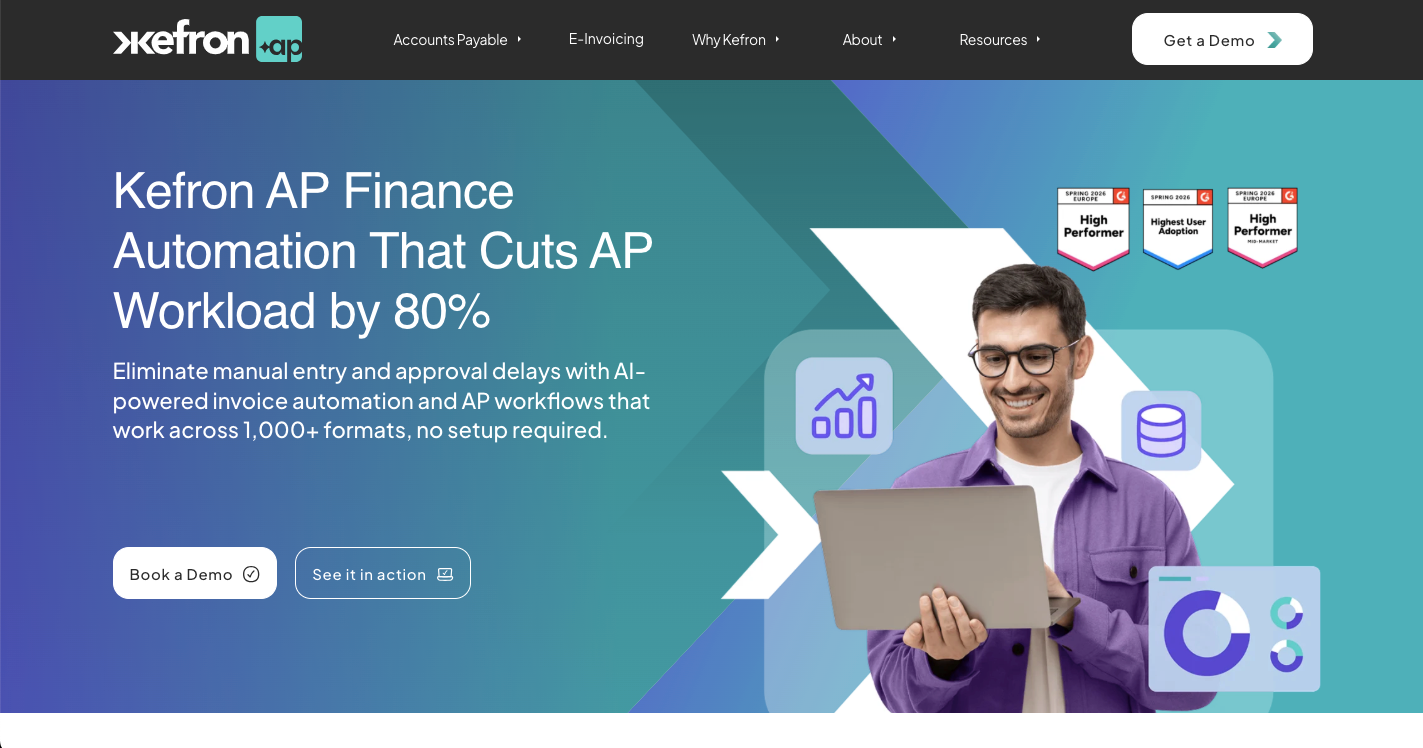
Best for: Mid-market and enterprise finance teams that want more control over invoice processing without moving their ERP or supplier-payment infrastructure.
Kefron AP focuses on the work required to turn an incoming supplier invoice into reliable, approved financial data.
That creates a different starting point from platforms where payment execution is a major part of the proposition.
Invoices can enter Kefron as PDFs, scans, XML, EDI or other supported formats. AI extracts the information, while uncertain fields can be reviewed by Kefron's Data Assurance Team before the invoice continues through coding, matching and approval.
The result is an AP process designed to prevent unreliable invoice information from creating work further downstream. Kefron reports 99%+ invoice data accuracy after validation and up to 80% less invoice processing time.
This becomes particularly relevant for finance teams using more complex ERP environments.
Kefron connects with more than 70 finance and ERP systems, including SAP, Oracle, NetSuite, Microsoft Dynamics, Sage, Infor and Unit4. Supplier records, tax codes, POs and goods received notes can be pulled from the ERP for processing, while validated invoices return for posting.
That two-way relationship matters for European businesses with established finance architecture. The AP platform does not have to become the new financial system of record or the place where treasury executes every supplier payment.
European e-invoicing can also sit alongside the AP workflow. Kefron's separate e-invoicing capability supports formats including UBL, XML, Peppol, XRechnung and KSeF, with compliance across 65+ countries.
For a BILL user, the distinction is therefore architectural.
BILL brings invoice processing and payment execution together. Kefron is a stronger fit when the organisation wants a specialised invoice-processing layer feeding the finance systems and payment controls it already has.
Key strengths
Worth shortlisting when: Your payments and ERP are not the problem; the effort required to produce accurate, approved invoice data is.
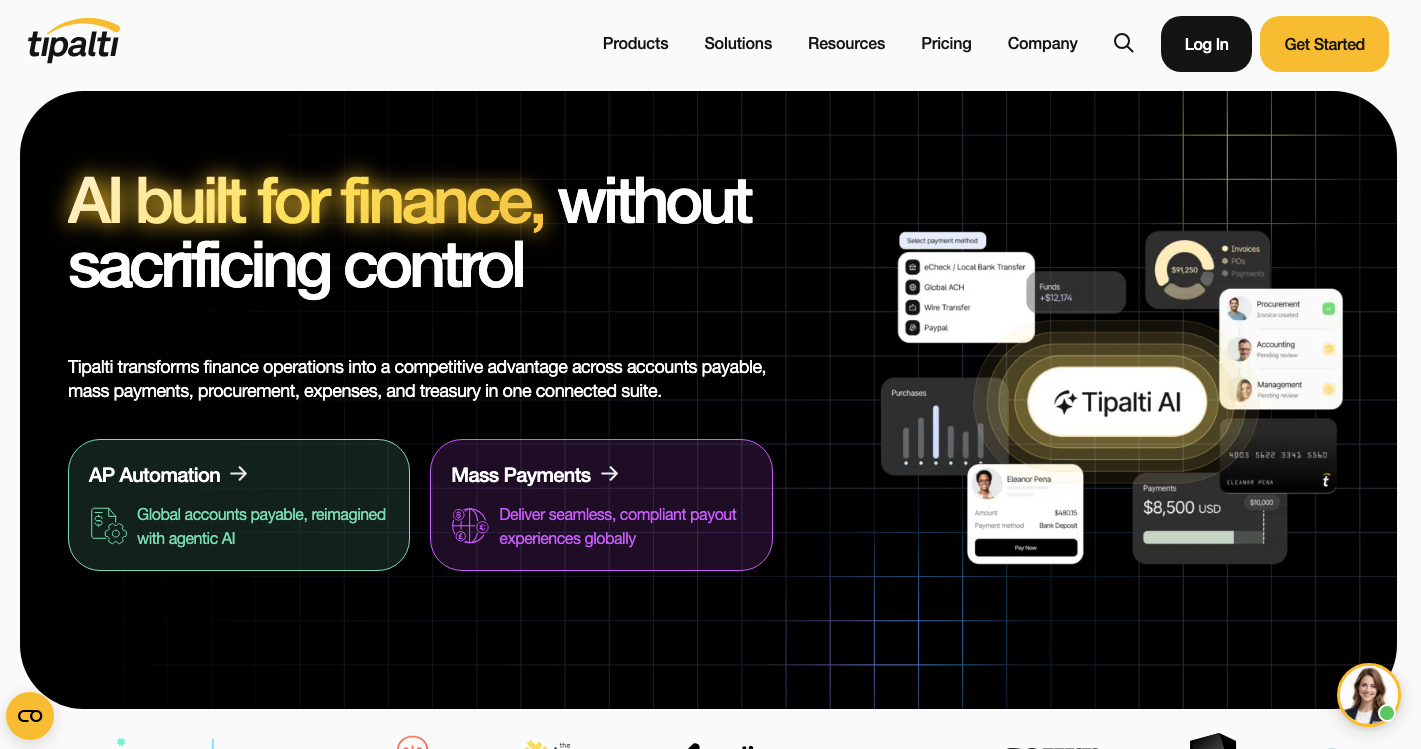
Best for: Businesses managing a large and geographically diverse supplier or payee base.
Tipalti moves further in the opposite direction: global payables infrastructure is one of its central strengths.
The platform supports payments to more than 200 countries and territories in 120 currencies through 50+ payment methods. It also provides supplier onboarding, banking-data validation, tax controls and multi-entity payables.
This makes Tipalti particularly relevant when the operational burden is not only approving invoices but maintaining payment information and moving money to suppliers, contractors or other payees around the world.
Key strengths
Worth shortlisting when: International payment operations are one of the main reasons you are replacing BILL.
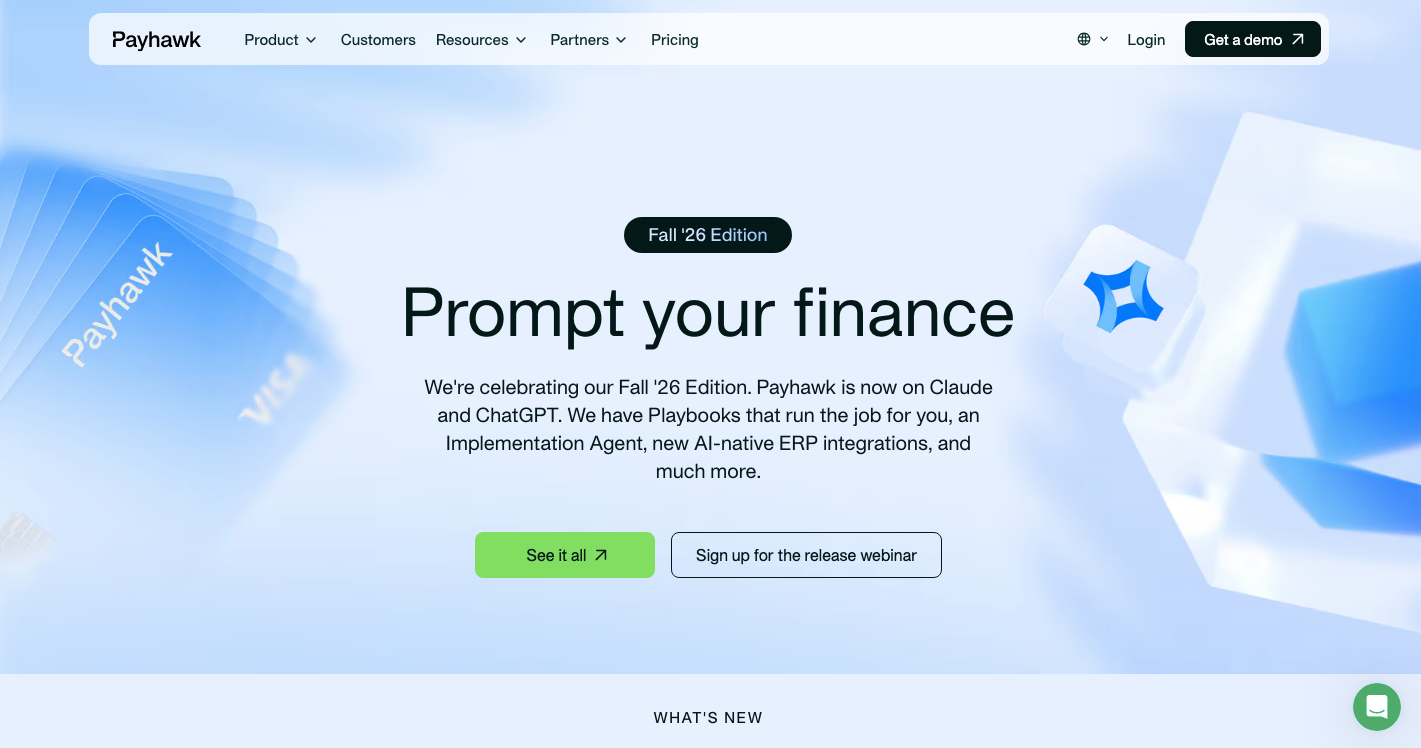
Best for: European companies that want AP to sit inside a broader spend-management environment.
Payhawk combines supplier invoices with purchase requests, company cards, expenses and business payments.
Its European e-invoicing capabilities are increasingly important to the proposition. Payhawk supports structured e-invoices through formats and networks including Peppol, France's infrastructure and Poland's KSeF, with additional European coverage being added.
Global supplier payments are also built in. Payhawk supports international payments in 119+ currencies alongside several currency accounts.
The attraction is therefore consolidation rather than AP specialisation alone.
Key strengths
Worth shortlisting when: You are trying to reduce the number of systems used to manage company spend as well as replace BILL.
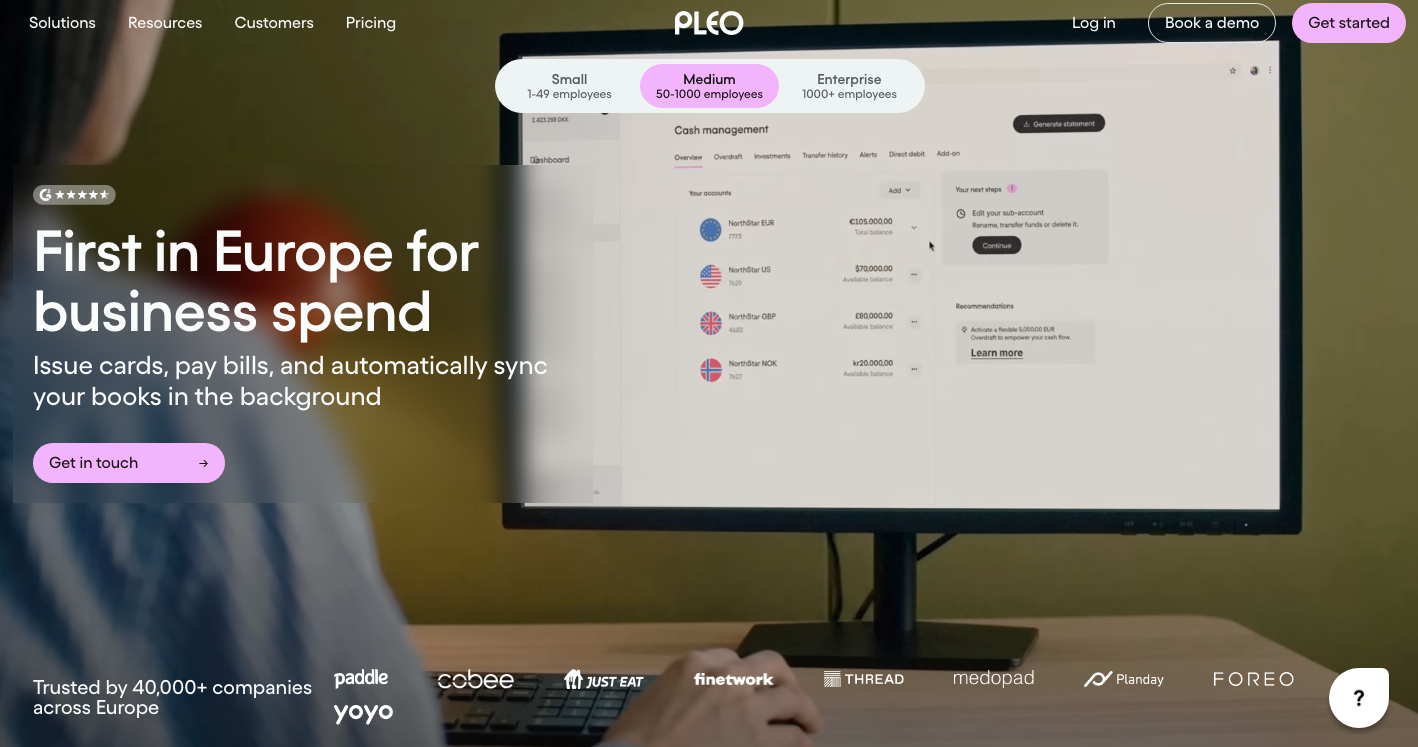
Best for: Lean European finance teams that want straightforward AP alongside employee spending.
Pleo began with company cards and expense management but now provides a broader accounts payable workflow.
Invoices can arrive through the platform inbox, move through configurable approvals and be paid from the Pleo account. Supplier payments support local rails and international transfers in more than 50 currencies.
That makes Pleo a useful option for smaller or mid-market teams that value ease of use and prefer AP and employee spend to live together without adopting a large enterprise finance suite.
Its scope is different from platforms designed around complex multi-ERP invoice operations or large-scale source-to-pay transformation.
Key strengths
Worth shortlisting when: A relatively lean finance team wants one practical system for everyday spend and supplier invoices.
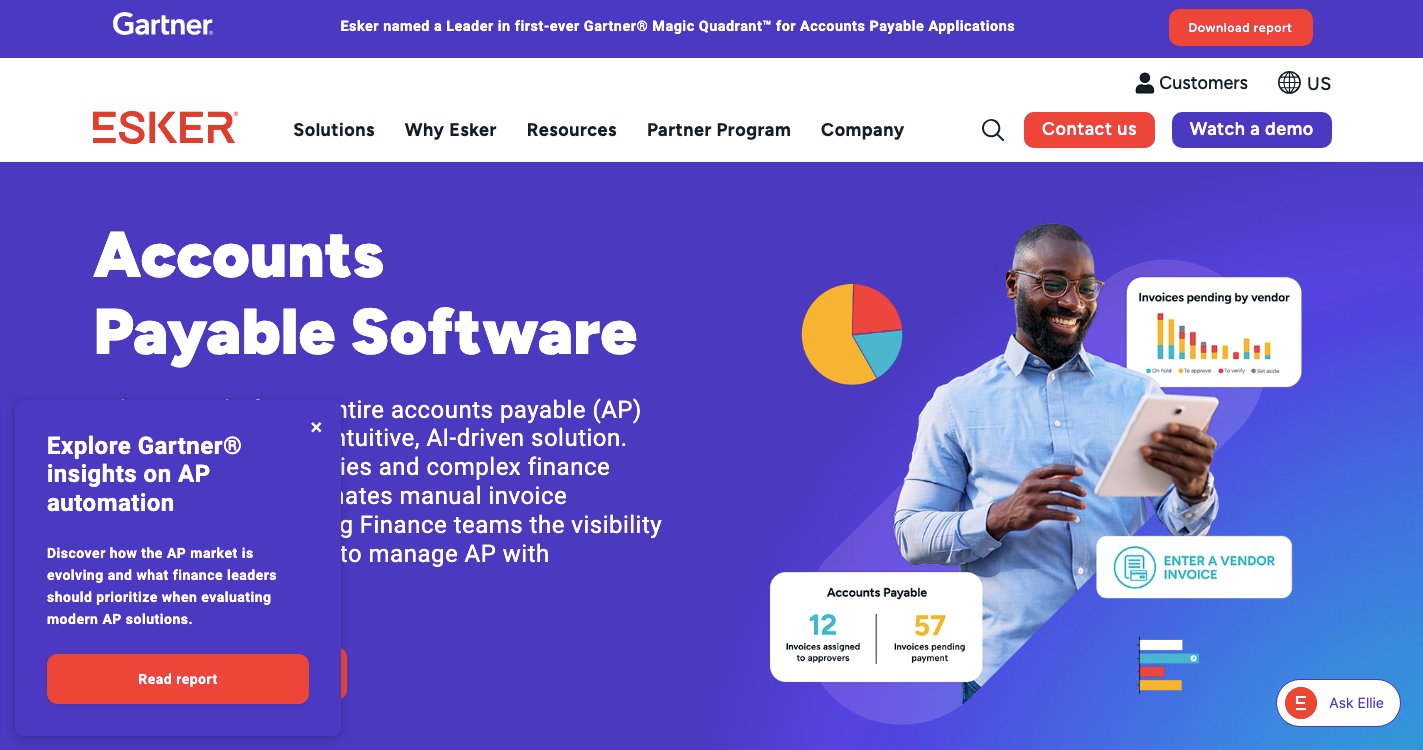
Best for: Multinational businesses that need e-invoicing on both sides of the ledger.
Esker differs from many BILL alternatives because its e-invoicing proposition spans both supplier invoices and customer invoice delivery.
It supports compliant e-invoicing across more than 60 countries and provides connectivity through networks including Peppol and public platforms. Its wider platform links those capabilities with accounts payable, procurement and order-to-cash processes.
This can matter when a European e-invoicing programme is larger than AP. A business may need to receive compliant supplier invoices while also generating and distributing compliant sales invoices from the same broader infrastructure.
Key strengths
Worth shortlisting when: E-invoicing transformation affects both incoming and outgoing invoices across several countries.
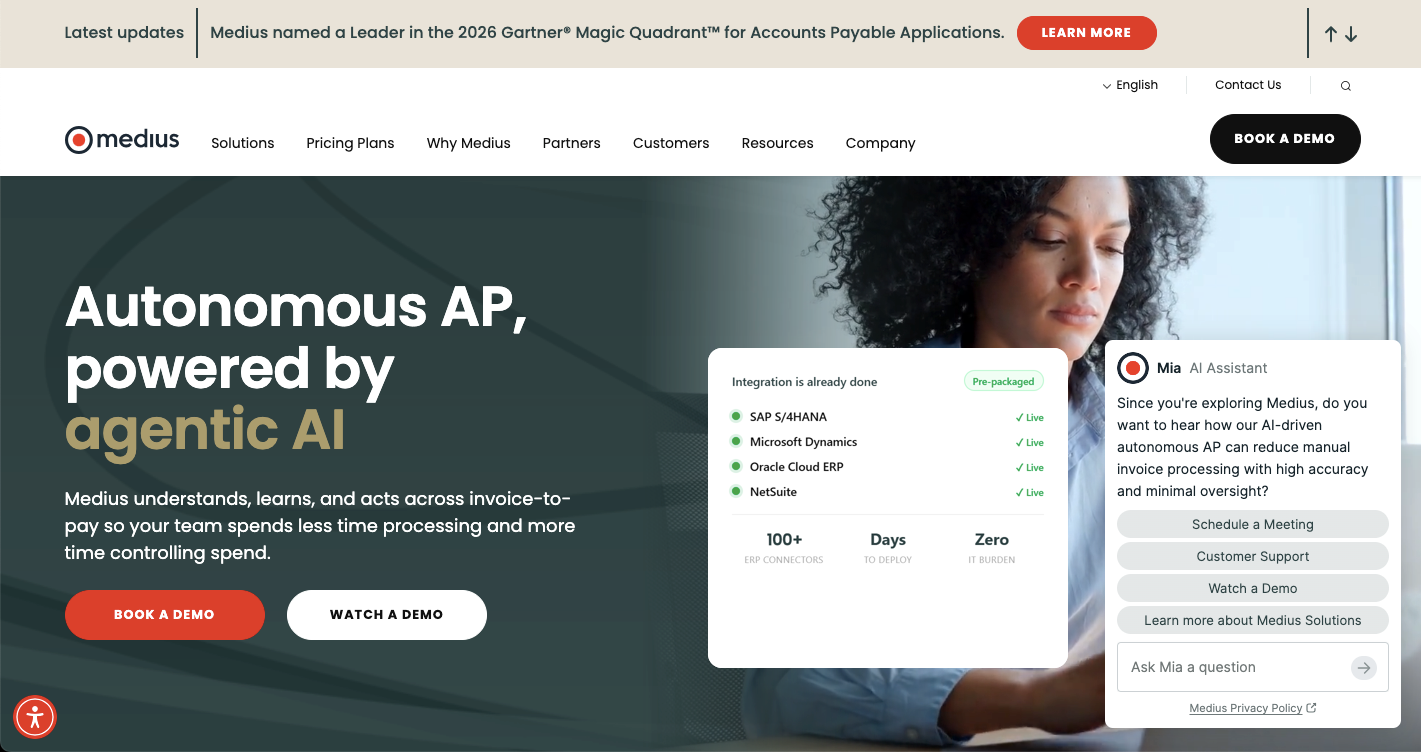
Best for: Enterprises that want AI to make more AP decisions rather than simply automate predefined steps.
Medius positions its platform around autonomous accounts payable.
Its agentic AI can operate across invoice capture, coding, PO and non-PO processing, supplier communication, approvals and fraud detection. The intended model is for AI to handle routine decisions and surface cases that genuinely require human judgement.
This gives Medius a distinct role in the shortlist.
A finance team considering it is usually asking how far AP can progress towards autonomous operation, rather than primarily looking for a simpler way to send international payments.
Key strengths
Worth shortlisting when: Greater decision-making autonomy from AI is an explicit part of the finance transformation strategy.
Best for: Large organisations where the project starts with controlling spend before an invoice ever reaches AP.
Coupa approaches the problem through procurement and total spend management.
Purchase requests, POs, suppliers, invoices, expenses and payments can sit within the same wider spend framework. Its invoicing environment supports PO-backed and non-PO processes, while its supplier portal and compliant invoicing capabilities support electronic invoice exchange.
This can be useful when AP problems originate upstream.
If invoices regularly arrive without approved purchases, correct supplier data or adequate spend controls, improving invoice automation alone may not solve the root problem. A procurement-led platform gives the organisation more control before the liability exists.
Key strengths
Worth shortlisting when: The objective is to control purchasing and supplier spend across the enterprise, not just improve invoice processing.
BILL's broad proposition can make comparisons misleading.
A platform may look like a weaker alternative simply because it does not perform every function BILL performs. In practice, that can be intentional.
Four decisions are more useful than a feature-for-feature checklist.
Some finance teams want one continuous workflow from invoice receipt through supplier settlement. Others intentionally separate duties.
AP validates and approves the liability. The ERP records it. Treasury or authorised payment teams release the cash through controlled banking infrastructure. Neither model is automatically better. But it changes whether payment functionality should be a primary selection criterion.
Paying a supplier in Germany is not the same requirement as operating a German legal entity.
The latter may involve local tax treatment, structured invoice requirements, entity-specific workflows and reporting obligations.
When comparing European payment platforms and AP tools, separate where your suppliers are located from where your own legal entities operate.
A new AP platform should not create a second version of supplier records, tax codes, POs and accounting dimensions unless there is a clear reason.
For organisations with a mature ERP, ask how the AP platform consumes existing master data and how completed transactions return.
For businesses with lighter accounting infrastructure, a more self-contained financial operations platform may be preferable.
BILL alternatives range from specialised AP applications to complete spend ecosystems. More scope can simplify the technology stack when the additional modules solve real problems. It can also create unnecessary implementation complexity if finance only needs to fix invoice processing.
Define the intended scope before evaluating vendors, not after seeing their product demos.
The seven alternatives solve different problems.
For invoice processing around an established ERP, Kefron AP offers a specialised approach that leaves existing payment infrastructure intact.
For large-scale international payables, Tipalti brings supplier onboarding, FX and global payments into a broader payments operation.
Payhawk is relevant when a European group wants AP, procurement, cards and employee spend brought closer together, while Pleo offers a lighter version of that model for leaner finance teams.
Esker deserves consideration when multinational e-invoicing across AP and AR is becoming a major programme.
Medius approaches the problem through greater AI autonomy.
Coupa moves the conversation further upstream toward procurement and total spend control.
The strongest shortlist will therefore depend less on which products technically overlap with BILL and more on why the organisation wants to replace BILL in the first place.
If you're weighing other AP platforms too, see our comparisons of SoftCo alternatives and Yooz alternatives.
There is no universal European replacement for BILL because businesses use BILL for different jobs.
A company focused on overseas supplier payments needs a different alternative from one struggling with ERP-side invoice preparation. A business facing European e-invoicing mandates has another requirement again.
Start by separating AP, payments, compliance, procurement and spend management. Then decide which of those capabilities should genuinely live together.
For finance teams that want to improve the quality and automation of invoice processing while keeping established ERP, banking and treasury infrastructure, Kefron AP is one option worth evaluating against real AP workflows.
How should we compare pricing between BILL.com alternatives?
Compare the total cost of operating the platform rather than the headline subscription alone.
Depending on the vendor, charges may be based on invoice volume, users, entities, payment transactions, implementation, integrations or additional modules. International payments can also introduce FX margins or transaction fees.
For a meaningful comparison, model the expected annual cost using your actual invoice volumes, entities, users and payment activity.
What information should we prepare before evaluating AP software?
A vendor comparison becomes much more useful when finance teams bring real operating data into the process.
Prepare information such as:
This helps vendors demonstrate the platform against your real operating environment rather than a generic workflow.
Should we ask for a proof of concept before switching AP platforms?
For more complex AP environments, testing representative invoices can provide considerably more insight than a standard product demonstration.
Include straightforward invoices as well as the cases that create work today: unusual supplier formats, multiple PO lines, missing information, new suppliers and recurring exceptions.
The objective is to see how the software behaves when conditions are imperfect.
What should we look for in AP implementation support?
Clarify who is responsible for configuration, ERP mapping, workflow design, testing, supplier setup and user training.
It is also worth asking what happens after launch. Some providers primarily supply software and technical support, while others take a more active role in reviewing processes and improving performance.
For finance teams with limited internal implementation resources, that difference can materially affect the project.
How should we assess security and financial controls in an AP platform?
Security reviews should cover more than user passwords.
Finance and IT teams should examine access controls, segregation of duties, approval permissions, audit histories, supplier-bank-detail changes, duplicate detection and how sensitive financial information is stored and transferred.
Where the platform can initiate payments, payment authorisation and fraud controls deserve additional scrutiny.
What metrics should we track after changing AP software?
Avoid measuring success only by whether the new platform went live.
Useful operational measures include invoice processing time, approval turnaround, manual touches per invoice, exception rate, data accuracy, cost per invoice and the percentage of invoices processed without AP intervention.
Tracking the same measures before and after implementation makes it easier to determine whether the new system has actually improved finance operations.