
Best BILL.com Alternatives for European AP in 2026
BILL combines invoice processing, approvals and payments within one financial operations platform....

Basware is designed for complex invoice environments, with capabilities spanning accounts payable automation, e-invoicing, AI, compliance and control across multiple countries and ERP systems. Its current Invoice Lifecycle Management model goes beyond individual AP tasks to manage invoices from supplier submission through payment and reconciliation.
For organisations researching Basware alternatives, the question is therefore not simply which platforms can capture invoices and automate approvals.
The more useful question is what you want to do differently.
You might want a provider that takes a more hands-on role in improving touchless processing. You may need international supplier payments alongside AP. Procurement could be part of the same transformation. Or your current requirements may not justify the breadth of an enterprise invoice-lifecycle platform.
This guide compares 10 Basware competitors through those different priorities, helping finance teams identify which alternatives deserve a closer look.
Before comparing alternatives to Basware, it is worth understanding what the platform is built to do today.
Basware describes its approach as Invoice Lifecycle Management, connecting invoice receipt, validation, coding, matching, approvals, compliance, fraud controls, payment-related processes and reconciliation across a common framework. Its platform can sit across different ERP environments, with Basware reporting connections to SAP, Oracle, Microsoft Dynamics and more than 250 other systems.
AI is increasingly central to that proposition. Basware's 2026 roadmap includes AI-assisted processing for both PO and non-PO invoices, intelligent coding and matching, agent-based support and predictive insights.
That makes Basware particularly relevant to large or multinational organisations managing substantial invoice complexity, compliance requirements and fragmented ERP landscapes.
A business may still evaluate Basware AP alternatives when it wants a different balance between:
With those differences in mind, here are 10 platforms worth comparing.
Best for: Finance teams that want to increase touchless invoice processing while keeping their existing ERP and core finance processes.
Kefron AP approaches automation around a customer-specific performance target rather than applying the same headline automation percentage to every business.
During onboarding, Kefron works with the customer to understand its suppliers, invoice types, workflows, exceptions and manual processing points. From that starting point, the teams establish a realistic touchless processing target and work to improve the percentage of invoices that can pass through the AP process with minimal intervention.
The model is built around three stages:
Define. Achieve. Improve.
The distinction is important because AP automation performance depends on more than whether the software technically supports capture, matching and approvals. Supplier behaviour, poor data quality, approval design, recurring exceptions and ERP configuration can all introduce manual work.
Kefron's specialists remain involved in identifying and addressing those barriers through workflow optimisation, validation improvements, process standardisation, exception reduction and ongoing automation refinement.
Kefron also combines AI-powered invoice extraction with human data assurance. When invoice information cannot be interpreted confidently, flagged fields can be reviewed before the data reaches the customer's AP team. Kefron reports 99%+ invoice data accuracy through this AI and human-validation model.
The wider platform supports automated GL and cost-centre coding, two-way and three-way line-level PO matching, configurable approval routes, exception handling, searchable audit trails and ERP synchronisation.
Key strengths
Worth shortlisting when: Your main objective is reducing the amount of invoice work that remains with the AP team, and you want the provider actively involved in improving that performance after implementation.
Best for: Enterprises pursuing greater autonomy across invoice-to-pay processes.
Medius is an alternative to Basware that placed autonomous AP at the centre of its current proposition. Its agentic AI operates across areas including invoice capture, coding, matching, supplier conversations, approvals and fraud detection. The company describes a model in which routine work is handled automatically and finance users are directed towards cases requiring judgement.
This makes Medius particularly relevant to organisations that see AI autonomy as a strategic objective rather than simply another way to accelerate individual AP tasks.
Its scope also extends into broader source-to-pay processes, giving larger finance functions room to expand beyond invoice processing.
Key strengths
Worth shortlisting when: Your finance transformation is centred on increasing the amount of AP work handled autonomously by AI.
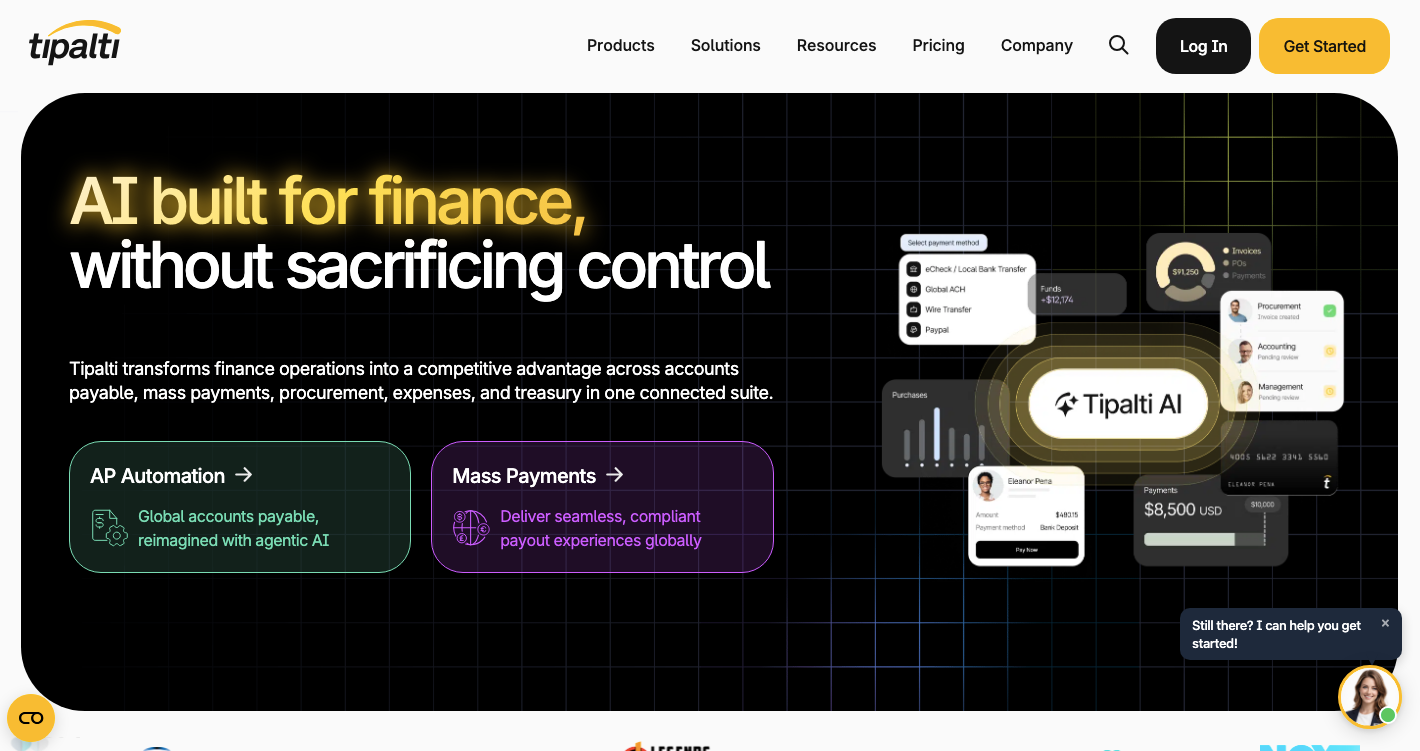
Best for: Businesses where global supplier payments are as important as invoice automation.
Tipalti combines accounts payable with supplier onboarding, global payments, procurement, expenses and treasury.
Its strongest distinction in this comparison is international payment infrastructure. Tipalti states that it supports payments across more than 200 countries and territories, 120 currencies and 50+ payment methods.
That makes it particularly relevant for organisations managing international suppliers, contractors or other payees and wanting invoice processing and payment execution brought closer together.
The question for a Basware buyer is whether global payables infrastructure is a major requirement or whether the organisation already has an effective ERP-to-bank payment process.
Key strengths
Worth shortlisting when: Cross-border supplier payments and AP need to be addressed within the same finance platform.
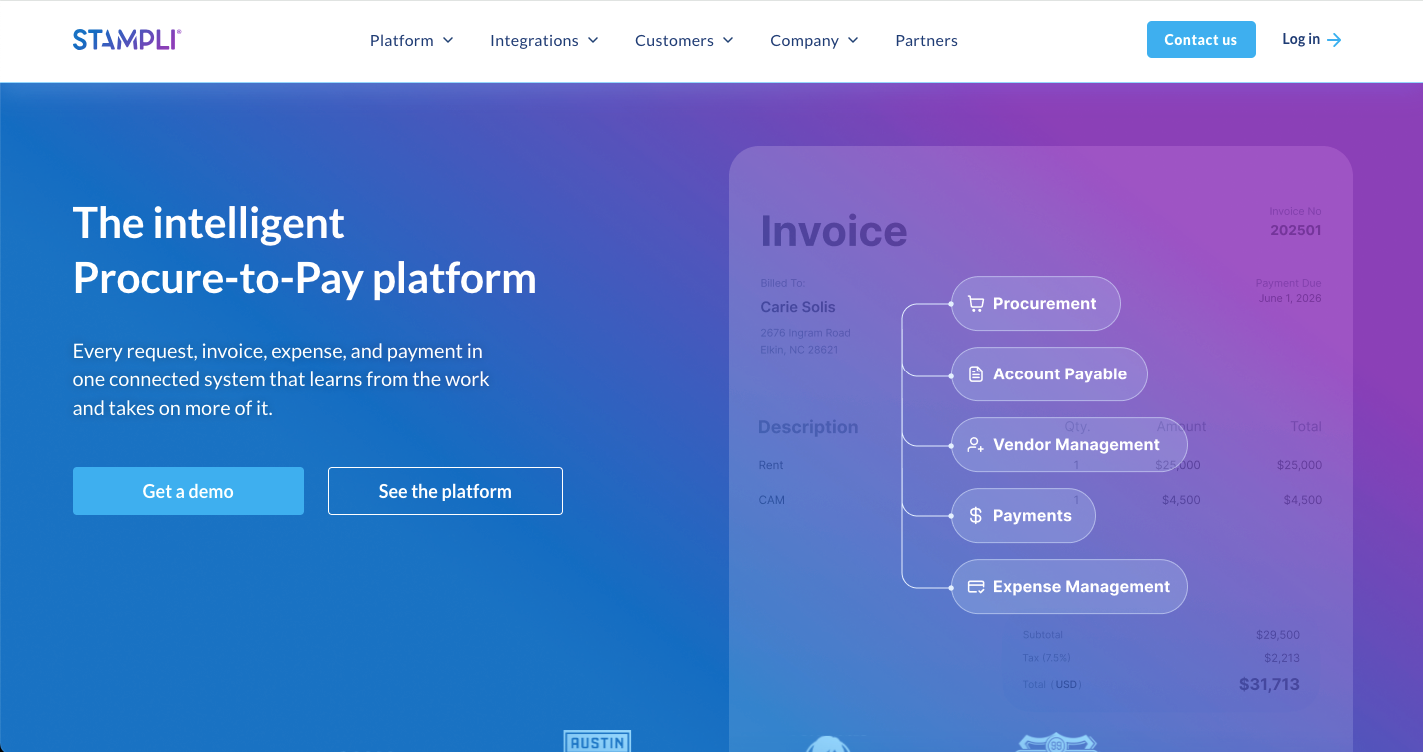
Best for: Finance teams where communication, approvals and missing context slow invoices down.
Stampli treats the invoice as a workspace where documents, conversations, coding, matching and approvals stay connected.
Its procure-to-pay platform now spans procurement, AP, vendor management, payments and expenses, while retaining a strong focus on the collaboration surrounding individual invoices.
That approach can be particularly useful when invoices frequently stop because AP needs information from another department, an approver or procurement.
Rather than resolving those issues across separate email threads and systems, the context remains attached to the transaction.
Key strengths
Worth shortlisting when: The problem is not only processing invoices but coordinating the people and information required to approve them.
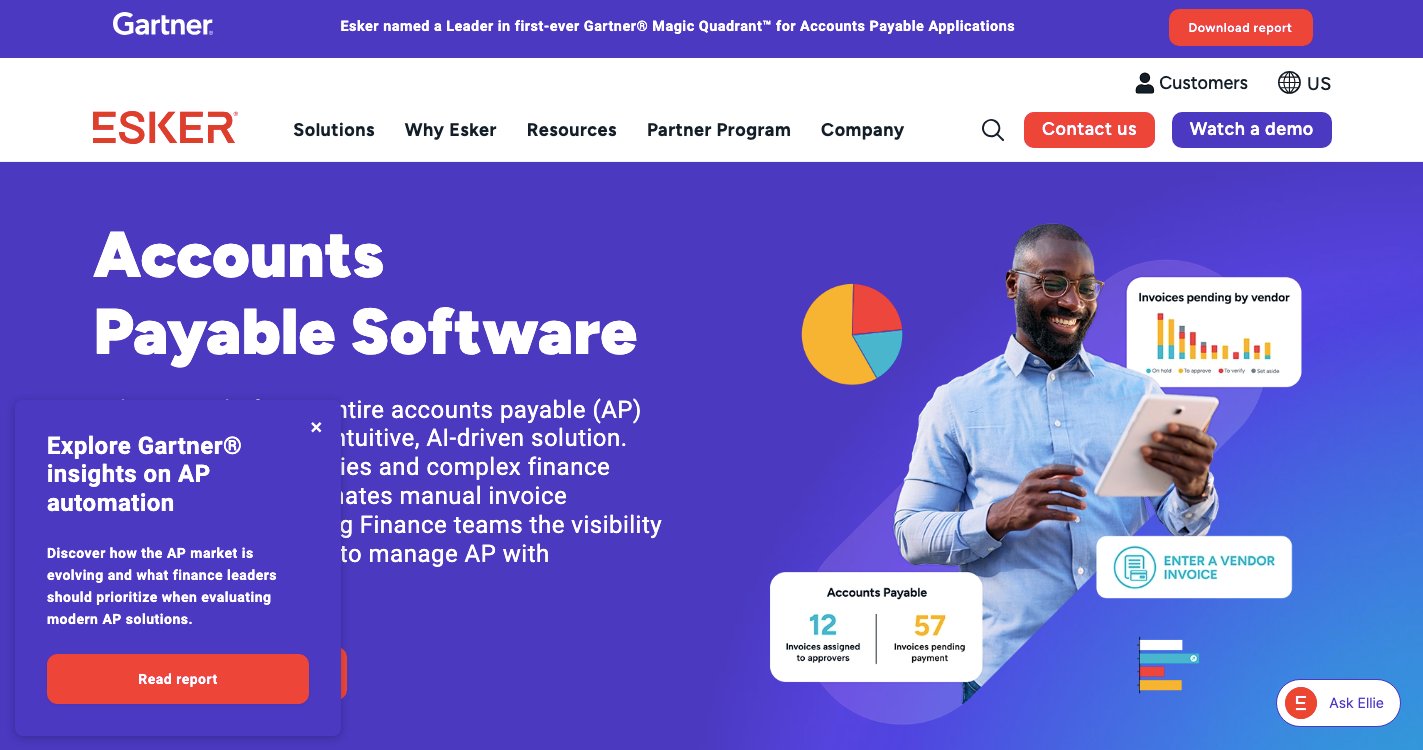
Best for: Organisations expanding their finance transformation upstream into procurement and supplier management.
Esker offers a broader source-to-pay platform covering sourcing, supplier management, contracts, procurement, expenses, accounts payable and payment-related processes.
This is relevant when recurring AP problems originate before the invoice reaches finance.
Missing purchase orders, inconsistent supplier information or poorly controlled purchasing can all create exceptions later in the process. Esker's model gives procurement and finance a common environment for addressing more of that lifecycle.
Its AI is applied across sourcing, purchasing, contract and invoice workflows, with human validation retained for critical decisions.
Key strengths
Worth shortlisting when: You want to address upstream purchasing and supplier processes alongside accounts payable.
Switching from Basware can involve more than moving approval workflows from one AP automation platform to another.
Because Basware can sit across e-invoicing, compliance, matching, invoice processing and multiple ERPs, finance and IT should first establish exactly what the current environment is responsible for.
Document how suppliers currently submit invoices.
Depending on the business, this might include:
A replacement needs to support each relevant source or provide a clear alternative route.
This is particularly important for businesses operating in markets where structured e-invoicing is becoming mandatory.
Invoice processing and regulatory e-invoicing are related, but they are not the same requirement.
Basware places continuous compliance prominently within its Invoice Lifecycle Management model and currently states that its platform supports compliance mandates across more than 60 countries.
If the existing setup handles tax-authority connectivity, invoice validation, archiving or country-specific mandates, identify those functions separately from internal AP workflow automation.
That prevents compliance infrastructure from being overlooked during a platform change.
Do not stop at asking whether a Basware alternative supports your ERP.
Identify what information actually moves between the systems.
That can include:
Then verify which exchanges are standard, which require configuration and how multiple entities or ERP instances are handled.
A high automation percentage can still leave a finance team with substantial work if the remaining exceptions are complex.
Ask what happens when:
More importantly, identify who is expected to resolve each problem.
That can expose a meaningful difference between two systems that appear similar in a feature comparison.
AP processes are not static.
Suppliers change. New entities are created. Approval routes move. ERP configurations evolve. Invoice volumes fluctuate.
Before selecting a replacement, establish who will monitor automation performance and identify recurring problems after implementation.
For some organisations, that responsibility will remain internal.
Others may prefer a provider that takes a more active role in ongoing optimisation.
This is particularly relevant when the business case depends on increasing touchless processing over time rather than simply digitising the current process.
The 10 platforms above solve different versions of the AP problem.
If your main objective is increasing touchless invoice processing, Kefron AP deserves closer examination because the automation target is defined around the customer's actual operation and continuously optimised.
If your strategy centres on AI autonomy, Medius takes a more explicitly autonomous approach.
For global supplier payments, Tipalti moves payment infrastructure much closer to the centre of the platform.
Where collaboration and approvals are causing delays, Stampli offers a different invoice-centred operating model.
If the project must extend into sourcing, supplier management or procurement, Esker and Coupa become more relevant.
For PO-intensive AP, Rillion's matching capabilities deserve deeper testing.
AvidXchange is particularly relevant to US AP and supplier payments, while Quadient AP provides a more focused option for mid-market finance teams.
SAP Concur Invoice becomes more compelling where the organisation wants to connect AP with travel and expense management.
The useful comparison is therefore not which vendor appears to offer the most functionality.
It is which platform is designed around the finance problem your organisation is actually trying to remove.
For businesses already operating at enough scale to consider Basware, Kefron AP is most relevant when the desired outcome is more invoices moving through AP without manual intervention.
Its approach combines software automation, human data assurance and ongoing specialist involvement around a customer-specific touchless processing target.
That model is particularly useful when automation already exists but AP teams still spend too much time fixing invoice data, dealing with matching exceptions, chasing approvals or managing edge cases.
Instead of assessing the product only through a standard demonstration, Kefron can use a prospect's own invoice examples during the sales process. This allows finance teams to see how the platform handles their supplier formats, PO structures, approval requirements and exceptions before making a decision.
For organisations evaluating alternatives to Basware, that provides a practical way to test whether a different operating model would genuinely reduce AP intervention rather than simply move the same work into a new system.
Basware's scope makes it suitable for organisations that need sophisticated invoice management across countries, entities and ERP environments. But the same breadth is also why there is no single like-for-like Basware replacement.
A company looking to improve touchless processing has a different requirement from one consolidating procurement, adding international payments or simplifying a mid-market AP operation.
Start by defining what should be different after the change. Then build the shortlist around that outcome.
For finance teams whose priority is increasing the percentage of invoices processed touch-free while keeping their existing ERP and finance processes intact, Kefron AP is one option worth testing against real invoice and exception scenarios. If you need more information, get in touch with us.
Which Basware alternative is most focused on touchless AP processing?
Several vendors support touchless invoice processing, but their approaches vary.
Kefron AP explicitly establishes a customer-specific touchless processing target based on the organisation's suppliers, workflows and invoice environment and then works with the customer to improve that rate over time.
Medius approaches the same broad objective through autonomous AP and agentic AI, while Rillion is particularly relevant where PO matching determines whether invoices can move through automatically.
Which alternatives to Basware support broader procurement processes?
Stampli, Esker and Coupa all extend beyond invoice processing into procurement-related workflows.
Their scope is not identical. Stampli combines procurement with AP, vendor management and payments; Esker covers the wider source-to-pay lifecycle; and Coupa is positioned around broader enterprise spend management.
Finance teams should determine whether procurement is part of the current project before giving that additional platform breadth significant weight.
Can Basware be replaced without changing the ERP?
Potentially, yes.
Many accounts payable automation solutions are designed to integrate with existing ERP environments rather than replace the financial system of record.
However, a migration should be assessed at data-flow level. Confirm how supplier data, purchase orders, receipts, accounting codes, approved invoices and payment information will move between the new platform and each ERP instance.
Is Basware mainly an AP automation platform?
Basware includes substantial accounts payable automation functionality, but its current positioning is broader.
The company describes its platform as Invoice Lifecycle Management, covering the journey from supplier submission through processing, compliance, control, payment and reconciliation across countries and ERP systems.
That wider scope is important when comparing Basware with more specialised AP automation software.
How should we compare Basware with Kefron AP?
The useful comparison is not simply a checklist of overlapping AP features.
Look at how each platform fits your invoice environment, ERP architecture, compliance requirements, exception workload and desired operating model.
For Kefron specifically, test whether its combination of AI, human data assurance, detailed matching and ongoing optimisation can increase the percentage of your invoices processed touch-free.
Using representative invoices and real exceptions will provide a more meaningful comparison than a standard happy-path demonstration.