Your AP team compares purchase orders, goods receipts, and supplier invoices every day. When those three documents don't align, the consequences go beyond a delayed payment. You're looking at duplicate invoices slipping through, overpayments draining working capital, and the professional credibility of your finance function under scrutiny. Three-way matching is the internal control that catches these problems before they reach your bank account.
Automated three-way matching takes that control and removes the manual bottleneck. Instead of pulling up PDFs, cross-referencing line items in spreadsheets, and chasing goods receipts from the warehouse, the comparison happens in seconds. Accounts payable automation platforms like Kefron AP run this validation at the line level, flagging only the exceptions that genuinely need your attention.
This article explains what three-way matching is, how the process works step by step, where manual matching breaks down, and how automation addresses each failure point.
Key Takeaways: Three-Way Matching in AP
- Three-way matching compares purchase orders, goods receipt notes, and supplier invoices before releasing payment to prevent errors.
- Manual matching is resource-intensive, consuming significant AP analyst time on repetitive document comparison at volume.
- Automated matching applies tolerance rules and flags exceptions, reducing the need for line-by-line human review.
- Kefron AP automates PO matching at line level, helping finance teams process higher invoice volumes without added headcount.
- The process strengthens financial controls against duplicate payments, overbilling, and fraudulent invoices reaching your ERP.
What Is Three-Way Matching in Accounts Payable?
Three-way matching is an accounts payable verification process that compares three documents before approving a supplier invoice for payment: the purchase order (PO), the goods receipt note (GRN), and the supplier invoice itself.
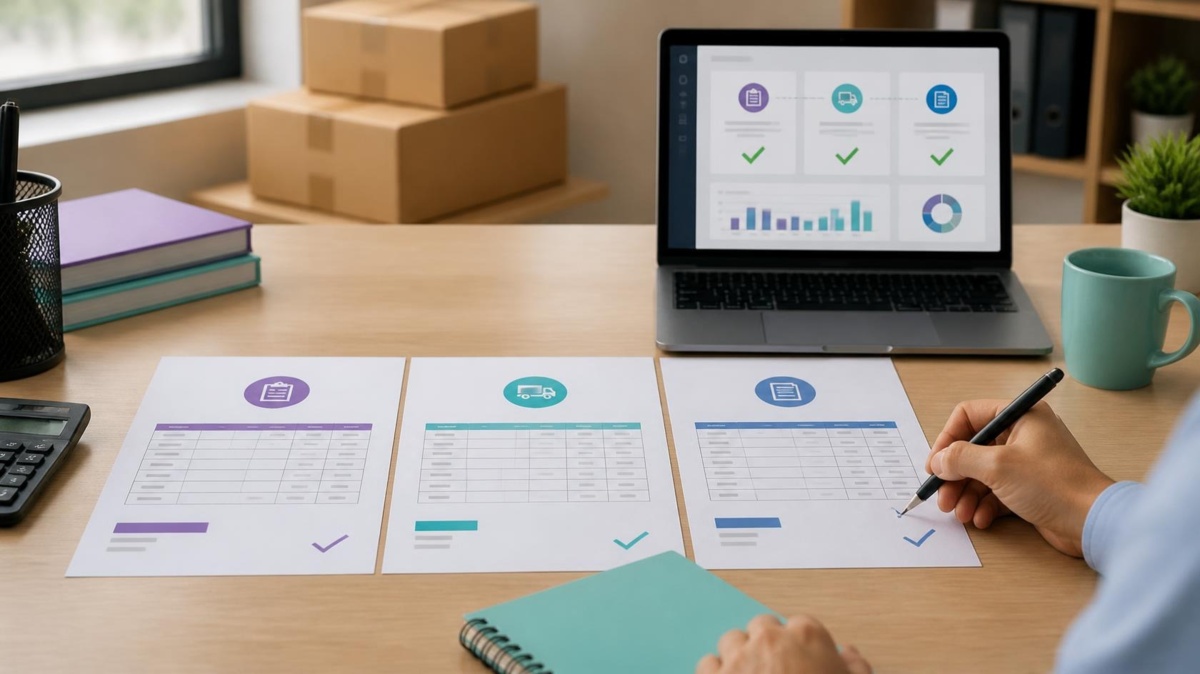
The purchase order records what your organisation agreed to buy and at what price. The GRN confirms what was actually delivered and accepted. The supplier invoice states what the vendor is billing you for. When quantity, price, and item details agree across all three within your tolerance rules, the invoice is approved. When they don't, the invoice is held for investigation.
This three-point verification exists as a financial control. It prevents your team from paying for goods that never arrived, catching price discrepancies before they become overpayments, and flagging duplicate invoices before they reach your ERP system.
What Documents Are Involved in a Three-Way Match?
The Purchase Order
Your procurement or purchasing team issues the PO. It functions as the authorised record of what was ordered, including supplier details, item descriptions, quantities, agreed unit prices, and delivery terms. The PO is the benchmark against which both receipt and billing are measured.
The Goods Receipt Note
Your receiving team, whether that's a warehouse, facilities, or operations function, creates the GRN when the delivery arrives. It captures what was actually received: quantities delivered, condition of goods, partial delivery notes, and the date of receipt. The GRN is your proof that the items reached your premises.
The Supplier Invoice
The supplier sends this document to request payment. It includes a unique invoice number, PO reference, line-item quantities and prices, applicable taxes, and payment terms. The invoice is what the vendor says you owe. Three-way matching confirms whether that claim is accurate before your AP approval workflow releases payment.
How Does Three-Way Matching Work Step by Step?
The three-way matching process follows a defined sequence from procurement through to payment approval. Each step builds on the previous one, and skipping any stage introduces risk.
First, your purchasing team issues a PO in the ERP system. This PO records the agreed items, quantities, and prices. Second, when goods arrive, your receiving team inspects the delivery and logs a GRN, noting quantities received and any discrepancies such as shortages or damaged items.
Third, when the supplier invoice arrives, your AP team retrieves the corresponding PO and GRN. Fourth, the team compares all three documents line by line: do the quantities on the invoice match the GRN? Do the unit prices match the PO? Does the invoice total fall within your configured tolerance?
Invoices that match are approved for payment. Invoices with discrepancies are held as exceptions until the mismatch is investigated and resolved. Only then does payment proceed.
Where Does Manual Three-Way Matching Break Down?
In practice, manual execution is the bottleneck. Your AP analyst opens the invoice, looks up the PO, navigates to the ERP, retrieves the GRN from a separate system, and compares quantities and prices across three documents in different formats.
Timing mismatches are a common failure point. The invoice arrives before the GRN is created because the receiving team hasn't logged the delivery. Your AP team holds the invoice, sends a reminder, and waits. Days pass.
Partial deliveries add complexity. The GRN confirms receipt of 80 units, but the invoice is for 100. Your team must decide whether to approve for the 80 received and dispute the balance, or hold the entire invoice.
At volume, a single PO with 25 line items requires 25 individual comparisons. Tolerance rules get applied inconsistently by different analysts, and duplicate invoices with altered numbers pass through undetected. It's a big part of why so few finance teams have fully automated AP, as our UK accounts payable statistics show.
How Does Automation Solve Three-Way Matching Challenges?
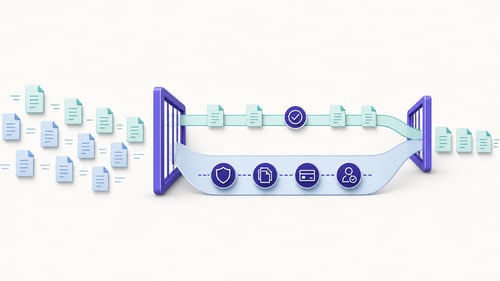
Automated three-way matching addresses each of these failure points by standardising the entire comparison process. The technology captures invoice data using Optical Character Recognition (OCR) and AI extraction, retrieves the corresponding PO and GRN from your ERP, and runs line-level comparisons against your configured tolerance rules.
Where manual matching depends on an analyst remembering to check every field, automation compares vendor details, item descriptions, quantities, unit prices, and totals simultaneously. It applies your tolerance thresholds consistently, whether that's a 3% price variance or a zero-unit quantity tolerance.
Kefron AP runs automated 2-way and 3-way matching at the line level. Invoices that fall within tolerance are approved without manual intervention. Exceptions are routed to an exception handling workspace where your team can review the specific mismatch with all supporting documents visible in one place.
What Is the Difference Between 2-Way and 3-Way Matching?
Two-way matching compares just two documents: the purchase order and the supplier invoice. It verifies that the billed amounts align with what was ordered. However, it does not confirm whether the goods were actually received.
Three-way matching adds the goods receipt note, creating a third verification layer. This additional check catches scenarios that two-way matching misses entirely, such as invoices for items that never arrived, overbilling for partially delivered orders, or billing for goods that were rejected upon inspection.
Two-way matching can be appropriate for low-risk purchases like recurring services or trusted, high-volume suppliers with established track records. Three-way matching is the standard control for physical goods, high-value transactions, and any scenario where partial deliveries are possible. Many organisations run three-way matching as their default and apply two-way matching selectively.
How Does Three-Way Matching Prevent Fraud and Errors?
Three-way matching operates as a financial control at the point where your organisation is most vulnerable: the moment before payment leaves your account. According to the ACFE's 2024 Report to the Nations, nearly a third of organisations detected between one and five fraud attempts in a single year, with many more going undetected.
The three-way match catches specific fraud vectors. A phantom vendor submits an invoice for goods never ordered: the match fails because no PO exists. A supplier inflates quantities on the invoice beyond what was delivered: the GRN shows a lower count. A duplicate invoice arrives with a slightly altered reference number: the system flags that the PO has already been matched and paid.
Beyond fraud prevention, the process catches honest errors. Transposed digits, misplaced decimal points, and incorrect tax calculations are identified before they become overpayments that require time-consuming recovery efforts.
How Does Kefron AP Handle Three-Way Matching?
Kefron AP provides a complete automated invoice processing workflow that includes line-level three-way matching as a core function. The process starts with dynamic PO creation, where your team builds purchase orders with multi-line items, pre-set supplier and GL defaults, and built-in controls for approved vendors and codes.
When goods arrive, the system converts POs into GRNs in a single action, capturing delivered quantities and linking each receipt back to its source PO automatically. Supplier invoices are captured through OCR and AI-powered data extraction, pulling structured data from any invoice format.
The matching engine then runs line-level comparisons across all three documents. Matched transactions flow through to your ERP, whether that's NetSuite, SAP, Sage, or Microsoft Dynamics. Exceptions are surfaced in a dedicated workspace where your team resolves mismatches with full document context, rather than digging through email threads or filing cabinets. This keeps your month-end close on track and your audit trail intact.
In Conclusion: Why Automated Three-Way Matching Matters for Your AP Team
Three-way matching is a proven control that protects your organisation from overpayments, duplicate invoices, and fraudulent billing. The principle is sound. The manual execution is where most finance teams lose time, accuracy, and confidence in their payables data.
Automating the process removes the repetitive document comparison that consumes your AP analysts' hours, applies your tolerance rules consistently across every invoice, and surfaces only the genuine exceptions that require professional judgement. For mid-market finance teams managing growing invoice volumes, that shift from manual checking to exception-based processing is where operational control and efficiency meet. If you're weighing up platforms, our comparison of the best AP automation software for 2026 is a good place to start.
FAQs About Three-Way Matching in Accounts Payable
What is three-way matching in accounts payable?
Three-way matching compares the purchase order, goods receipt note, and supplier invoice before approving payment. It confirms that what was ordered, received, and billed all align within your organisation's tolerance rules, preventing overpayments and errors.
How does automated three-way matching differ from manual matching?
Automated matching uses OCR and AI to extract invoice data and compare it against PO and GRN records at line level. Kefron AP runs this comparison in seconds, routing only exceptions for human review instead of requiring manual checks on every invoice.
Can three-way matching integrate with existing ERP systems?
Yes. Kefron AP integrates with ERP systems including NetSuite, Sage, Oracle, SAP, Microsoft Dynamics, and AccountsIQ. Matched invoices export directly to your accounting system without requiring separate data entry.
When should you use two-way matching instead of three-way?
Two-way matching compares the PO and invoice without verifying goods receipt. It works for recurring services or low-risk purchases from established suppliers. For physical goods and high-value transactions, three-way matching provides the additional delivery verification your controls require.
How does Kefron AP handle exceptions during three-way matching?
When a mismatch occurs, Kefron AP flags the invoice and routes it to a dedicated exception handling workspace. Your team reviews the discrepancy with the PO, GRN, and invoice visible together, resolving the issue before payment proceeds.
What types of fraud does three-way matching help prevent?
Three-way matching catches phantom vendor invoices where no PO exists, overbilling where invoiced quantities exceed delivered amounts, and duplicate invoices submitted with altered reference numbers. Each check adds a verification layer that manual review alone can miss at volume.