
Effective AP Performance Management Strategies for Improved Efficiency
Explore comprehensive strategies for effective AP performance management, including the importance...
Accounts payable reconciliation is a critical financial process for businesses of all sizes. Ensuring that the amounts recorded in the accounts payable ledger match those on supplier invoices and statements is essential for maintaining accurate and reliable financial records. This article delves into the importance of accounts payable reconciliation, outlines the steps involved, addresses common challenges, and explores the benefits of using automation tools like Kefron AP to streamline the process.
Accounts payable reconciliation is a fundamental financial process used by businesses to verify that the amounts recorded in their accounts payable ledger align with the amounts on supplier invoices and statements. This process involves comparing the accounts payable aging report, supplier invoices, and supplier statements to identify and resolve any discrepancies. Ensuring accurate records helps prevent financial mismanagement, avoids overpayments or underpayments, and maintains the reliability of financial statements.
The primary objective of accounts payable reconciliation is to confirm that the amounts due to suppliers are accurate and complete. This helps prevent financial errors and ensures that the company’s financial statements reflect a true and fair view of its financial position. Regular reconciliation also supports good relationships with suppliers by ensuring timely and accurate payments, fostering trust and reliability.
Reconciliation of accounts payable involves several systematic steps to ensure the accuracy of financial records. Here’s a comprehensive guide on how to perform accounts payable reconciliation effectively.
Supplier statement reconciliation is another essential aspect of the accounts payable process. This involves verifying that the amounts on supplier statements match those recorded in the company’s accounts payable ledger. Regularly performing supplier statement reconciliation helps maintain accurate records and fosters strong relationships with suppliers. By comparing supplier statements with the company’s internal records, businesses can identify and resolve discrepancies promptly, demonstrating a commitment to transparency and reliability in financial dealings.
An accounts payable aging report is an essential tool used in accounts payable reconciliation. This report provides a snapshot of outstanding supplier invoices, categorized by the length of time they have been outstanding. Typically, the aging report segments payables into time periods such as current, 1-30 days past due, 31-60 days past due, and so on.
The accounts payable aging report is crucial for managing cash flow and understanding the company’s short-term financial obligations. By analysing the aging report, businesses can identify which invoices are overdue and prioritise payments to avoid late fees and maintain good supplier relationships. This report also helps in identifying potential issues with cash flow and allows businesses to make informed financial decisions.
Accounts payable reconciliation can be a complex and time-consuming task, often fraught with various challenges.
One of the most common challenges is dealing with discrepancies and errors. These can arise from various sources such as data entry mistakes, lost invoices, or incorrect recording of transactions. Identifying and resolving these discrepancies requires careful examination and verification of financial documents.
Many businesses still rely on manual processes for accounts payable reconciliation. This can be labour-intensive and prone to human errors. Manual processing also makes it difficult to keep track of all transactions and can lead to delays in identifying and resolving discrepancies.
Businesses dealing with a high volume of transactions may struggle to keep up with the reconciliation process. The large number of invoices and payments can make it challenging to ensure that all records are accurate and up-to-date.
The use of automation tools for accounts payable reconciliation can significantly improve efficiency and accuracy.
Automation tools integrate with existing financial systems to streamline the reconciliation process. Here’s how they typically work:
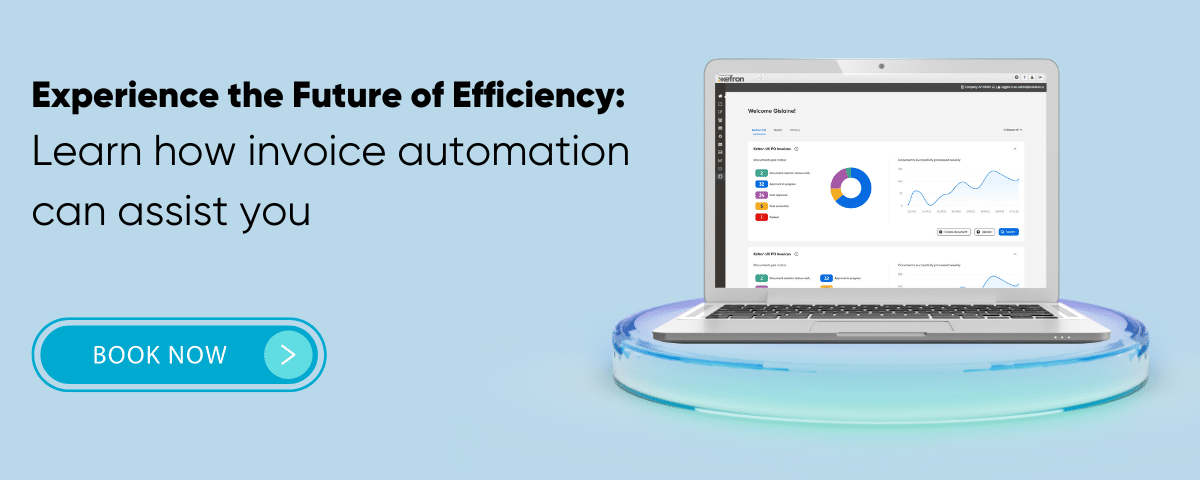
Kefron AP is a robust automation tool designed to enhance the efficiency of accounts payable reconciliation. It digitises invoices for seamless processing, approval, and record-keeping. Whether invoices arrive by post, fax, or email, Kefron AP can process them within minutes, handling data entry and validation so that staff only need to manage exceptions.
As businesses continue to navigate the complexities of financial management, the integration of advanced automation tools like Kefron AP will play an increasingly critical role. By automating repetitive and error-prone tasks, companies can ensure that their accounts payable reconciliation processes are not only efficient but also accurate and secure.
The transition from manual to automated accounts payable reconciliation is more than just a trend; it’s a necessity for modern businesses. Automation tools provide the scalability needed to handle growing volumes of transactions without compromising accuracy. As a result, businesses can focus more on strategic financial management rather than getting bogged down by routine administrative tasks. See how month end close automation helps teams close the books faster.
Automation tools like Kefron AP are designed with continuous improvement in mind. They leverage cutting-edge technology to adapt to changing business needs, ensuring that the reconciliation process remains efficient and effective. This adaptability is crucial for businesses looking to maintain a competitive edge in an increasingly digital world.
Accounts payable reconciliation is a vital process for maintaining financial accuracy and stability. By adopting automation tools like Kefron AP, businesses can streamline their reconciliation processes, reduce errors, and enhance overall efficiency. As companies continue to embrace digital transformation, the role of automation in accounts payable reconciliation will only become more significant, driving improvements in financial management and fostering stronger relationships with suppliers.
Incorporating technology into accounts payable reconciliation processes enhances efficiency, accuracy, and security. Automation tools like Kefron AP simplify data entry, streamline reconciliation reporting, and integrate seamlessly with financial systems. These advancements allow businesses to maintain accurate financial records, prevent fraud, and foster stronger relationships with suppliers. Regular and automated reconciliation practices not only streamline operations but also build a foundation of financial integrity and trust with suppliers.