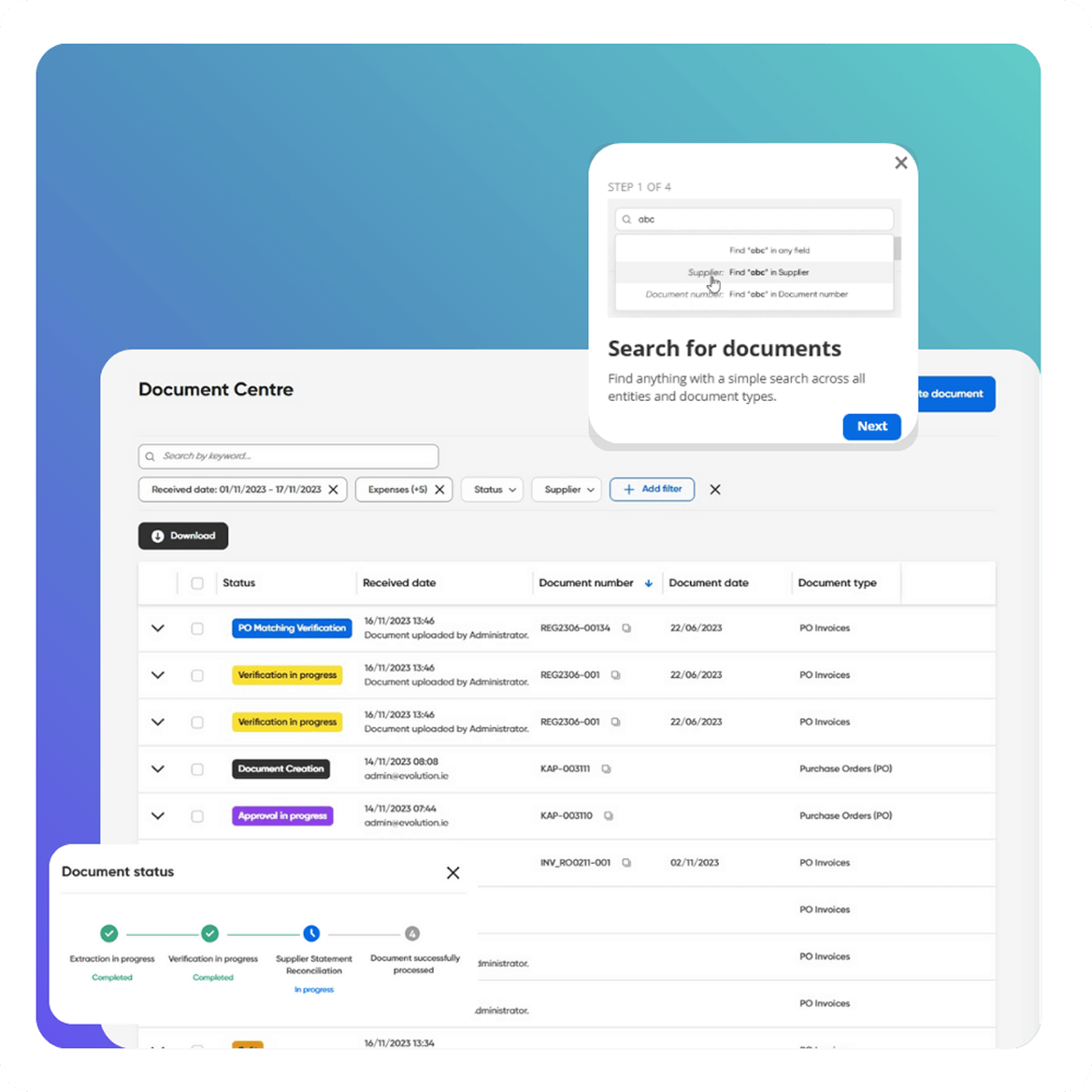
Kefron AP automation cost is based on invoice volume, not user count. Add approvers, suppliers, entities and currencies without the price moving. Implementation is a one-off fee based on your workflow complexity and ERP environment, quoted upfront.
Your price reflects your real AP workload. There are no add-ons or per-user fees. You also avoid inflated AP software costs seen with competitors.
Pricing flexes with your invoice volume so you only pay for what you actually automate.
Your one-off setup fee is based on your workflow complexity and ERP environment.
Every plan comes with the full AP automation suite, no add-ons needed.
Your pricing stays predictable with no extra charges for users, suppliers, or entities.
From faster processing and cleaner month-end close to year-one payback, Kefron AP delivers measurable gains in speed, accuracy, and ROI.
reduction in invoice
processing time
reduction in
approval time
of time saved
processing month-end
return on
investment
Automate monthly statement checks and eliminate manual matching work.
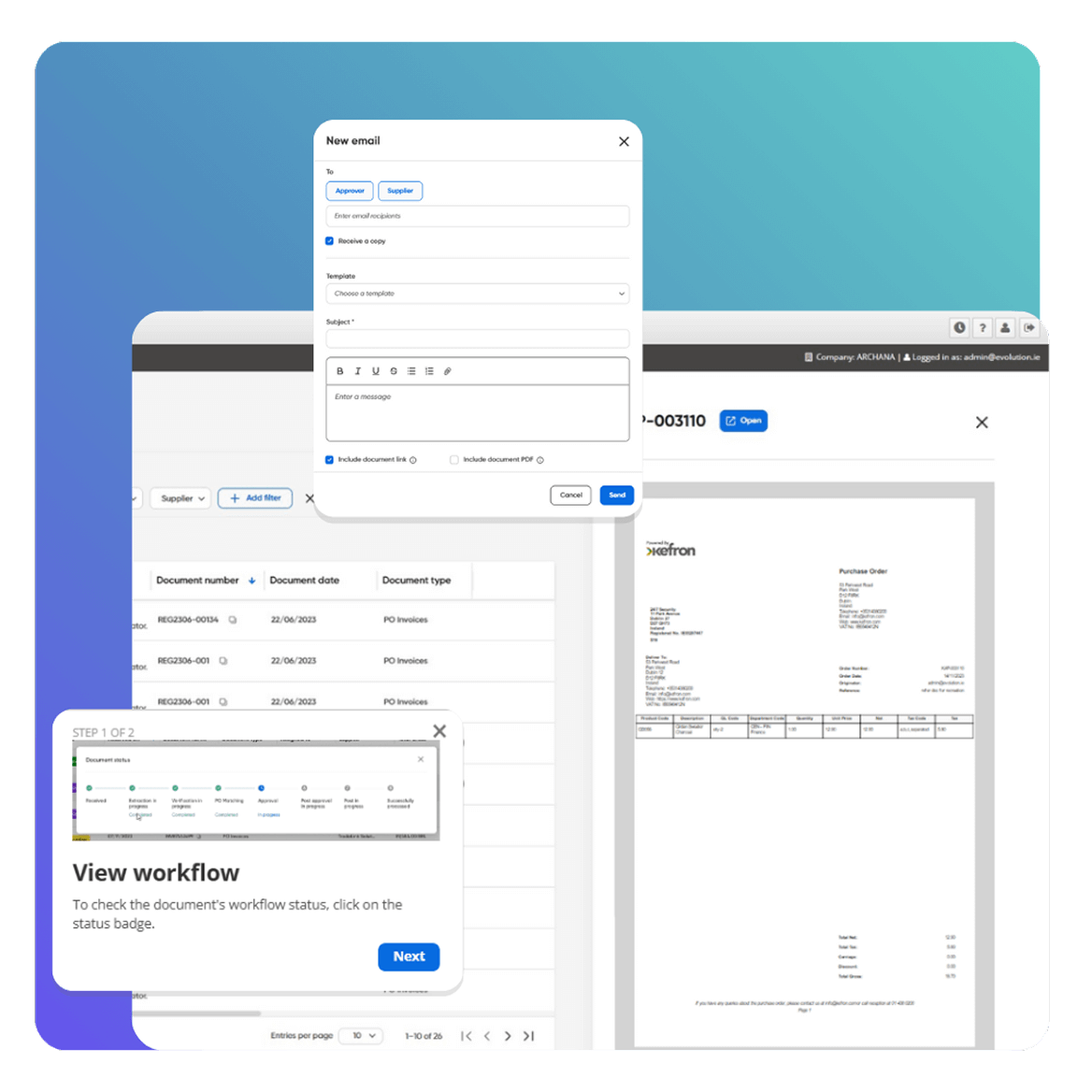
A modern PO solution that replaces clunky ERP add-ons and reduces AP workload.
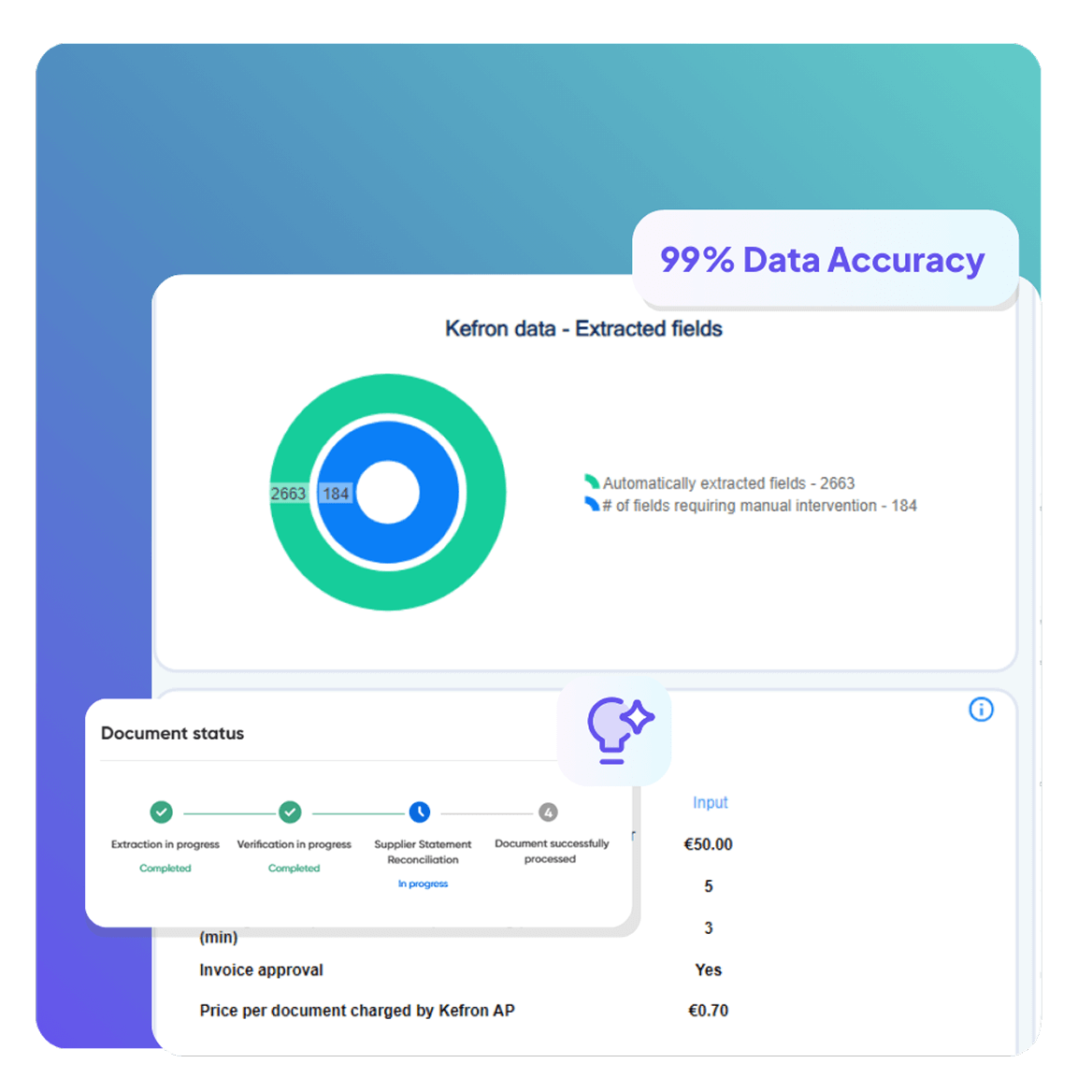
Achieve 99%+ accuracy with AI extraction backed by Kefron’s expert data team.
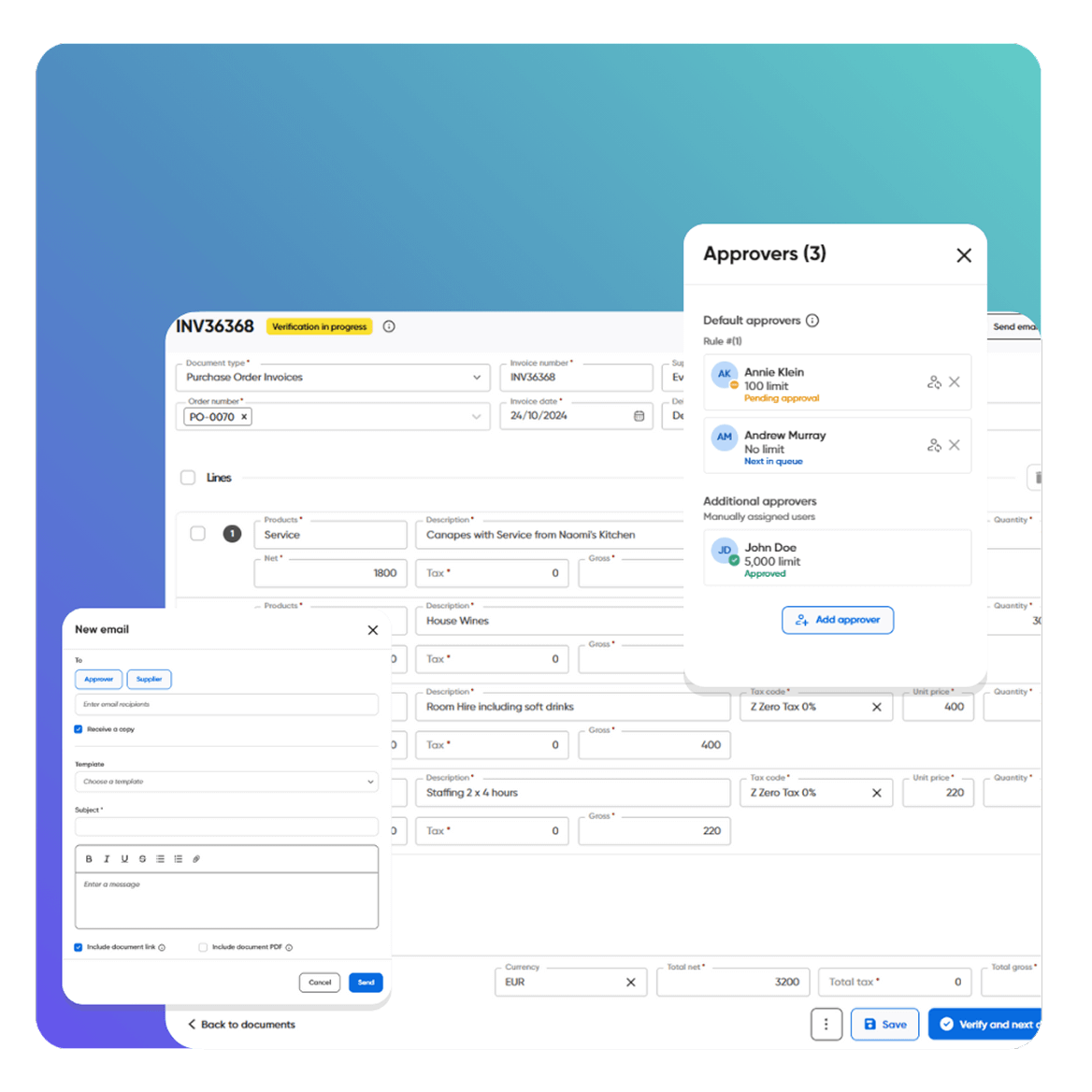
A single interface to view, edit, approve, and track invoices with fewer clicks.
Share your invoice volume and workflow details to receive a tailored pricing proposal with projected ROI, accuracy gains, and implementation scope.

Most AP automation platforms charge either a per-invoice fee, often low single digits at scale, or a subscription based on volume bands. Nearly all apply a one-time implementation fee, usually starting in the low thousands and rising with ERP complexity and number of entities. Kefron AP pricing is driven by invoice volume with a one-off implementation fee, and no per-user, per-approver or per-supplier charges.
Kefron AP pricing is driven primarily by the volume of invoices you process, following a pay-for-what-you-process model. Implementation is a separate one-off fee based on your workflow complexity, number of entities and ERP environment. User count, approver count, supplier count and number of entities do not affect the price.
AP automation pricing is how vendors charge for software that automates invoice capture, coding, matching and approval. It usually scales with invoice volume, user or approver count, number of entities, and integration depth. The pricing model matters more than the headline rate, because each model behaves differently as your business grows.
There are five common models: per invoice, flat subscription for a defined volume band, per user per month, hybrid models combining these, and quote-only enterprise pricing with no published structure. Many vendors apply volume tiers so the per-invoice rate falls as volume rises. Kefron AP uses volume-based pricing.
With per-invoice pricing you pay a set amount for each invoice processed, usually within volume bands so higher volumes reduce the unit price. It suits organisations that want cost to track activity and growth rather than headcount. Kefron AP works this way, so seasonal spikes and quiet months are reflected in what you pay.
A flat-rate subscription charges a fixed monthly or annual fee for a defined invoice range or feature bundle. It is cost-effective for organisations with steady, high invoice volumes because you are not billed per invoice inside the agreed band. Always confirm the overage rules for exceeding that band.
Yes. Capacity grows with your business, so expansion, new entities and seasonal invoice spikes are absorbed without renegotiating licences. Because pricing follows volume processed rather than seats purchased, you are not paying for unused capacity in quieter months.
Every plan includes unlimited users, approval roles, suppliers, entities and currencies; AI extraction with human validation for 99%+ data accuracy; workflows, audit trails and controls; ERP integration and training; and free workflow changes and rule updates. Platform updates and customer support are part of ongoing service rather than separate upgrade charges.
Core AP automation is one price based on invoice volume.Supplier statement reconciliation is priced separately at a fixed monthly cost based on statement volume. The Purchase Order Module is also priced separately, with no license fees or per-user charges. Implementation is a one-off fee quoted upfront.
In order of impact: invoice volume, number of users and approvers, number of entities or regions, ERP integration depth, implementation complexity, and any modules beyond core AP. Pricing rises fastest when your environment is high-volume, multi-entity and heavily integrated. Kefron AP removes the second and third of those from the calculation.
Divide your total AP costs over a period by the number of invoices processed in that period. Include labour, overhead, software, scanning, supplier query handling, late payment work and reprocessing caused by errors. Most teams underestimate the last three. This baseline is what any ROI calculation should be measured against.
Compare your current cost per invoice against your projected cost per invoice after automation, then set the annual saving against the platform fee and one-off implementation cost. Include time saved on approvals and month-end close, not just data entry. Kefron's savings calculator produces a baseline figure from your invoice volume and current handling time.
Payback typically lands within 9 to 12 months, depending on invoice volume, exception rates and workflow complexity. Returns come from lower cost per invoice, fewer errors and duplicate payments, faster approvals, improved cash-flow visibility and finance time freed for other work.
Budget for two layers: recurring pricing based on invoice volume or subscription, and a one-time implementation cost covering process design, ERP integration, data migration, testing, training and rollout. Multi-entity or multi-region deployments need more configuration, which raises the implementation figure. Kefron AP quotes implementation upfront as a fixed project estimate.
Higher volume raises total spend but almost always unlocks a lower per-invoice rate or a better subscription tier. In practice AP automation becomes more cost-efficient as invoice load grows, which is the opposite of per-user pricing, where cost rises with every person you add.
Multi-entity, multi-currency and multi-region setups require more workflow logic, tax and VAT handling and integration mapping, which raises the one-off implementation fee. With Kefron AP the number of entities and currencies does not affect ongoing pricing, because that is driven by invoice volume.
Yes. Capacity grows with your business, so expansion, new entities and seasonal invoice spikes are absorbed without renegotiating licences. Because pricing follows volume processed rather than seats purchased, you are not paying for unused capacity in quieter months.
Easy and fast adjustments of elements is possible with Core template. Find our more about our all-in-one programmatic template.