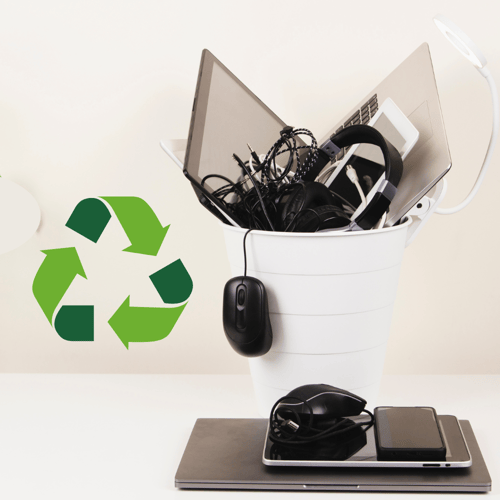
Choosing an ITAD Provider in Ireland for Commercial Businesses
Choosing an ITAD provider is one of those decisions that looks straightforward until something goes...
Key Takeaways
Every year, businesses across Ireland and the UK spend millions upgrading their technology infrastructure. Laptops are refreshed, servers are replaced, networking equipment is upgraded, and mobile devices are swapped out for newer models.
Yet when the new hardware arrives, an important question is often overlooked:
What happens to the equipment it replaces?
For many organisations, retired IT assets are treated as an afterthought. Devices are boxed up and moved to a storage room. Old servers remain in racks long after they've been decommissioned. Mobile phones sit in drawers waiting for someone to decide what to do with them.
The assumption is simple: once equipment has been fully depreciated on the balance sheet, it no longer has any meaningful value.
In reality, the opposite is often true.
Across the growing market for refurbished IT equipment, enterprise hardware, component harvesting, and materials recycling, many organisations are sitting on assets worth thousands—or even tens of thousands—of euros.
The challenge is that most businesses don't realise it until the opportunity has already passed.
One of the biggest misconceptions surrounding IT asset disposal is the belief that accounting value reflects market value.
It doesn't.
Most business laptops, desktops, servers, and networking equipment are depreciated over three to five years. Once they reach the end of that accounting cycle, their book value falls to zero.
That makes sense for financial reporting.
It does not mean the hardware suddenly loses its usefulness.
A well-maintained three-year-old business laptop can still perform everyday productivity tasks with ease. Enterprise servers often continue operating reliably for years beyond their accounting lifespan. Network switches, wireless access points, storage arrays, and mobile devices can all retain substantial value in secondary markets.
The reality is simple:
An asset can be fully depreciated on your balance sheet while remaining highly desirable to buyers.
| Asset Age | Accounting Value | Potential Market Value |
|---|---|---|
| New Device | High | High |
| 3 Years Old | Low | Moderate to High |
| Fully Depreciated | €0 | Often Significant |
| End of Life | €0 | Component & Recycling Value |
Figure 1: Book Value vs Market Value
The gap between accounting value and market value is where many organisations unknowingly leave money behind.
The market for refurbished technology has expanded significantly over the past decade.
Several factors are driving demand:
Businesses that once purchased only brand-new equipment are increasingly considering refurbished alternatives, particularly for non-critical applications.
Schools, charities, start-ups, managed service providers, and organisations operating under tight budgets actively seek quality refurbished hardware that offers enterprise-grade performance at a lower cost.
As a result, retired business equipment often enters a vibrant secondary market rather than becoming waste.
The answer varies depending on age, specification, condition, and market demand. However, many organisations are surprised by how much value remains in seemingly obsolete equipment.
Modern business laptops are among the most commonly traded assets in the refurbished market. Devices from major manufacturers such as Dell, Lenovo, and HP can retain meaningful value even after several years of use. For organisations replacing hundreds of laptops during a refresh cycle, the combined resale value can quickly reach tens of thousands of euros.
Servers often represent the highest-value assets in an IT estate. Equipment from enterprise manufacturers continues to attract demand from businesses seeking cost-effective infrastructure solutions. Even when complete servers are not resold, the internal components frequently carry significant value.
Corporate smartphones and tablets are often overlooked during asset disposal planning. Yet they frequently provide some of the highest recovery values relative to their size and original cost. A large-scale mobile device refresh can generate substantial returns when managed correctly.
Switches, routers, firewalls, and wireless infrastructure continue to perform long after many organisations replace them.
Secondary buyers often seek proven enterprise-grade networking equipment rather than investing in expensive new hardware.
Many businesses focus only on whole-device resale, overlooking the multiple layers of value contained within each asset.
Many organisations postpone disposal decisions.
The hardware gets moved into storage while teams focus on higher-priority projects.
Unfortunately, every month spent in storage can reduce the potential value recovery.
Technology depreciates rapidly.
A laptop worth €250 today may be worth considerably less in twelve or twenty-four months. Servers, storage equipment, and mobile devices follow similar patterns.
The longer equipment remains unused, the greater the risk of:
In effect, businesses are often watching recoverable value disappear while equipment gathers dust.
Financial value is only part of the equation.
Old hardware frequently contains sensitive information, including:
Many organisations mistakenly believe a factory reset or quick format permanently removes data.
In reality, data can often be recovered unless specialist data destruction methods are used.
This creates significant compliance and cybersecurity risks.
A professional IT asset disposition (ITAD) process combines value recovery with certified data destruction, ensuring organisations protect sensitive information while maximising returns.
.png?width=1920&height=1080&name=Extended%20lead%20times%20and%20elevated%20hardware%20costs%20Ongoing%20(2).png)
Figure 3: Modern IT Asset Disposition Process
This structured approach helps organisations recover value without compromising security or compliance.
One of the most overlooked aspects of IT asset recovery is that value exists even when a device can no longer be resold.
Professional ITAD providers evaluate equipment at multiple levels.
A laptop that is too old for refurbishment may still contain:
Similarly, enterprise servers contain valuable processors, memory, drives, and controller cards that can be sold independently.
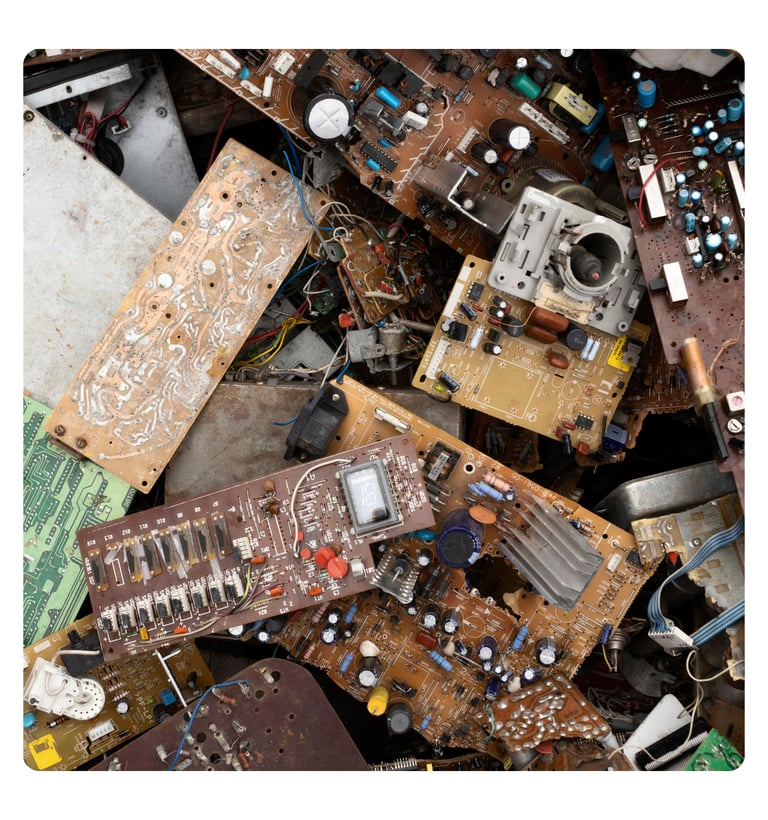
Even equipment that has reached the end of its operational life contains recyclable materials such as:
This means that virtually every asset retains some level of recoverable value.
The key is having a process capable of identifying and extracting it.
Many organisations devote significant attention to procuring new technology. Budgets are scrutinised. Vendors are evaluated. Refresh strategies are planned months in advance. Yet disposal often receives little strategic attention. That approach is increasingly outdated.
Forward-thinking organisations now view IT asset disposal as a critical part of broader IT lifecycle management.
Instead of asking:
"How do we get rid of this equipment?"
They ask:
"How much value can we recover while ensuring compliance and security?"
That shift in mindset transforms disposal from a cost centre into a revenue-generating activity.
The secondary market for enterprise technology continues to grow.
Businesses, schools, charities, and organisations worldwide actively seek quality refurbished equipment. Component markets remain strong. Recyclers continue recovering valuable materials from end-of-life devices.
The result is that fully depreciated hardware is rarely worthless.
In many cases, the laptops, servers, switches, mobile devices, and storage systems sitting in your office today still have significant financial value.
The question is whether your organisation has a process in place to recover it.
Because every month that equipment remains forgotten in storage, its value declines—and so does the opportunity to turn retired IT assets into measurable returns for the business.