Choosing an ITAD Provider in Ireland for Commercial Businesses
Choosing an ITAD provider is one of those decisions that looks straightforward until something goes...
IT asset disposal is the process of securely and compliantly retiring end-of-life IT equipment — covering data destruction, WEEE-compliant recycling, and where possible, asset resale. For businesses in Ireland, it is a legal obligation under both GDPR and the WEEE Directive, not simply a facilities task. This guide explains what IT asset disposal involves, what Irish businesses are legally required to do, how secure data destruction works, and what to look for in an ITAD provider.
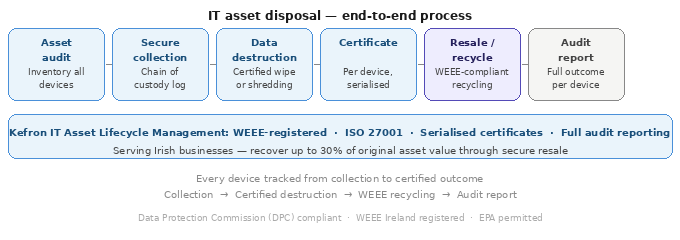
Figure 1: The end-to-end IT asset disposal process — from asset audit through to certified data destruction and WEEE-compliant recycling.
IT asset disposal — commonly known as ITAD — is the process of securely and responsibly managing IT equipment at the end of its useful life. It goes significantly beyond throwing old hardware in a skip or leaving it in a storage room.
A full IT asset disposal service covers:
| Stage | What Happens |
|---|---|
| Asset audit | Inventory of all devices by type, make, model and data-bearing status |
| Secure collection | Tracked pickup with chain of custody documentation from your premises |
| Data destruction | Certified wiping, degaussing or physical shredding of all storage devices |
| Certificate of destruction | Serialised certificate issued per device, proving data is unrecoverable |
| Refurbishment and resale | Viable equipment securely refurbished and resold to recover value |
| WEEE-compliant recycling | Remaining materials broken down and recycled through approved channels |
| Audit reporting | Full asset report documenting the outcome of every device |
The distinction between IT asset disposal and IT asset recycling is worth noting. Recycling is one outcome of disposal — it describes what happens to the physical materials. Disposal is the end-to-end process, of which recycling is the final step for devices that cannot be resold or refurbished.
→ Learn about Kefron's IT Asset Lifecycle Management service
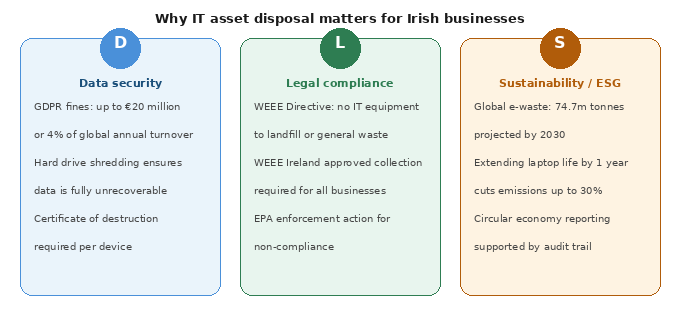
Figure 2: The three reasons every Irish business needs a formal IT asset disposal process.
There are three distinct reasons an Irish business needs a formal IT asset disposal process — and doing nothing carries real consequences in all three.
Every device your business has ever used — laptops, desktops, servers, phones, printers — holds data. Deleting files or performing a factory reset does not make that data unrecoverable. Without certified data destruction, sensitive information including customer records, financial data, employee files and intellectual property can be recovered from disposed devices by anyone with basic technical knowledge.
A data breach resulting from improperly disposed IT equipment is a GDPR violation. Under Ireland's Data Protection Act 2018 and the EU GDPR, the Data Protection Commission can impose fines of up to €20 million or 4% of global annual turnover — whichever is higher. The Irish DPC has issued over €3.5 billion in fines since 2018, making it one of the most active data protection regulators in Europe.
The WEEE Directive (Waste Electrical and Electronic Equipment) requires Irish businesses to ensure end-of-life IT equipment is recycled through approved channels — it cannot go to general waste or landfill. WEEE Ireland administers the national compliance scheme. Failure to comply can result in enforcement action from the Environmental Protection Agency.
Beyond WEEE, businesses must also consider data retention and destruction obligations under GDPR, sector-specific regulations (particularly in healthcare and finance), and any contractual obligations around data handling with clients or partners.
Global e-waste is projected to reach 74.7 million tonnes by 2030, making it one of the fastest-growing waste streams in the world. For businesses in Ireland with ESG commitments, how you handle end-of-life IT equipment is increasingly a board-level concern. Certified IT asset disposal provides the audit trail and documentation needed to support sustainability reporting.
Extending a device's life through refurbishment before recycling also has a measurable impact — research from McKinsey indicates that extending a laptop's lifespan by just one year can reduce its total lifecycle emissions by up to 30%.
💡 Expert Insight The most common mistake Irish businesses make is treating IT disposal as a facilities issue rather than a compliance issue. The moment a data-bearing device leaves your premises without a documented chain of custody and a certificate of destruction, you have lost control of that data — and the legal liability that comes with it.
Any device that has held, processed or transmitted data needs to go through a formal disposal process. This includes equipment that is commonly overlooked:
| Device Type | Data Risk | Disposal Method |
|---|---|---|
| Laptops and desktops | High — drives, SSDs | Shredding or certified wipe |
| Servers | Very high — large storage volumes | Shredding or certified wipe |
| Mobile phones and tablets | High — local storage, accounts | Certified wipe or shredding |
| Printers and MFDs | Medium — internal storage, logs | Certified wipe or destruction |
| Networking equipment | Medium — config, credentials | Certified wipe or destruction |
| External hard drives and USBs | High | Shredding |
| Monitors and peripherals | Low — no internal storage | WEEE-compliant recycling |
| Tapes and legacy media | High | Physical destruction |
Printers and multifunction devices are frequently overlooked. Modern office printers store copies of every document scanned, printed or emailed — and most businesses have no process for clearing this data before disposal.
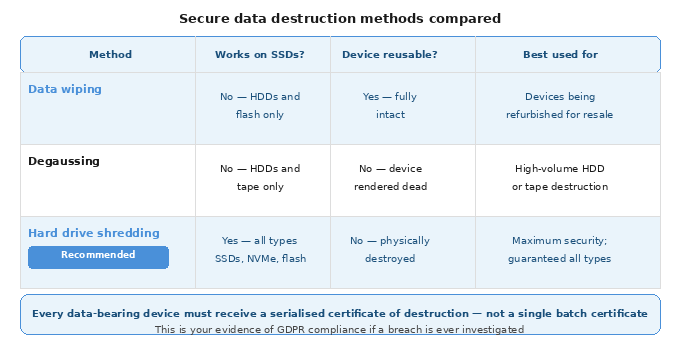
Figure 3: The three certified data destruction methods — when each is appropriate and what it guarantees.
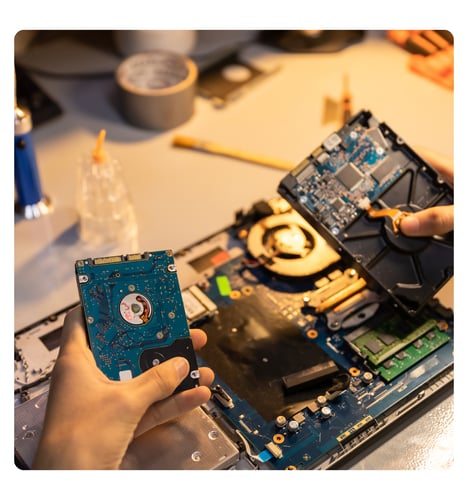
Data destruction must happen before any device leaves your premises or before it is handed to a disposal provider — and it must be certified. There are three methods, each appropriate in different circumstances:
Software-based overwriting of all storage sectors to NIST 800-88 or DoD 5220.22-M standards. Appropriate for devices being refurbished for resale where the hardware needs to remain intact. Produces a verifiable wipe report per device.
Exposure to a powerful magnetic field that destroys the magnetic data on traditional hard drives and magnetic tape. Fast and effective for large volumes of HDDs, but does not work on SSDs or flash storage. Renders the device non-functional.
Physical destruction of the storage device into fragments small enough that data recovery is impossible. The only method guaranteed to work on all storage types including SSDs, NVMe drives and flash memory. Hard drive shredding can be performed on-site at your premises or off-site at a secure facility.
Every data-bearing device that goes through destruction must receive a serialised certificate of destruction — a document that records the device make, model, serial number, destruction method, date and the operative who carried it out. This is your proof of GDPR compliance if a breach is ever investigated.
A provider who does not issue individual certificates per device — as opposed to a single certificate for a batch — is not operating to the standard Irish businesses need.
→ Learn more about Kefron's secure data destruction services
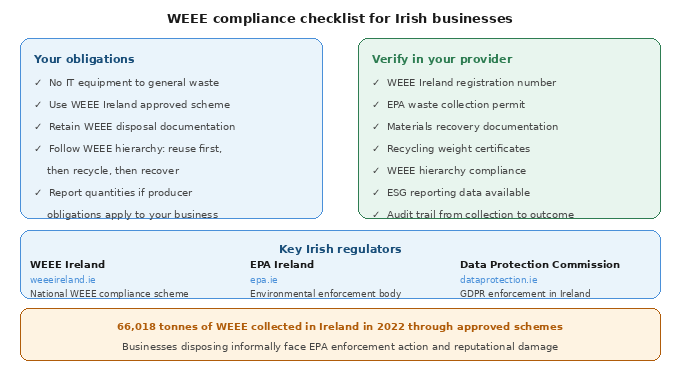
Figure 4: WEEE compliance obligations for Irish businesses and what to verify in a disposal provider.
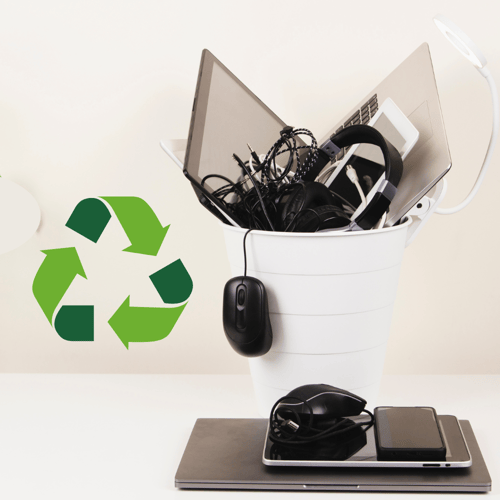
The WEEE Directive applies to all electrical and electronic equipment. For Irish businesses it means you cannot dispose of IT equipment through general waste — you are legally required to ensure it is collected and recycled through an approved WEEE compliance scheme.
WEEE Ireland is the main compliance scheme for business WEEE in Ireland, operating under authorisation from the EPA. A certified IT asset disposal partner will be registered with WEEE Ireland and will handle all obligations on your behalf.
In 2022, 66,018 tonnes of WEEE were collected in Ireland through approved schemes. Businesses that handle disposal informally — through unapproved collectors or general waste — face EPA enforcement action and potential reputational damage.
Disposal does not have to mean pure cost. A professional ITAD provider will assess every device in your asset audit for residual value before determining its disposal route.
Kefron's IT Asset Lifecycle Management service offers the ability to recover up to 30% of original asset value through secure refurbishment and resale of eligible equipment. The process works as follows:
For a business retiring a fleet of 200 laptops, even partial value recovery can meaningfully offset the cost of the disposal programme. It also supports circular economy principles — keeping functional equipment in use rather than sending it straight to recycling.
→ Read about the top reasons to manage IT asset recycling effectively
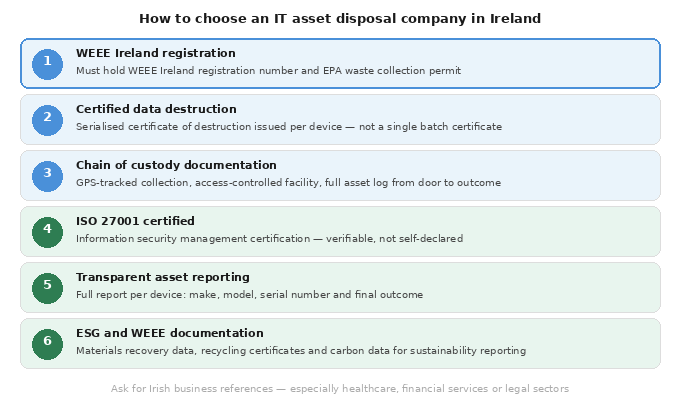
Figure 5: Use this checklist to evaluate IT asset disposal providers before appointing one.
Not all ITAD providers operate to the same standard. These are the criteria Irish businesses should use to evaluate any provider before engaging:
WEEE registration Must be registered with WEEE Ireland and hold an EPA waste collection permit. Ask for registration numbers — do not accept a verbal assurance.
Certified data destruction Must issue individual serialised certificates of destruction per device. Ask specifically whether certification is per device or per batch.
Chain of custody documentation Every asset must be logged from collection at your premises through to its final outcome. GPS-tracked vehicles and access-controlled facilities are the standard for serious providers.
Transparent asset reporting You should receive a full report per disposal project detailing every device by make, model, serial number and outcome (resold, recycled, destroyed). This supports your GDPR and ESG reporting.
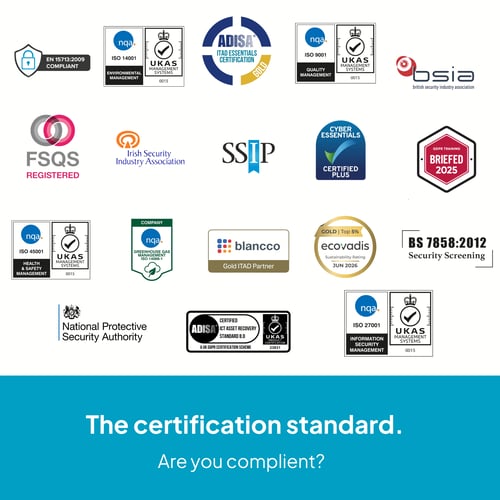
ISO 27001 certification Confirms the provider manages information security to an internationally recognised standard — relevant given the sensitive nature of data-bearing devices they handle.
ESG documentation For businesses with sustainability reporting obligations, your provider should supply materials recovery data, recycling weight certificates and carbon impact documentation.
References from comparable Irish businesses Ask for case studies or references from Irish organisations of comparable size and sector — particularly if you have specific regulatory requirements (healthcare, financial services, legal).
→ See how Kefron handles secure IT asset disposal end to end
What is IT asset disposal? IT asset disposal (ITAD) is the end-to-end process of retiring end-of-life IT equipment securely and compliantly. It covers data destruction, WEEE-compliant recycling, asset resale where applicable, and full audit documentation — not simply collecting and discarding old hardware.
Is IT asset disposal a legal requirement in Ireland? Yes, in two ways. The WEEE Directive requires all electrical and electronic equipment to be disposed of through approved recycling channels — not general waste. And GDPR requires that personal data stored on devices is permanently destroyed before disposal. Both obligations carry enforcement consequences.
What is the difference between data wiping and hard drive shredding? Data wiping uses software to overwrite storage sectors and is appropriate for devices being refurbished for resale. Hard drive shredding physically destroys the device and is appropriate where maximum security is required or where the hardware has no resale value. Shredding is the only method guaranteed to work on all storage types including SSDs.
What is a certificate of destruction? A certificate of destruction is a document issued per device confirming that data has been permanently destroyed. It records the device make, model, serial number, destruction method, date and operative. It is your evidence of GDPR compliance if a data breach investigation ever occurs.
What happens to IT equipment after disposal? Viable equipment is assessed for refurbishment and resale. Equipment that cannot be resold undergoes WEEE-compliant recycling — broken down into recoverable materials including metals, plastics and rare earth elements. Only devices requiring data destruction by shredding are physically destroyed; the resulting materials are still recycled.
How much does IT asset disposal cost in Ireland? Cost depends on volume, device types, and the level of service required (on-site vs off-site shredding, resale assessment, reporting depth). Many organisations find that recovered resale value offsets a significant portion of disposal cost — in some cases the entire programme cost. Contact Kefron for a no-obligation quote.
Can we recover value from old IT equipment? Yes — up to 30% of original asset value can be recovered through secure refurbishment and resale of eligible devices. The recovery potential depends on device age, condition and current secondary market demand. A professional ITAD provider will assess every device before determining its disposal route.
IT asset disposal is not a back-office task — it is a data security, legal compliance and sustainability obligation that every Irish business faces whenever equipment reaches end of life. The cost of getting it wrong — a GDPR fine, a data breach, an EPA enforcement action, far exceeds the cost of working with a certified ITAD provider.
The right partner handles everything from collection and certified data destruction through to WEEE-compliant recycling and value recovery, with full documentation at every step.
Talk to the Kefron team about IT asset disposal for your business →