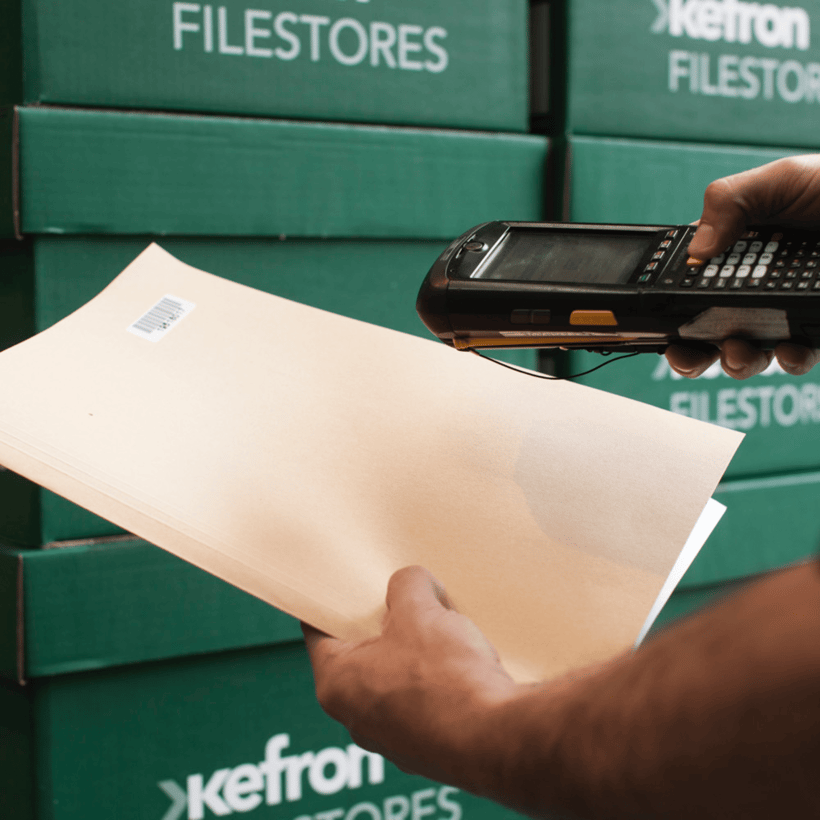
See how bulk document scanning and high-volume digitisation can transform how your business works. This guide covers cost savings, security and compliance with GDPR and ISO 27001, plus best practices, tools and the industries that benefit most. Learn how OCR makes documents easier to find and why a document management system (DMS) matters.
Why Bulk Document Scanning Matters in the Digital Age
Bulk document scanning is now essential for companies that want to digitise and manage their records efficiently. Law firms, healthcare providers and financial institutions all handle huge volumes of paper. That takes time, costs money and leads to mistakes.
According to AIIM, organisations that digitise their documents see a 30-50% increase in efficiency. That makes bulk scanning a key investment for better workflows and compliance.
What Is Bulk Document Scanning?
Bulk document scanning turns large volumes of paper documents into digital files. It uses high-speed scanners and Optical Character Recognition (OCR) technology. Traditional scanning handles one page at a time. High-volume scanning is built for large projects, so it cuts manual work and makes documents easier to access.
Key Benefits of High-Volume Scanning:
High-volume scanning offers many benefits beyond going digital. You can find documents faster, cut costs, improve security and be more sustainable. Here are the key benefits:
Increased Efficiency
- Removes slow manual data entry and searching, so documents are available instantly.
- Advanced OCR indexes documents automatically, which greatly reduces human error.
- Adding scanned documents to a Document Management System (DMS) improves workflow automation and teamwork.
Cost Reduction
- Cuts the cost of physical storage, including rent, filing cabinets and paper.
- Reduces admin costs, because no one needs to handle or retrieve paper files.
- Boosts productivity, so staff can focus on valuable work instead of data entry.
Enhanced Security
- Digital documents can be encrypted and stored securely in a cloud-based system, which stops unauthorised access.
- Multi-level sign-in and audit trails track who opens each document, which protects data and supports compliance.
- Digital files reduce the risk of breaches from lost or stolen paper.
Regulatory Compliance
- Supports standards such as GDPR, ISO 27001, HIPAA and SOX, so sensitive information stays protected.
- Automatic retention policies help you follow legal rules on keeping and destroying documents.
- Secure digital archives keep audit trails ready for inspections and reporting.
Environmental Sustainability
- Cuts paper waste and supports a greener business through digital workflows.
- Lowers your carbon footprint by reducing printing, copying and paper use.
- Encourages eco-friendly habits by relying less on paper and physical storage.
Improved Disaster Recovery
- Digital backups protect key records from fire, flood and other events.
- Cloud storage keeps extra copies and allows remote access, so data is less likely to be lost.
- Automated backup and recovery plans help you get back to work quickly after a crisis.
Industries That Benefit from Bulk Document Scanning
Many industries use bulk scanning to work more efficiently, stay compliant and protect documents. Here are the sectors that benefit most.
1. Legal Firms & Corporate Offices
Law firms handle thousands of paper case files. High-volume scanning lets legal teams search, find and share case documents quickly. This boosts productivity and cuts storage costs.
2. Healthcare & NHS Providers
The NHS processes over 1 billion paper documents a year. Turning patient records into electronic health records (EHRs) reduces medical errors and improves patient care. With rules such as GDPR and the NHS Information Governance Framework, secure scanning is now essential for managing medical records.
3. Financial & Accounting Services
Financial firms handle sensitive data such as invoices, tax forms and contracts. Bulk scanning with OCR indexes documents automatically and can improve document accuracy by up to 99.9%. Digital retrieval also makes financial audits easier and helps you meet the requirements of bodies like HMRC.
4. Government & Public Sector
Government agencies produce huge amounts of paperwork. Digitising records improves services for citizens, speeds up decisions and helps meet legal retention rules. Digital document management also helps departments work together and cuts admin.
How to Successfully Implement a Bulk Document Scanning Project
Digitising large volumes of documents needs a clear plan and the right tools. Follow these steps for a smooth move to paperless working.
Step 1: Assess Your Document Volume & Needs
Before you start, carry out an audit to find out:
- The number of documents to be scanned
- Document types (invoices, contracts, records, etc.)
- Retention policies and compliance requirements
- Integration needs with existing document management systems (DMS)
Step 2: Choose the Right High-Volume Scanning Equipment
A professional-grade scanner is key to working efficiently. Look at:
- Speed: Choose scanners that handle 100+ pages per minute.
- Resolution: Use at least 300 DPI for clear text and images.
- OCR: Makes text searchable and editable after scanning.
- Automatic Document Feeder (ADF): Lets you scan large batches smoothly.
Step 3: Prepare Documents for Scanning
- Remove staples, paper clips and sticky notes.
- Sort documents by category and importance.
- Check the paper is in good enough condition to go through the scanner.
- Use barcode separators or indexing to sort documents automatically.
Step 4: Use OCR & Automated Indexing
Optical Character Recognition (OCR) turns scanned text into editable digital files, which makes documents searchable. You can then find documents instantly by keyword and metadata. Advanced OCR can also read multiple languages and handwriting.
Step 5: Implement a Secure Document Management System (DMS)
Storing digitised documents in a cloud-based DMS makes them easier to access and more secure. Popular options include:
Overcoming Common Challenges in Bulk Document Scanning
Challenge 1: Handling Sensitive Data Securely
Solution: Use encrypted storage and access controls to protect confidential information. Add secure sign-in and audit trails to track who opens each document.
Challenge 2: Managing Large Volumes of Paper Efficiently
Solution: Work with a bulk scanning provider that has professional equipment and expertise. AI-driven automation can also speed up processing of large batches.
Challenge 3: Ensuring Compliance with Regulations
Solution: Put GDPR-compliant document handling in place and run regular audits. Consider certified scanning providers that meet ISO 27001 security standards.
Exploring Kefron’s Document Scanning & Data Capture Services
If you need a trusted partner for high-volume scanning, Kefron offers advanced document scanning and data capture solutions. Services include:
- Secure bulk scanning for large digitisation projects.
- OCR and smart data extraction for automated document processing.
- Integration with cloud and enterprise DMS platforms.
- GDPR-compliant document management for peace of mind.
Find out how Kefron can help you digitise documents by visiting Kefron’s Document Scanning & Data Capture.
The Future of Bulk Document Scanning
AI-powered OCR and automation are shaping the future of bulk scanning. Key trends include:
- AI-driven data extraction for intelligent document classification
- Blockchain-based document security for tamper-proof records
- Cloud integration with AI chatbots for real-time document retrieval
- Machine learning-powered predictive analytics to gain insights from digitised records
By 2026, the document scanning market is expected to reach $9.2 billion, as demand for paperless offices grows.
Conclusion: Is Bulk Document Scanning Right for Your Business?
If your organisation handles a lot of paperwork, high-volume scanning can transform how you manage documents. It improves efficiency and compliance and cuts costs and environmental impact. Bulk scanning is a game-changer for modern businesses.
If you want to simplify how you work, now is the time to go digital with bulk document scanning.