Choosing an ITAD Provider in Ireland for Commercial Businesses
Choosing an ITAD provider is one of those decisions that looks straightforward until something goes...

Key Takeaways
For many organisations, IT asset disposal is still viewed as the final administrative step in a hardware refresh project. Equipment reaches the end of its useful life, data is securely erased, compliance requirements are met, and the assets are removed from the business.
That approach made sense for years.
The problem is that the technology market has changed dramatically, while many disposal strategies have remained largely unchanged.
Global supply chain disruption, semiconductor shortages, sanctions, inflation and geopolitical instability have fundamentally altered the value of retired IT equipment. Hardware that would once have been considered obsolete now commands significant demand in secondary markets.
As a result, organisations that continue to treat IT disposal purely as a compliance exercise may be overlooking substantial opportunities for value recovery.
The question is no longer simply "How do we dispose of retired equipment securely?"
It's increasingly becoming: "How much value are we losing by not recovering it?"
The global semiconductor shortage exposed how dependent modern businesses are on a highly concentrated technology supply chain.
The disruption began during the COVID-19 pandemic when manufacturing facilities closed, logistics networks slowed, and demand for technology surged as organisations shifted to remote and hybrid working models. At the same time, consumer demand for laptops, tablets, gaming devices and networking equipment reached record levels.
These pressures created a perfect storm.
Lead times for new hardware increased dramatically. Equipment that had previously been available within days suddenly required months-long waits. Prices rose across almost every category of enterprise technology,with lead times stretching beyond 40 weeks during the peak shortage.
The situation was further complicated by geopolitical tensions and trade restrictions affecting major semiconductor manufacturers. Businesses that had relied on predictable procurement cycles found themselves facing uncertainty regarding availability, cost and delivery times.
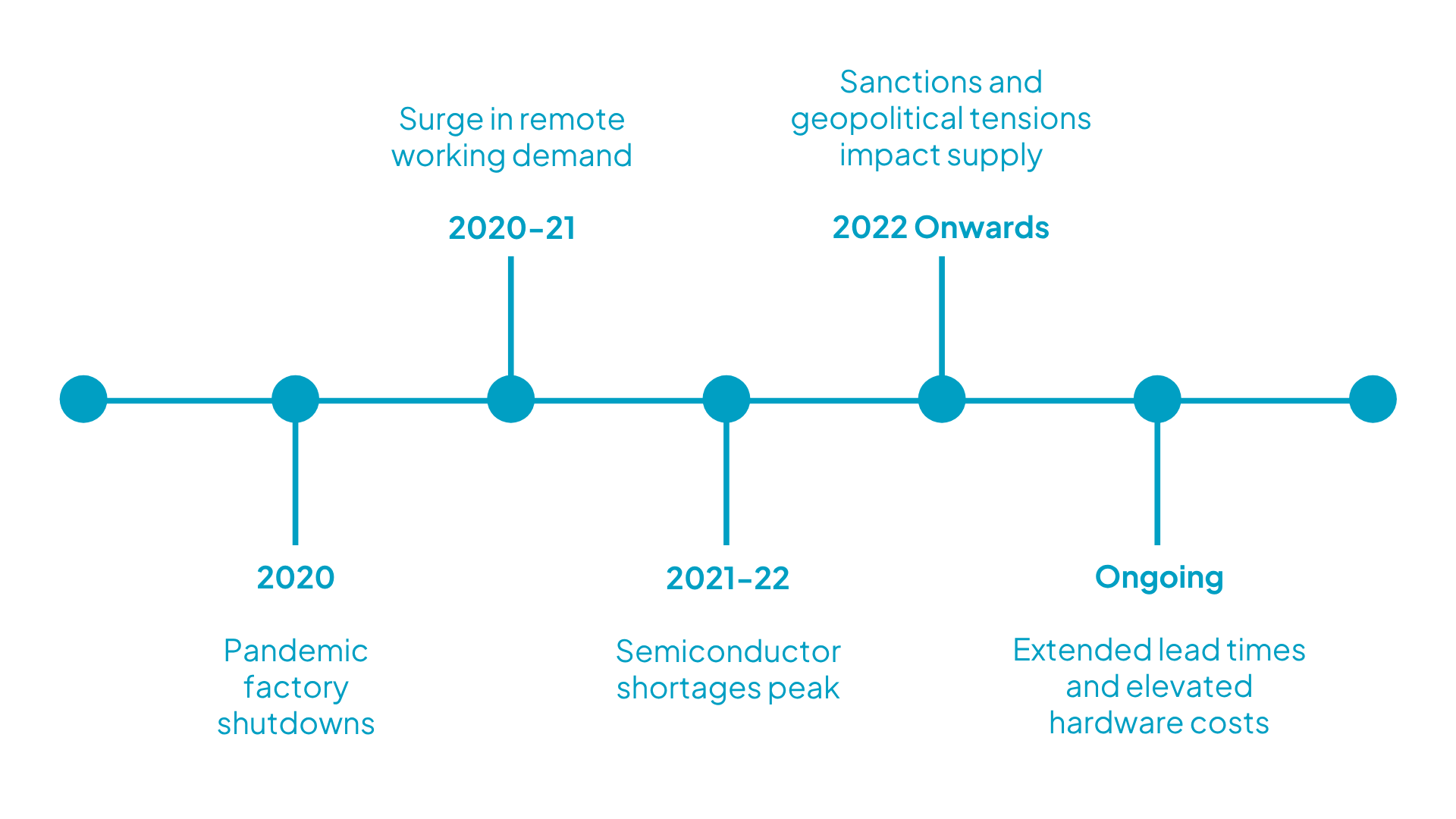 Figure 1: Global Technology Supply Chain Disruption Timeline
The conflict in Ukraine created additional strain on semiconductor production.
Ukraine has historically supplied a significant proportion of the world's purified neon gas, a critical component used in semiconductor manufacturing,accounting for as much as 50–70% of global neon supply.
Russia has also been a major producer of palladium, another material essential to chip fabrication processes.
When supply chains for these materials were disrupted, chip manufacturers faced additional challenges in maintaining production levels.
The impact was felt globally.
Although semiconductor production has gradually improved, the effects of these disruptions continue to influence hardware availability, pricing and procurement strategies across many industries.
When organisations cannot obtain new equipment quickly, they begin exploring alternatives.
This shift led to a surge in demand for refurbished enterprise hardware.
Equipment that had previously been considered a stop-gap solution became a strategic procurement option. IT departments that had rarely purchased refurbished devices suddenly found themselves actively sourcing pre-owned laptops, servers, storage arrays and networking equipment.
The secondary hardware market expanded rapidly, with server resale values rising significantly—by over 300% in some cases.
Businesses looking to extend the life of existing infrastructure began competing for the same pool of available equipment. Demand increased while supply remained relatively constrained, pushing resale values significantly higher.
| Market Condition | Resale Value of Retired Hardware |
|---|---|
| Stable Supply Chain | Moderate |
| Semiconductor Shortage | High |
| Extended Lead Times | Very High |
| Refurbishment Demand Surge | Peak Value |
Figure 2: Typical Enterprise Hardware Value Trends
The result is a market where retired assets often retain considerably more value than many organisations realise.
One of the most common misconceptions in IT asset management is that equipment written down to zero on a balance sheet has no remaining value.
Accounting value and market value are not the same thing.
A three-year-old business laptop may be fully depreciated from a financial reporting perspective, yet remain highly desirable in the secondary market. The same applies to enterprise servers, storage systems, network switches, firewalls and mobile devices.
Many organisations still replace hardware according to fixed refresh cycles rather than actual performance requirements. As a result, large quantities of perfectly functional equipment enter the disposal stream every year.
In today's market, buyers are actively seeking this equipment, driven by a global refurbished IT market expected to grow into a multi‑billion‑euro industry exceeding € 35 billion.
Refurbishers, brokers, managed service providers, educational institutions and growing businesses all represent potential purchasers for retired enterprise assets.
Organisations that understand this dynamic are increasingly incorporating IT asset recovery programmes into their lifecycle management strategies.
Those that do not are effectively discarding assets that still possess real-world market value.
Historically, IT disposal strategies have focused on three primary objectives:
These remain critically important.
No organisation should compromise security or regulatory obligations in pursuit of financial returns.
However, many businesses continue to view compliance as the finish line rather than the starting point.
A modern IT asset disposition (ITAD) strategy should achieve four objectives simultaneously:
The best IT asset disposal providers now combine certified data destruction processes with refurbishment, resale and remarketing services designed to maximise residual asset value.
This approach transforms disposal from a cost centre into a value-generating activity.
The opportunity currently available in secondary hardware markets may not last indefinitely.
Semiconductor manufacturing capacity continues to expand. Supply chains are gradually stabilising. New production facilities are being developed across multiple regions to reduce dependency on concentrated manufacturing hubs.
As supply normalises, the premium currently attached to refurbished hardware is likely to decrease.
That doesn't mean value recovery will disappear.
It means the exceptionally favourable market conditions currently supporting higher resale prices may become less pronounced over time.
Organisations planning hardware refresh programmes over the next 12–24 months should evaluate whether their existing disposal processes are positioned to capture today's market opportunities.
Waiting until market conditions return to historical norms could mean missing a significant window for recovery.
Traditional Approach
Refresh → Dispose → Compliance Certificate → End Process
Modern ITAD Approach
Refresh → Secure Data Erasure → Asset Testing → Refurbishment → Resale → Value Recovery → Compliance Reporting
Forward-thinking organisations are increasingly treating retired IT equipment as a recoverable asset class rather than waste.
A modern disposal strategy should include:
This approach delivers multiple benefits simultaneously:
Most importantly, it ensures organisations are extracting maximum value from technology investments throughout the entire asset lifecycle.
The hardware market has changed significantly over the past several years.
Supply chain disruption, semiconductor shortages and increased demand for refurbished technology have created a market environment unlike anything seen in recent memory.
Yet many organisations continue to follow disposal processes designed for a completely different era.
If your organisation is planning a hardware refresh, now is the time to evaluate whether your IT asset disposal strategy reflects current market realities.
Because every laptop, server, switch or mobile device leaving your business represents a simple question:
Is your current IT disposal process returning value to the organisation—or are valuable assets being written off unnecessarily?