
11 Tipalti Alternatives for AP and Finance Automation
Tipalti covers a wide range of finance operations, including accounts payable, global payments,...
|
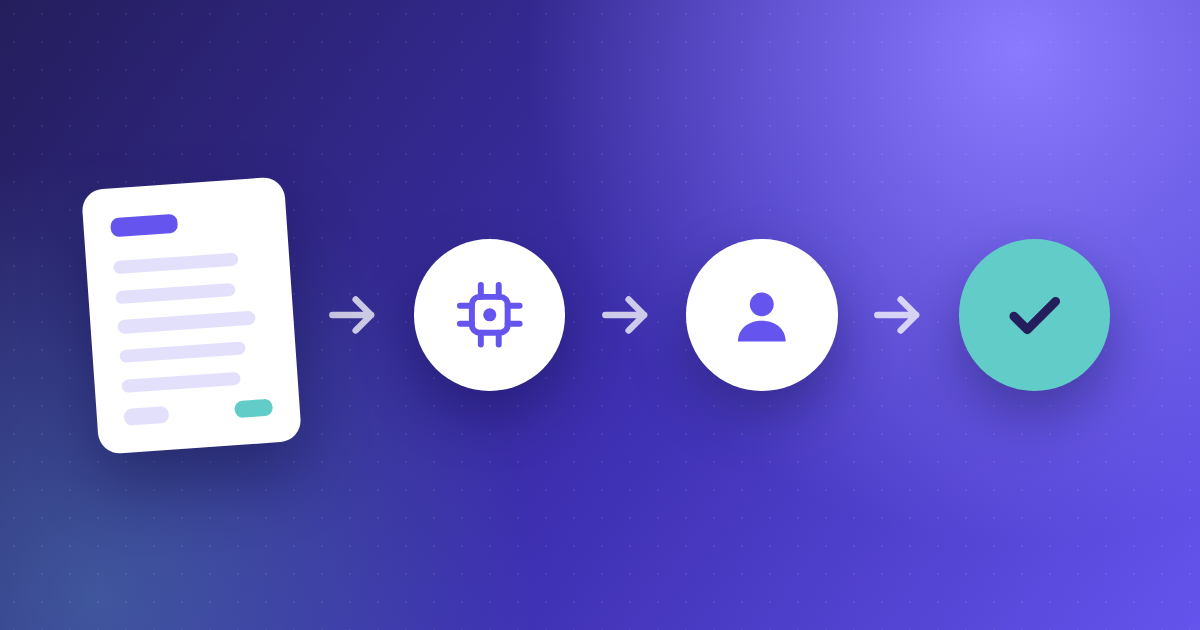
The short answer: Non-PO invoices are handled efficiently at scale by treating them as a controlled exception with a process of their own — not as leftovers from the PO workflow. That means a single intake channel, classification at the point of receipt, AI-assisted GL coding applied before routing, a defined replacement control set instead of three-way matching, rules-based approval routing tied to budget ownership, and human review reserved for exceptions only. The volume itself is then reduced by converting recurring non-PO suppliers onto POs or contracts.
|
Every finance team has a version of the same problem. PO-backed invoices flow through automation cleanly, because the purchase order already carries the approval, the coding and the commitment. Non-PO invoices arrive with none of that. Someone has to work out what the spend was, which cost centre owns it, whether it was authorised, and who is allowed to approve it — and they usually have to do it by email.
At low volume that is an irritation. At scale it is the single biggest constraint on AP productivity, because non-PO invoices consume disproportionate effort per invoice and are the category most exposed to duplicate payment and supplier fraud.
A non-PO invoice is a supplier invoice that arrives without a matching purchase order. Because no PO exists, it cannot be validated by three-way matching against a PO and a goods receipt. Instead, it has to be coded, validated and approved by a person with budget authority — which is why the control model, not the software, determines whether it scales.
Typical non-PO categories include:
There is no single benchmark, and the published ranges differ by region and industry. Analysis published on SAP Community puts typical non-PO usage at 5–30% of invoice volume and 5–25% of AP spend, and treats anything above 30% as a signal of slow PO processes, heavy services spend or immature procurement systems. IOFM benchmarks cited across the industry put the figure higher, at roughly 30–50% of invoices received — a gap largely explained by stronger PO discipline in North American manufacturing versus services-heavy and European operations.
The practical point is not the benchmark. It is that non-PO share is a KPI in its own right, and a rising share is a procurement warning sign rather than an AP one. The thresholds below are a workable starting position:
|
Status |
Non-PO share of invoice volume |
Non-PO share of AP spend |
What it means |
|
Healthy |
Under 15% |
Under 10% |
Non-PO is a genuine exception. Maintain controls and monitor. |
|
Risky |
15–30% |
10–25% |
Build a remediation plan. Identify recurring suppliers and convert. |
|
Alarm |
Over 30% |
Over 25% |
Immediate controls, audit and supplier enablement required. |
Threshold framework adapted from SAP Community analysis of non-PO invoice practice.
Three things compound as volume grows.
A PO invoice validates itself. A non-PO invoice needs manual coding, a routing decision and a human approval before it can post. According to Ardent Partners’ Accounts Payable Metrics That Matter in 2025, the average organisation spends $9.40 to process a single invoice and takes 9.2 days to do it, while best-in-class teams reach $2.78 and 3.1 days. Non-PO volume is where most of that gap lives.
In the same research, high exception rates and lengthy invoice approval workflows rank among the most-cited challenges facing AP leaders, alongside rising fraud risk. Best-in-class teams run a 9% exception rate against an industry average of 22%. Non-PO invoices are over-represented in that exception pile because there is no PO to resolve the ambiguity.
Invoice fraud and payment-diversion attempts target exactly the invoices that no automated match will catch. Without a PO, the only barrier between a fraudulent invoice and a payment run is the control set the finance team designs.
Non-PO invoices that arrive in individual inboxes never enter the process at all until someone forwards them. Route every invoice — PDF, scan, email attachment, XML or EDI — to a single intake point and publish it to suppliers as the only accepted channel. A centralised invoice hub removes the shadow queue sitting in personal mailboxes, which is usually where month-end surprises come from.
Decide what kind of invoice you are holding on arrival, not three days later: PO-backed, contract-backed, recurring non-PO, or ad-hoc non-PO. Recurring non-PO invoices — the same utility, the same landlord, the same SaaS renewal each month — should follow a predefined workflow with no human decision at all. Splitting recurring from ad-hoc at intake typically removes the largest single block of manual work.
GL account, cost centre and tax treatment are the most time-consuming part of non-PO processing, and sending an uncoded invoice to a budget owner guarantees a round trip. Invoice coding automation that learns from historical treatment of the same supplier can apply the coding before routing, so the approver is confirming a decision rather than making one. Reserve AP review for low-confidence suggestions only.
This is the step most teams skip. If you remove PO matching, you have to put something in its place — deliberately, and in writing. The replacement set should cover:
Run all of these before the invoice reaches a budget owner. An approver who is also the first control is not a control.
Linear approval chains stall the moment one person is on leave. Automated invoice approvals should route on cost centre, department, entity, supplier and value — with defined thresholds, delegated authority, automatic reminders and escalation when an SLA is breached. Every action timestamped, so the audit trail is a by-product rather than a project.
|
Invoice value |
Approval requirement |
Target SLA |
|
Under €/£500 |
Departmental manager, single approval |
24 hours |
|
€/£500 – €/£5,000 |
Budget owner for the cost centre |
48 hours |
|
Over €/£5,000 |
Budget owner plus finance |
72 hours |
|
Capital or off-policy |
Financial controller, mandatory justification field |
72 hours |
Illustrative thresholds — set yours against your own delegated authority matrix.
The operating principle at scale is that people touch invoices that fail a rule, and nothing else. Unknown supplier, suspected duplicate, budget overrun, low-confidence extraction, missing documentation, changed bank details, high value — those go to a human. Everything else posts. This is the difference between an AP team whose workload grows with invoice volume and one whose workload grows with exception volume.
Automation makes non-PO invoices cheaper to process. It does not make them a good idea. Audit non-PO volume quarterly, rank suppliers by frequency, and move the recurring ones onto blanket POs, contracts or catalogues. Lightweight PO creation inside the AP platform matters here, because the usual reason teams don’t raise POs is that ERP licensing and complexity make it painful for occasional requesters.
|
|
PO invoice |
Non-PO invoice |
|
Approval timing |
Approved before the spend, at PO stage |
Approved after the spend, at invoice stage |
|
Primary validation |
Three-way match: invoice, PO, goods receipt |
Human approval plus a replacement control set |
|
Coding |
Inherited from the purchase order |
Applied at invoice stage, manually or by AI |
|
Budget visibility |
Committed spend visible at order |
Spend visible only when the invoice arrives |
|
Fraud exposure |
Lower — the PO is an independent check |
Higher — controls must be designed in |
|
Effort per invoice |
Low; suited to straight-through processing |
Higher unless coding and routing are automated |
Measure non-PO invoices separately from PO invoices. Blending them hides the problem, because a healthy PO touchless rate will mask a poor non-PO one. Cross-industry AP benchmarks published by APQC are a useful external reference point once you have a baseline.
|
Metric |
What it tells you |
Where to aim |
|
Non-PO touchless rate |
Share of non-PO invoices posting with no human touch |
The headline number — track it monthly |
|
Non-PO share of volume |
Procurement discipline, not AP performance |
Under 15% of invoice volume |
|
First-pass approval rate |
Whether coding is right before routing |
Rising quarter on quarter |
|
Approval cycle time |
Where invoices actually stall, and with whom |
Well inside your published SLA |
|
Exception rate |
Volume failing a control and needing review |
Best-in-class runs 9% vs a 22% average |
|
Cost per invoice |
The commercial case, in one figure |
Against $9.40 average / $2.78 best-in-class |
|
Duplicate payment rate |
Whether your controls are real |
Trending to zero |
If you want to size the opportunity before building a business case, the invoice processing savings calculator gives you a starting figure, and there is more detail on structuring the metrics in our guide to AP performance management.
|
Window |
Focus |
Outcome |
|
Days 1–30 |
Baseline non-PO volume, spend and cycle time. Publish the non-PO policy: which categories legitimately bypass a PO, and which do not. |
Everyone knows what a valid non-PO invoice looks like. |
|
Days 31–60 |
Single intake channel live. Classification and AI coding switched on. Control set configured to run pre-approval. |
Invoices arrive coded and pre-validated. |
|
Days 61–90 |
Routing rules and SLAs enforced. Exception queue in operation. Top 20 recurring non-PO suppliers identified for PO or contract conversion. |
Human effort concentrated on exceptions only. |
Kefron AP is managed accounts payable automation, which matters most in exactly this category. Non-PO invoices are the ones that generate low-confidence extractions and edge cases, and Kefron’s data assurance team reviews flagged fields before the invoice moves — so the customer’s own AP team is not the fallback when the model is unsure.
See how Kefron AP codes, validates and routes non-PO invoices without adding headcount — book a demo.

A non-PO invoice is a supplier invoice received without a matching purchase order. Because there is no PO or goods receipt to match against, it cannot be validated by three-way matching and must instead be coded, validated and approved by someone with budget authority.
A PO invoice is approved before the spend happens, at the point the purchase order is raised, and carries its coding and authorisation with it. A non-PO invoice is approved after the spend has already been committed, so approval, coding and control all happen at invoice stage.
Capture it through a single intake channel, classify it as recurring or ad-hoc, apply GL and cost centre coding before routing, run vendor validation and duplicate and fraud checks, route it to the budget owner based on cost centre and value, then post it to the ERP with a full audit trail.
Yes. Capture, coding, validation, routing and ERP posting can all be automated. What cannot be removed is the approval itself, because a budget owner confirming the spend is the control that replaces three-way matching. The goal is to make that approval a single confirmation rather than an investigation.
Published ranges vary from 5–30% of invoice volume (SAP Community analysis) to 30–50% (IOFM benchmarks), depending on region and industry. A practical target is under 15% of volume and under 10% of AP spend, with anything above 30% treated as a procurement issue requiring remediation.
Vendor master validation, duplicate detection across multiple fields, bank detail change screening, anomaly checks on amount and frequency, evidence of receipt such as a contract or service entry, and segregation of duties between coding and approval. All of these should run before the invoice reaches an approver.
Audit non-PO volume quarterly and rank suppliers by frequency. Move recurring suppliers onto blanket POs, contracts or catalogues, publish a short list of categories that may legitimately bypass a PO, and make raising a PO easy enough that requesters do not route around it.