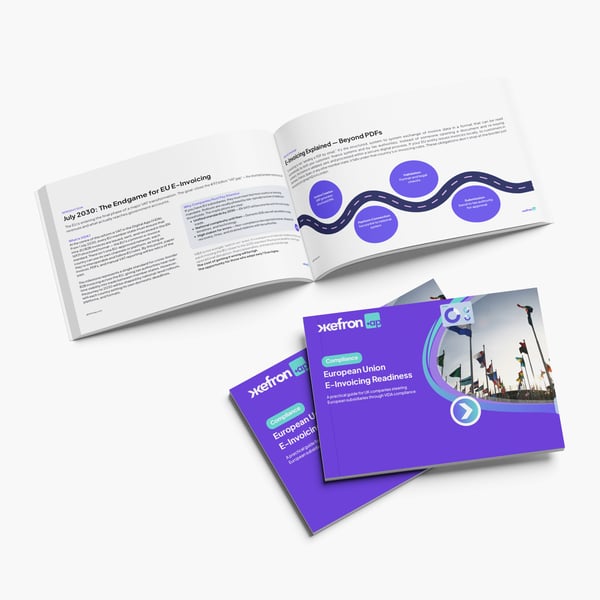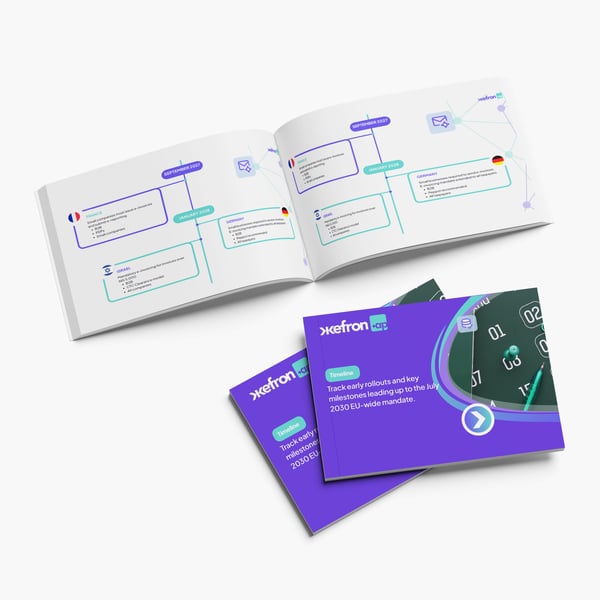
The European Commission’s VAT in the Digital Age (ViDA) initiative will transform how organisations manage VAT reporting and invoice exchange.
It introduces mandatory structured e-invoicing for intra-EU transactions, digital reporting requirements, near real-time VAT data submission, and standardised electronic formats.
For finance teams still relying on manual or PDF-based processes, this creates immediate compliance exposure. E-invoicing, supported by AP automation, becomes essential rather than optional.

ViDA is accelerating digital transformation in finance. Waiting increases risk. E-invoicing and AP automation enable organisations to:

Implementing a compliant electronic invoicing system transforms how finance teams manage compliance, risk, and efficiency across entities.

Automated validation and real-time clearance accelerate invoice approval and posting.

Structured data exchange and peppol e invoicing ensure invoices meet local and cross-border regulatory requirements.

Built-in matching and controlled approval routing reduce financial risk and policy breaches.

The electronic invoicing system connects directly to your ERP without disrupting existing finance operations.

Transparent cost models and reduced manual processing deliver measurable savings.

Real-time dashboards provide full oversight of invoice status, liabilities, and bottlenecks.
Testimonials:
A ViDA-ready electronic invoicing system must integrate seamlessly with ERP environments across entities.






Resources:
Access practical guidance on preparing for VAT in the Digital Age, implementing peppol e-invoicing and strengthening AP automation for regulatory readiness.
E-invoicing is no longer simply a finance efficiency initiative. Under ViDA, it becomes a compliance requirement and strategic enabler.


E invoicing is the structured digital exchange of invoice data between a supplier and a buyer through integrated finance systems. Unlike PDF or email invoices, e invoicing uses standardised formats (such as XML or UBL) that allow invoices to be automatically validated, processed, and stored without manual data entry.
E invoicing works by generating an invoice in your ERP or accounting system, converting it into a structured electronic format, transmitting it securely (often via peppol e invoicing or tax authority portals), validating it against compliance rules, and automatically posting it into the recipient’s electronic invoicing system.
Yes. Many European countries already require e invoicing for public sector transactions, and under VAT in the Digital Age (ViDA), structured e invoicing will become mandatory for cross-border EU transactions. Several countries are introducing national mandates ahead of the EU-wide 2030 deadline.
PDF invoices are unstructured documents that often require manual entry or OCR processing. E invoicing uses structured data that finance systems can read automatically, enabling faster processing, fewer errors, and stronger compliance controls within an electronic invoicing system.
An electronic invoicing system is software that creates, sends, receives, validates, and archives structured e invoices. It integrates with ERP platforms, connects to networks like peppol e invoicing, ensures tax compliance, and supports real-time validation and clearance where required.
Peppol e invoicing is a standardised method of sending structured electronic invoices through the Peppol network. Businesses connect via certified access points, allowing secure, compliant invoice exchange across countries and between public and private sector organisations.
Peppol e invoicing ensures invoices follow approved data standards and are exchanged through secure, validated channels. This reduces formatting errors, supports VAT reporting obligations, and strengthens audit trails within an electronic invoicing system.
E invoicing reduces manual processing, accelerates invoice approvals, improves VAT accuracy, strengthens compliance controls, and enhances visibility across accounts payable and receivable. When implemented through a robust electronic invoicing system, it also supports scalability across multiple entities and jurisdictions.