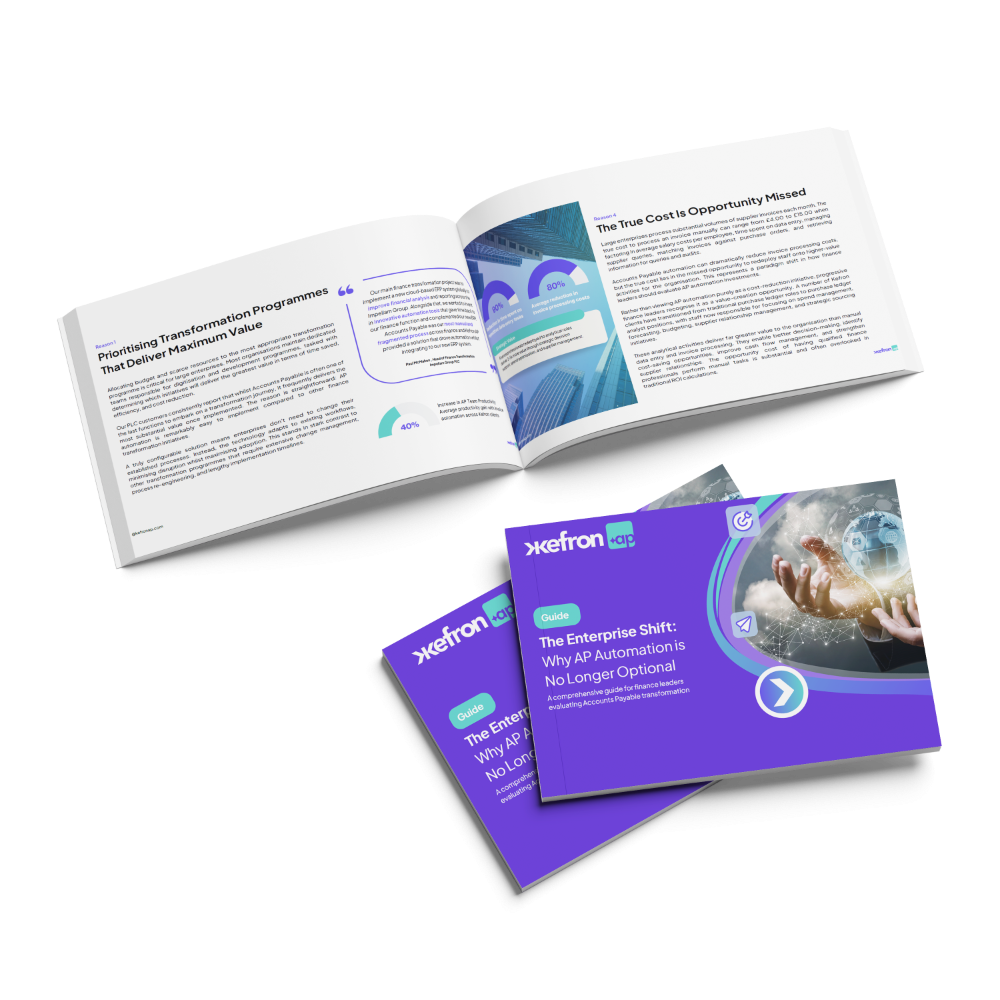
Guide:
The Enterprise Shift: Why AP Automation is No Longer Optional
A practical guide for MNCs and PLCs navigating multi-entity AP operations, improving enterprise invoice processing, and preparing for rising global e-invoicing regulations.
In our guide “7 Reasons Global Enterprises Are Investing in AP Automation”, you’ll:
- Understand the compliance landscape across Europe
- Reduce manual work across multi-entity finance teams
- Unlock global AP automation visibility and control
- Learn how enterprises scale AP without adding staff
- Gain insights from Impellam, Kingspan & Exclusive Networks
Download this guide:
30%
of invoice processing time saved

67%
reduction in invoice approval time

99%
data extraction accuracy

12 months
data extraction accuracy

100%
paperless invoice processing

32 hours
per month saved on data entry


Why Enterprise AP Automation Matters
Global enterprises are facing rapid changes in e-invoicing regulations, growing multi-entity complexity, and rising costs tied to manual AP work. As invoice volumes scale and compliance requirements tighten across regions, finance leaders need consistent, automated, and globally aligned AP processes. This guide highlights the key drivers behind AP automation for enterprises – shared by MNCs and PLCs across Europe – and why automation is now a strategic priority.
What Global Finance Leaders Are Saying

Key AP Automation Capabilities Enterprises Rely On
Modern enterprising invoicing software combines accuracy, visibility, and seamless integration to support global finance operations at scale.

Supplier Self-Service Portal
Suppliers can submit invoices, track progress, and resolve queries directly, reducing inbound calls and freeing AP teams for higher-value work.

Touchless Invoice Processing
AI-driven data capture delivers exceptional accuracy, enabling a high percentage of invoices to be processed without manual intervention.

Fast, Measurable ROI
Volume-based pricing and unlimited users help global enterprises achieve meaningful cost and time savings within a few months.

Custom Workflows
Configurable approval routes and automated discrepancy alerts mirror your existing AP automation processes while reducing manual oversight.

Supplier Statement Reconciliation
Automatically cross-reference invoices, payments, and statements to minimise errors and prevent duplicate or missed payments.

ERP Integration
Connect seamlessly with leading ERP systems to ensure data flows smoothly across finance operations and supports global reporting needs.

Take the First Step Toward Smoother Enterprise AP Automation
Discover the seven key drivers behind AP transformation in global organisations – from regulatory pressure and multi-entity complexity to scaling finance operations without additional headcount.
Frequently asked questions:

What makes enterprise AP automation different from standard AP automation?
Enterprise AP automation supports complex, multi-entity structures, global approval chains, high invoice volumes, and diverse ERP environments. It also handles multi-currency, multi-language invoices and regulatory compliance requirements across countries – capabilities that standard SME tools typically cannot support.
How does AP automation help with global e-invoicing compliance?
Modern enterprise AP automation supports e-invoicing mandates such as CTC, PEPPOL, and country-specific formats. It ensures invoices are captured, validated, and delivered in government-approved schemas, reducing compliance risk and preventing penalties for multinational organisations.
Can AP automation integrate with multiple ERPs across different regions?
Yes. Enterprise-grade solutions integrate with leading systems like SAP, Oracle, NetSuite, Microsoft Dynamics, Sage, and regional ERPs. This allows multi-entity organisations to unify AP processes even when subsidiaries operate different finance systems.
What real improvements do enterprise finance teams typically achieve?
Global organisations typically see 80% faster processing, 80% lower AP costs, 99%+ accuracy, and 70–90% touchless invoice processing. They also gain full visibility across entities and significantly reduce month-end bottlenecks caused by manual workflows.
Who should read this Enterprise AP Automation guide?
This guide is designed for CFOs, Finance Directors, Controllers, AP Managers, Shared Services Leads, and transformation teams in multi-entity or multinational organisations seeking better compliance, lower manual workload, improved visibility, and scalable AP operations.