Flexible AP Pricing for Accurate, Touch-free Invoice Processing
Scale your AP process without increasing headcount. Transparent, volume-based pricing designed around your approval flows, complexity, and ERP, no hidden extras. Transparent - Flexible - Built for Finance Teams

Trusted by Finance Organizations Worldwide


















How Kefron AP Pricing Works
Your price reflects your real AP workload, with no add-ons, no per-user costs, and no inflated AP software costs often seen with competitors.

Only Pay for What You Process
Pricing flexes with your invoice volume so you only pay for what you actually automate.
- Scales from small to enterprise volumes
- No per-user or per-approver costs
- Full access for all finance roles

Tailored Implementation Fee
Your one-off setup fee is based on your workflow complexity and ERP environment.
- Includes workflow mapping and rules setup
- Covers multi-entity and integration needs
- Clear, upfront project estimate

Everything You Need Included
Every plan comes with the full AP automation suite, no add-ons needed.
- AI + Human Validation for 99%+ accuracy
- Workflows, audit trails, and controls included
- ERP integration and training provided

No Hidden Fees or Restrictions
Your pricing stays predictable with no extra charges for users, suppliers, or entities.
- Unlimited users and approval roles
- Unlimited suppliers, entities, currencies
- Free workflow changes and rule updates
Measurable ROI from Day One
From faster processing and cleaner month-end close to year-one payback, Kefron AP delivers measurable gains in speed, accuracy, and ROI.
92%
reduction in invoice
processing time

67%
reduction in
approval time

86%
of time saved
processing month-end

12 months
return on
investment

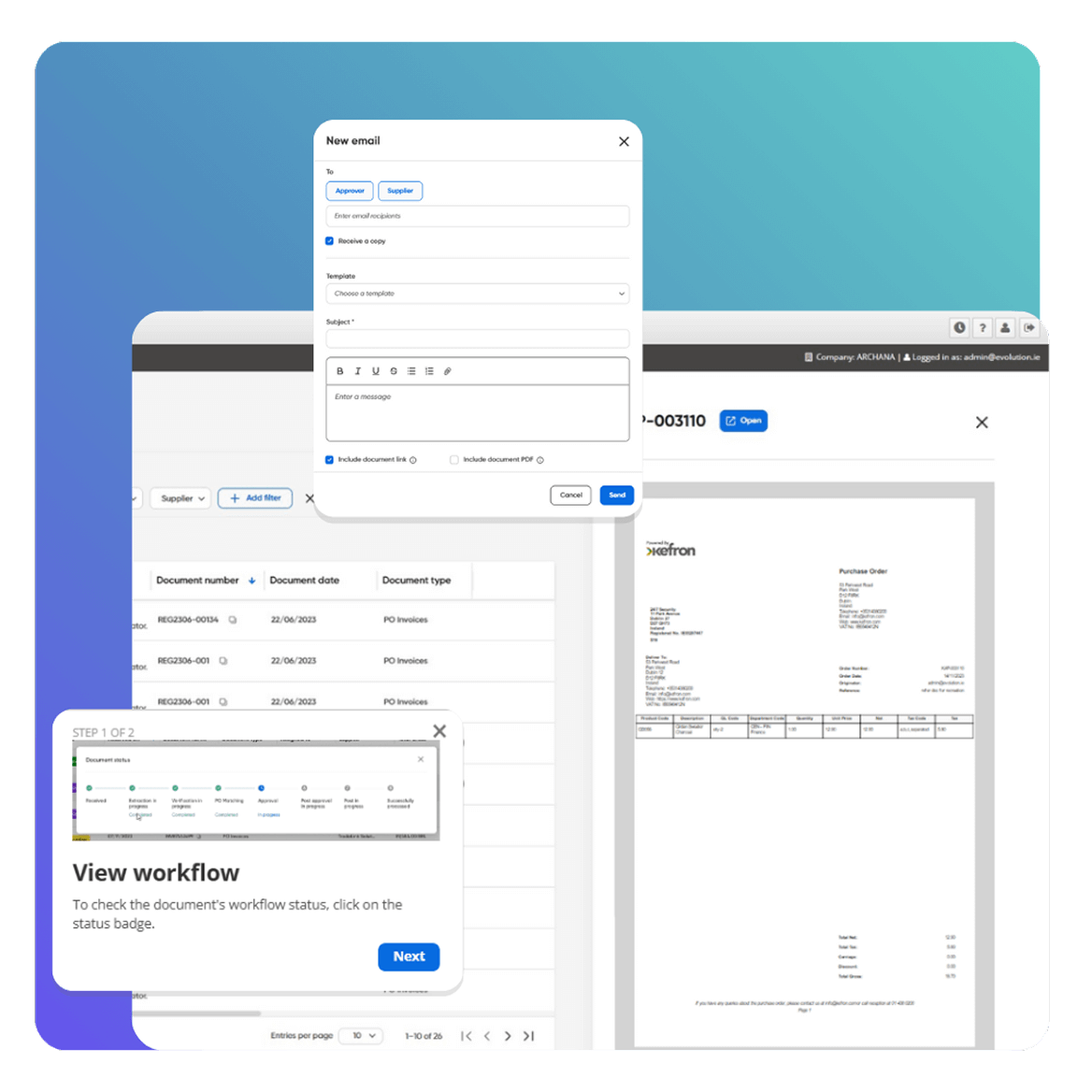
Supplier Statement Reconciliation
Automate monthly statement checks and eliminate manual matching work.
- Fixed monthly cost based on statement volume
- Automatically matches statements to invoices
- Cuts hours of manual reconciliation every month
Purchase Order Module
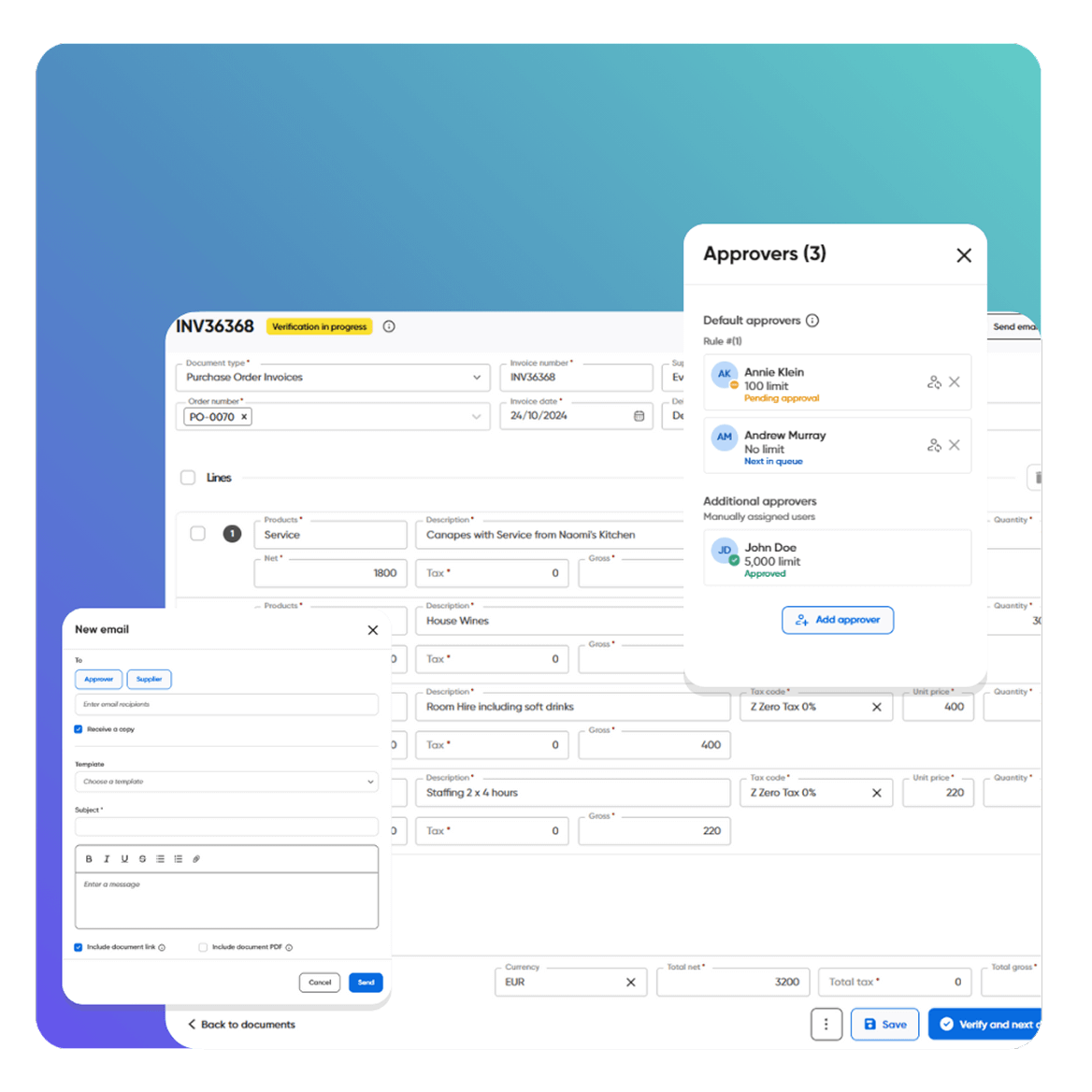
A modern PO solution that replaces clunky ERP add-ons and reduces AP workload.
- No license fees or per-user charges
- AI-powered matching for faster approvals
- Easy rollout across departments and entities
Complete Data Service
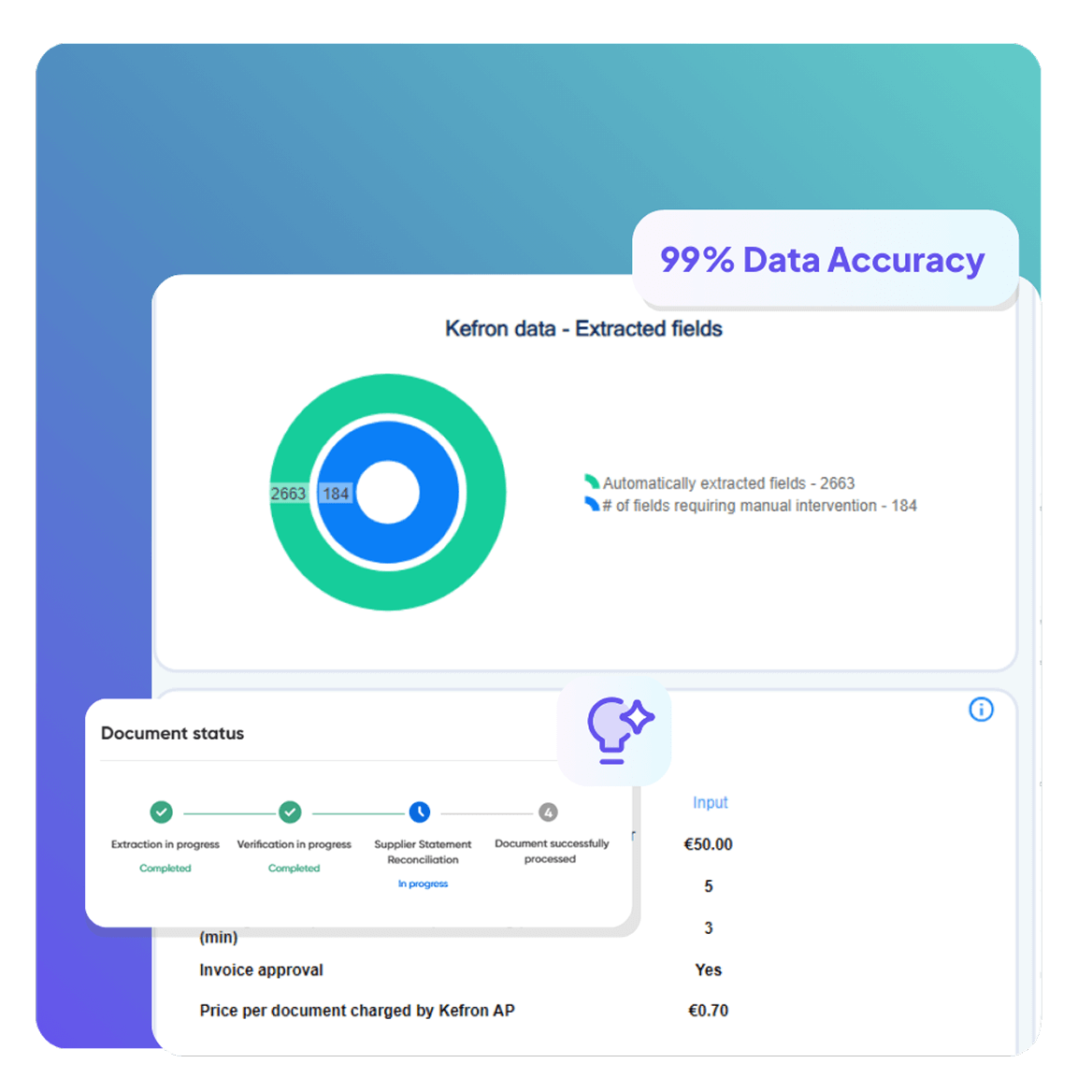
Achieve 99%+ accuracy with AI extraction backed by Kefron’s expert data team.
- No template building or manual corrections
- Fully validated data powering touchless automation
- Supports all formats (PDF, email, XML, EDI, scans)
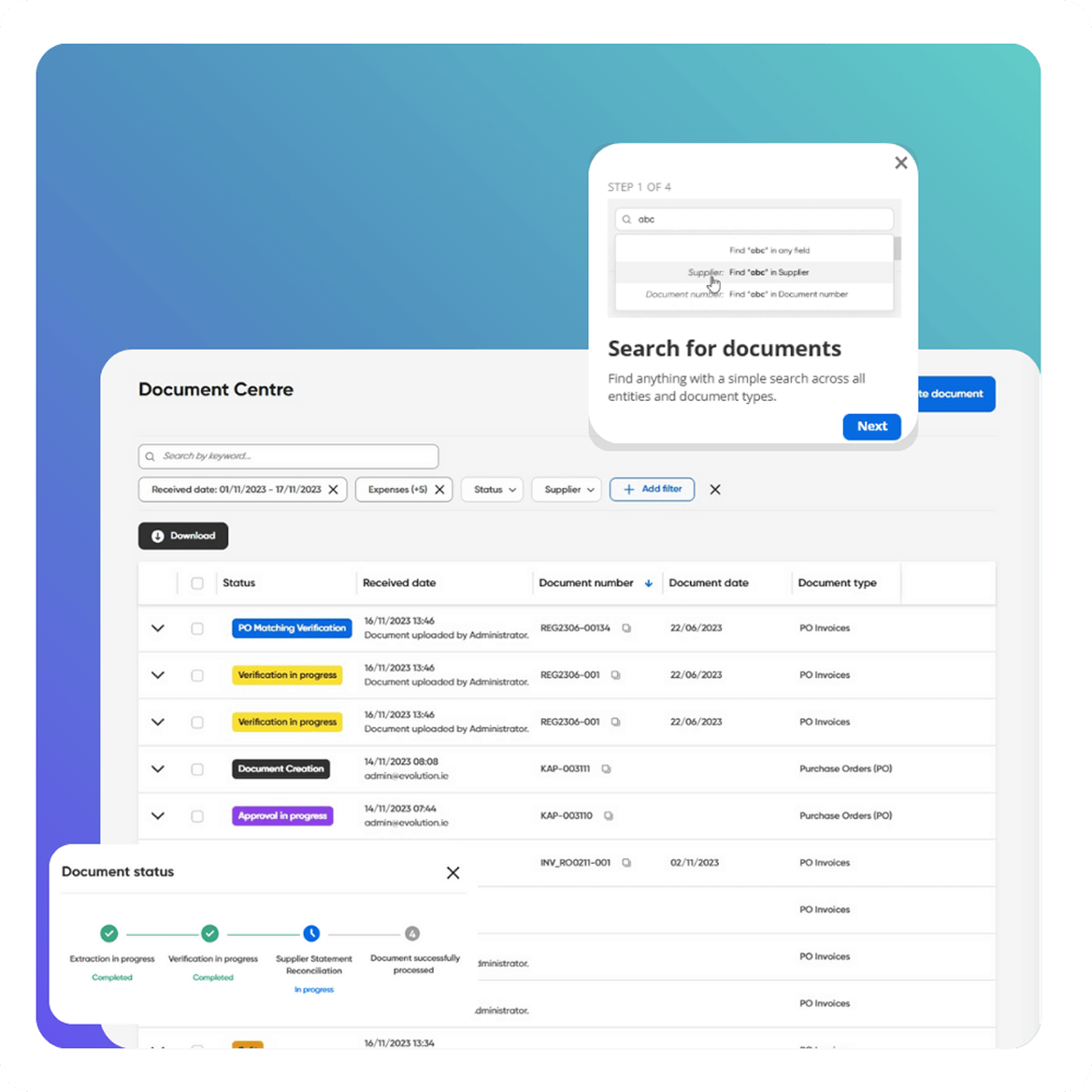
Document Workspace & Productivity Tools
A single interface to view, edit, approve, and track invoices with fewer clicks.
- Centralised view for all AP tasks
- Reduced screen-switching across approvals
- Document Centre + Workspace boosts team efficiency
Get Your Custom AP Pricing in 24 Hours
Share your invoice volume and workflow details to receive a tailored pricing proposal with projected ROI, accuracy gains, and implementation scope.