Future-Ready E-Invoicing Solution for Effortless Compliance
Ensure every invoice clears, every time. Kefron’s e-invoicing software connects to 65+ tax authorities to keep your business ViDA-compliant. No disruption and no delays.

E-Invoicing That’s Built for Scale, Not Complexity
Kefron removes the friction from global e-invoicing. From real-time clearance to automatic formatting, we simplify compliance without adding manual work or IT burden.

Compliance You Can Trust
Invoices are cleared in real time via direct connections to tax authorities.

Built-In Formatting
Auto-converts to UBL, XML, PEPPOL, XRechnung, KSeF, and more – no templates.

Ready to Scale
Supports multi-entity, multi-country growth with automatic rule updates.

Works With Your ERP
Integrates smoothly without changing your existing finance setup.
Avoid Risks of Non-Compliance
Missing ViDA e-invoicing rules can hurt more than compliance — it impacts cost, cash flow, and day-to-day operations.

Financial penalties
Fines can be steep and may apply per invoice, per day, or as a % of value. Late VAT interest adds up fast.
Cash-flow crunch
Rejected invoices delay payments, slow collection, and can risk VAT deduction rights.
Operational disruption
Wrong formats or channels trigger re-entry, system errors, and downstream delays across AP/AR.
Damage to credibility
Repeated failures raise red flags with tax authorities, suppliers, and customers, increasing audit risk.
ViDA Timeline: Europe’s E-Invoicing Deadlines
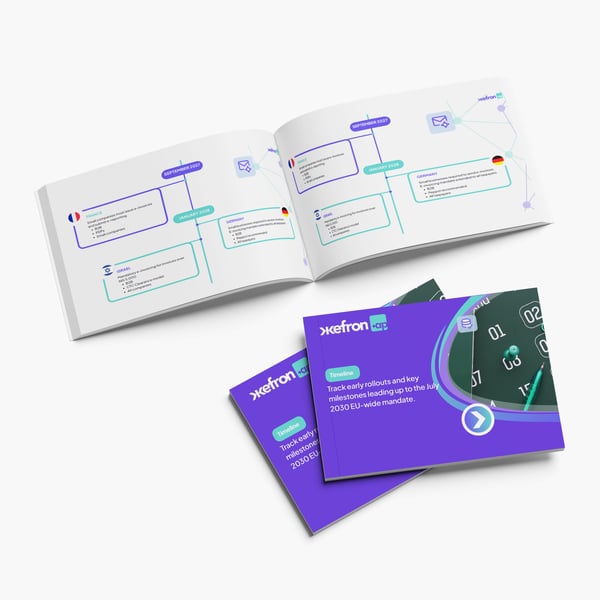
ViDA reforms will make e-invoicing mandatory across the EU by 2030, with earlier deadlines in many countries. Delay risks fines, rejections, and cash flow issues.


How Kefron E-invoicing Solution Works
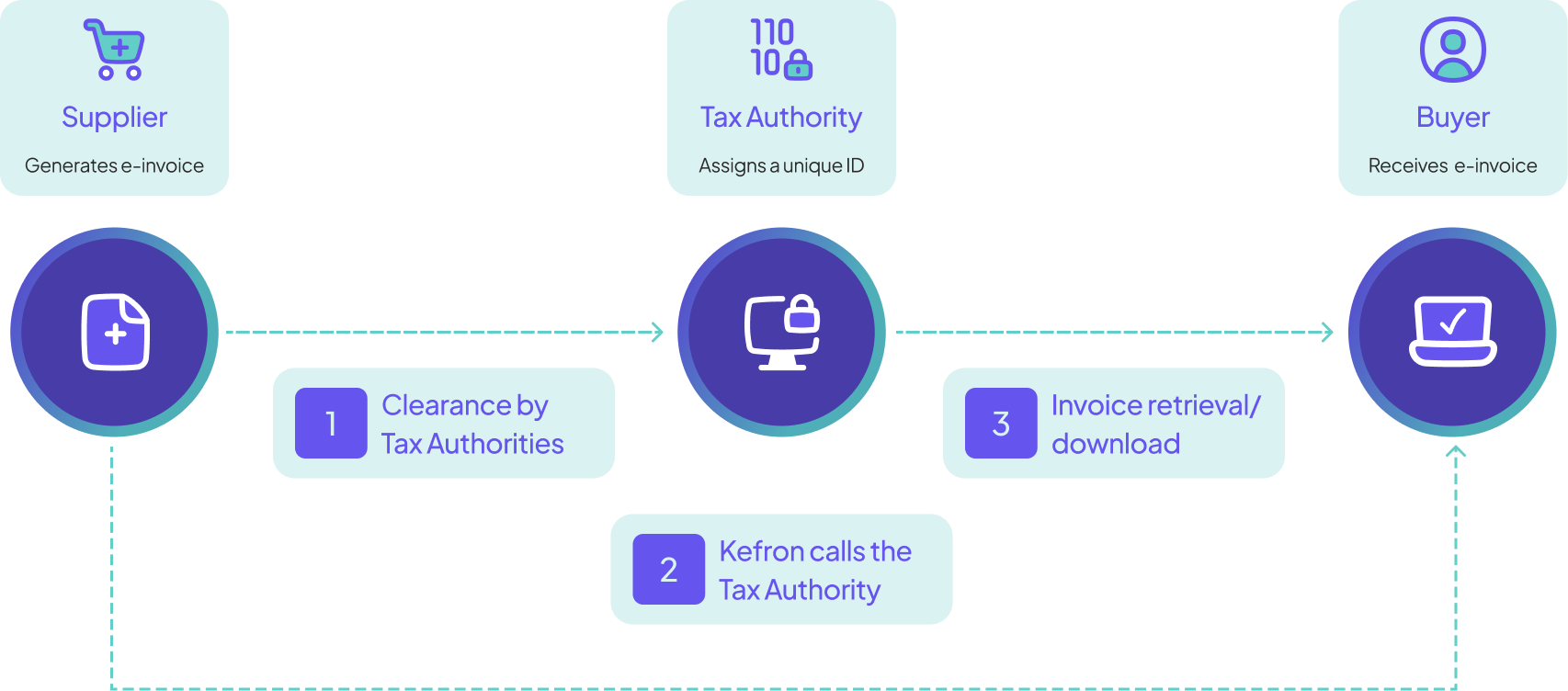
Kefron E-Invoicing sits between your ERP and global tax portals, validating invoices, ensuring real-time clearance, and automating delivery to buyers.
Clear Guidance for Confident E-Invoicing
Discover how leading organizations use Kefron’s e-invoicing solution to streamline finance operations, support global growth, and stay ahead of compliance requirements.
How E-Invoicing Software Streamlined Finance for a Global Cybersecurity Firm
“Kefron AP includes AP automation and e-invoicing solution globally. It reduces time to pay suppliers, makes training for our own staff easier, and provides more clarity and accuracy on reporting.”
– Exclusive Networks

Resources:
Expert Resources and Insights on E-Invoicing
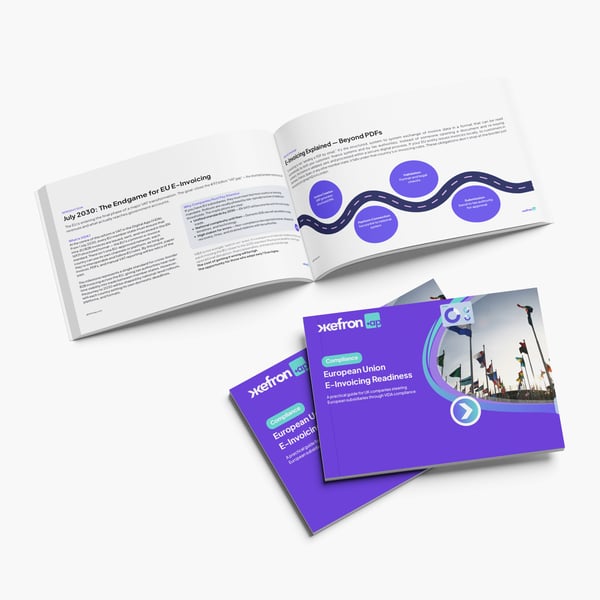
Stay ahead of ViDA and evolving e-invoicing mandates with a compiled list of expert resources designed for finance leaders.



Ready to Simplify E-Invoicing Before the Deadlines Hit?
E-invoicing is going global fast and Kefron keeps you ahead. Automate compliance across 65+ countries without changing your ERP or slowing your team down.
Frequently asked questions:

What is an e-invoicing solution?
An e-invoicing solution automates invoice exchange in structured digital formats (XML, UBL, PEPPOL, etc.), ensuring each invoice complies with tax rules and is cleared properly before entering your financial system.
How does e-invoicing work?
Invoices are created (or received), validated and reformatted to local standards, sent to tax authorities for clearance, delivered to the recipient, and stored in a legally compliant archive.
Is e-invoicing mandatory in Europe under ViDA?
Yes. The EU’s ViDA (VAT in the Digital Age) reforms set 2030 as the target, but many countries enforce e-invoicing mandates sooner – businesses must act now to stay compliant.
What is ViDA?
ViDA stands for VAT in the Digital Age, an EU reform package that will make e-invoicing and real-time digital reporting mandatory across all member states by 2030. Its goal is to modernise VAT collection, reduce fraud, and create a consistent approach to invoicing across Europe. Many countries, including Italy, Poland, France and Spain, are introducing ViDA-aligned mandates years earlier.
What is CTC (Continuous Transaction Control)?
CTC mandates require invoices or transaction data to be submitted to tax authorities in near real time, often before payment. It’s a stricter form of oversight that many ViDA laws will adopt.
What software is used for e-invoicing?
E-invoicing software is a system that connects finance teams with tax authorities, ensuring invoices are validated, formatted correctly, and cleared in real time. The best solutions integrate directly with your ERP, handle multiple formats (XML, UBL, PEPPOL, etc.), and keep compliance up to date as rules change.
What is the process of e-invoicing?
The e-invoicing process starts when an invoice is created or received. It is then validated and reformatted into the correct structure for the country, submitted to the relevant tax authority for clearance, delivered to the buyer or finance team, and finally stored securely in an audit-ready archive.
Is e-invoicing mandatory?
Yes. Many countries have already introduced mandatory e-invoicing, and under the EU’s ViDA (VAT in the Digital Age) reforms, all EU member states will require it by 2030. Some markets, like Italy, Poland, and France, have earlier deadlines.
What is the concept of e-invoicing?
The concept of e-invoicing is simple: replace paper or PDF invoices with structured digital invoices that can be automatically read, validated, and cleared by tax authorities. This ensures compliance, speeds up processing, reduces errors, and improves transparency for both businesses and governments.
How often is e-invoicing compliance updated?
As governments roll out new mandates or formats, your e-invoicing system updates automatically, so you never fall behind.
What happens if my e-invoice gets rejected?
You’ll get an error notification with the reason for rejection. The system guides you to correct the issue and resubmit, so invoices are cleared quickly and compliance is maintained.