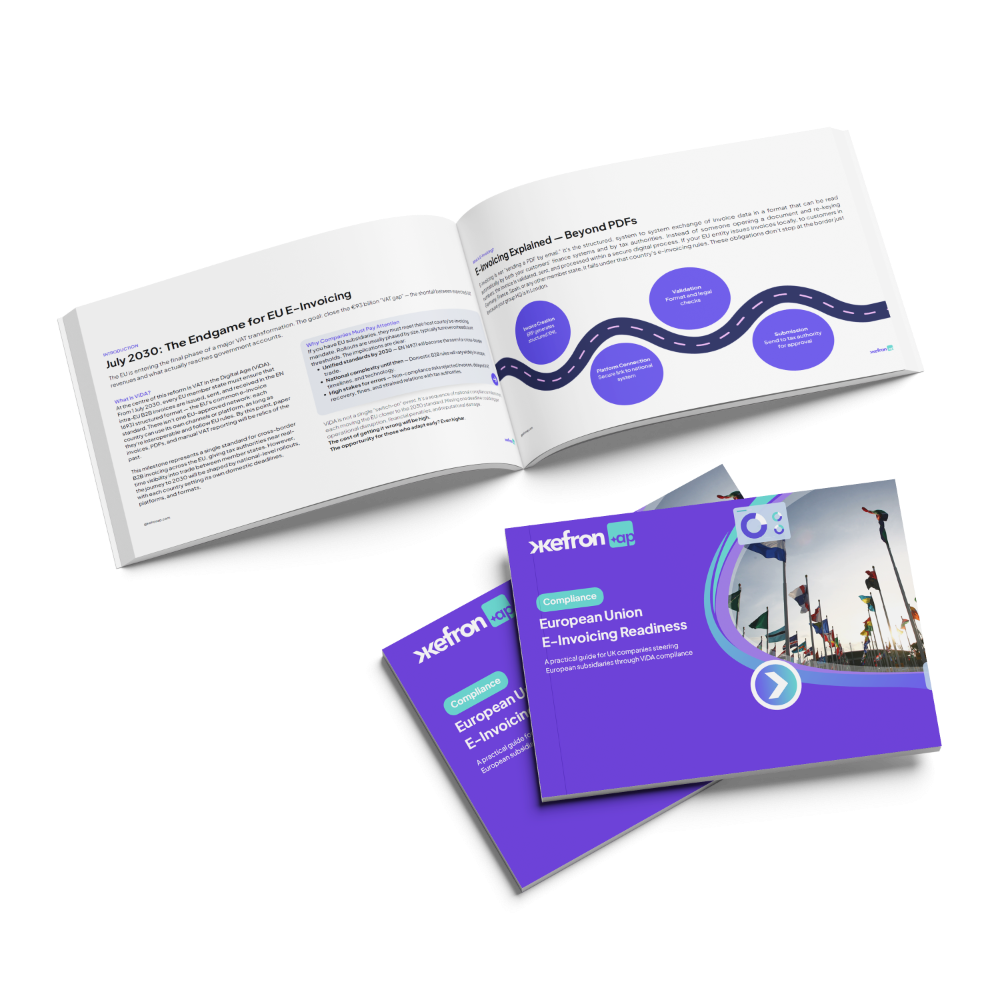
Guide:
ViDA Timeline Guide and Key Dates for European Finance Teams
Understand the ViDA timeline and upcoming EU e-invoicing requirements. Learn when mandatory e-invoicing starts and how finance teams prepare for compliance across Europe.
In our guide “E-Invoicing & ViDA Readiness”, you’ll:
- Understand key ViDA timeline milestones.
- Learn when e-invoicing becomes mandatory.
- Identify risks of missing compliance deadlines.
- Prepare systems for EU reporting changes.
- Build a ViDA readiness plan.
Download this guide:

Why ViDA Timeline Matters Now
The ViDA timeline defines when mandatory e-invoicing and digital VAT reporting will be enforced across the EU. These changes directly impact how invoices are issued, validated, and reported. Finance teams that don’t prepare early risk non-compliance, delayed payments, and operational disruption as deadlines approach.
ViDA Timeline: Key Dates and Phases

2024-2025
Early adoption and country-level mandates expand.
2026
Growth of real-time digital reporting requirements.
2028+
Standardised EU-wide VAT reporting and e-invoicing.
What Global Finance Leaders Are Saying

Capabilities Supporting ViDA Timeline Compliance
Kefron helps finance teams meet ViDA timeline requirements without changing ERP systems or adding operational complexity.

Timeline-Ready Invoices
Generate structured invoices aligned with mandatory e-invoicing formats required as each phase of the ViDA timeline is introduced.

Real-Time Reporting
Transmit invoice data to tax authorities in line with ViDA timeline deadlines and evolving EU reporting requirements.

Compliance Tracking
Monitor invoice status and ensure every submission meets ViDA timeline deadlines without manual tracking.

EU-Wide Coverage
Manage compliance across multiple EU countries as different stages of the ViDA timeline are rolled out.

Secure Archiving
Store invoices in compliance with EU retention rules and audit requirements introduced through ViDA timeline changes.

ERP Integration
Connect your finance systems to support mandatory e-invoicing and reporting obligations defined within the ViDA timeline.

Get Ahead of the ViDA Timeline Before Deadlines Hit
Understand what each phase of the ViDA timeline means for your business and how to prepare for mandatory e-invoicing without disruption or compliance risk.
Frequently asked questions:

What is the ViDA timeline?
The ViDA timeline outlines when new EU VAT rules, including mandatory e-invoicing and digital reporting, will be introduced. These changes are being rolled out in phases across member states. Finance teams need to understand these milestones to avoid last-minute disruption and ensure compliance readiness.
When will mandatory e-invoicing become required?
Mandatory e-invoicing is being introduced gradually under the ViDA timeline, with different countries moving at different speeds. Some EU states already have requirements in place, while others will follow as regulations expand. Businesses operating across borders need to prepare early to stay compliant everywhere.
What does the ViDA timeline mean for finance teams?
It means finance teams must adapt how invoices are created, processed, and reported. Structured invoice formats, real-time reporting, and stricter validation rules will become standard. Teams that rely on manual or outdated systems will struggle to keep up with these changes.
How can businesses prepare for ViDA compliance?
Preparation starts with reviewing your current invoicing processes and identifying gaps in compliance. Many companies will need systems that support structured e-invoicing and real-time reporting. Early preparation reduces risk and avoids rushed, reactive changes closer to deadlines.
What are the risks of missing ViDA deadlines?
Missing deadlines can result in rejected invoices, payment delays, and potential compliance penalties. It can also disrupt supplier relationships and cash flow if invoices are not processed correctly. Waiting too long to prepare increases both operational and financial risk.
Will ViDA affect cross-border transactions?
Yes, one of the key goals of ViDA is to standardize VAT reporting for cross-border transactions. This means businesses must report transaction data digitally and in near real time. Companies operating in multiple EU countries will need consistent processes across all entities.
Do companies need new systems for e-invoicing compliance?
In many cases, yes. Existing ERP systems or manual processes often don’t support structured e-invoicing or real-time reporting requirements. Companies typically need an e-invoicing solution or integration layer that ensures compliance without disrupting existing workflows.
How does ViDA improve VAT compliance across Europe?
ViDA aims to reduce fraud and close the VAT gap by increasing transparency and standardizing reporting. Digital invoices and real-time validation allow tax authorities to monitor transactions more accurately. For businesses, this creates more consistent rules but requires stronger systems and controls.