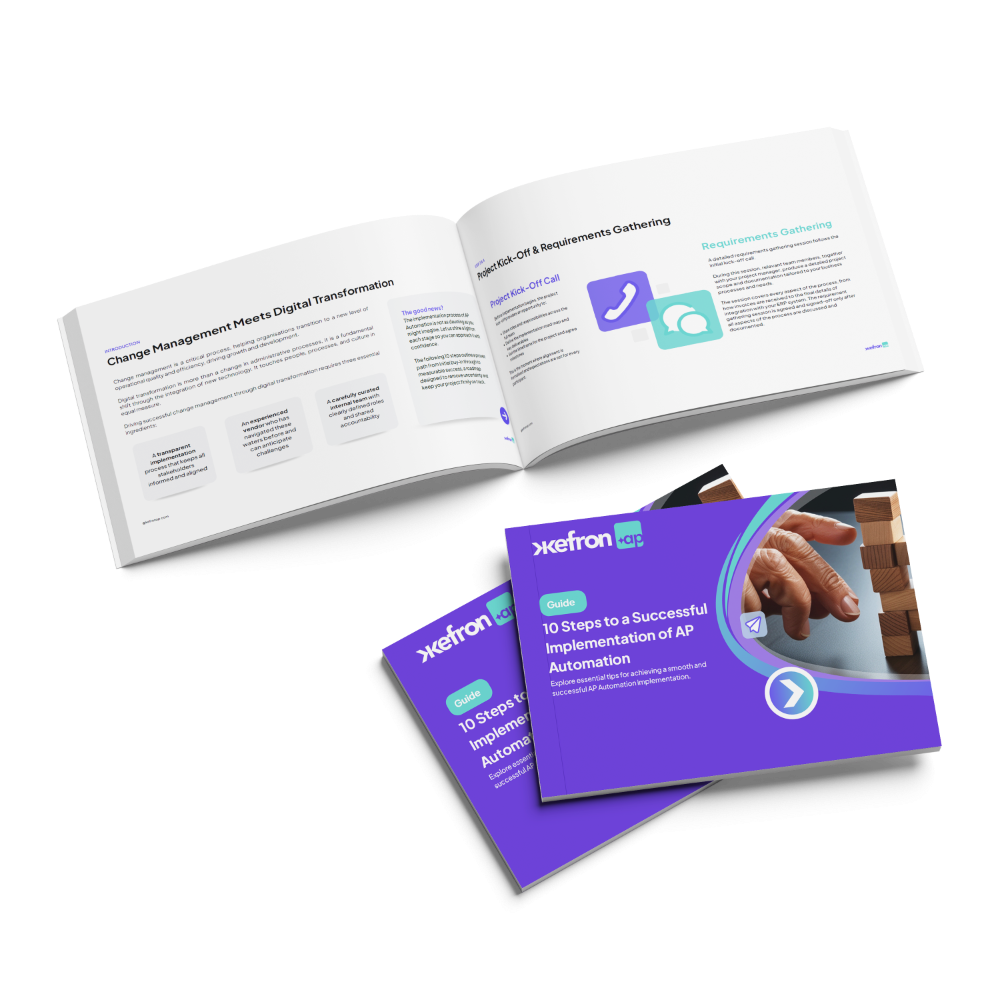
Guide:
10 Steps to a Successful Implementation of AP Automation
AP Implementation doesn’t need to be disruptive. This guide outlines an accounts payable automation rollout that delivers automation, accuracy, and measurable results in weeks – not months.
In our guide “10 Steps to a Successful AP Implementation”, you’ll learn to:
- Secure stakeholder buy-in early.
- Define roles to avoid project gaps.
- Map workflows before configuration.
- Run UAT with real invoice scenarios.
- Measure ROI with the right metrics.
Download this guide:

Why AP Implementation Matters Now
Rising invoice volumes, tighter compliance rules, and cost pressure are exposing the limits of manual AP. Slow approvals, duplicate payments, and poor visibility increase risk and operational overhead. A successful AP automation implementation reduces processing time, improves accuracy, and strengthens financial control without disrupting your ERP.
What Global Finance Leaders Are Saying

Capabilities That Support Successful AP Implementation
Enterprise AP implementation succeeds when governance, configuration, and validation are clearly defined throughout the invoice automation implementation process.

Stakeholder Buy-In & Roles
Define ownership early. Clear roles, sponsorship & accountability prevent gaps, keeping implementation aligned.

Requirements Mapping
Document current AP workflows end-to-end, from invoice receipt to ERP posting, including approval rules and exceptions.

Solution Design & Configuration
Configure the system around your finance structure, entities, and approval logic to avoid disruption and forced process changes.

Validated Data Accuracy
AI-powered capture combined with structured validation ensures consistent 99%+ invoice data accuracy from go-live.

User Acceptance Testing (UAT)
Test PO, non-PO, and exception scenarios in a controlled environment to ensure workflows perform well before launch.

Go-Live & KPI Monitoring
Post-launch check-ins and KPI tracking measure approval time, receipt-to-payment cycles, and efficiency improvements.

Plan Your AP Automation Rollout With Confidence
Discover the proven 10-step framework that helps finance teams implement AP automation with clarity, control, and measurable results.
Frequently asked questions:

What is AP implementation?
AP implementation is the structured process of deploying accounts payable automation within your finance function. It includes stakeholder alignment, workflow mapping, system configuration, ERP integration, testing, go-live, and post-launch performance monitoring. The goal is to modernise AP without disrupting core finance operations.
Is AP implementation an IT-led project?
No. While IT plays an important role in integration, security, and data governance, AP implementation is primarily finance-led. Ownership typically sits with CFOs, Finance Directors, or AP Managers, as the project directly impacts approval workflows, coding structures, compliance controls, and reporting visibility.
How long does AP implementation typically take?
Timelines depend on invoice volume, approval complexity, number of entities, and ERP environments. However, many structured AP implementations are completed within 3-6 weeks, with enterprise environments requiring additional coordination where multi-entity or global compliance factors are involved.
What happens during User Acceptance Testing (UAT)?
During UAT, finance users test real invoice scenarios – including PO, non-PO, exception handling, and multi-entity workflows – in a controlled environment. This stage validates approval routing, coding logic, ERP synchronization, and exception management before the system goes live.
How do you measure success after implementation?
Success is measured using clearly defined KPIs established at the start of the project. These often include invoice approval time, receipt-to-payment cycle time, touchless processing rate, cost per invoice, and reduction in duplicate or late payments. Tracking these metrics ensures the automation delivers measurable ROI.
What are the most common risks during AP implementation?
Common risks include unclear ownership, insufficient stakeholder buy-in, poorly documented workflows, and limited testing before launch. A structured implementation framework reduces these risks by defining responsibilities early, validating real-world scenarios during testing, and monitoring performance after go-live.