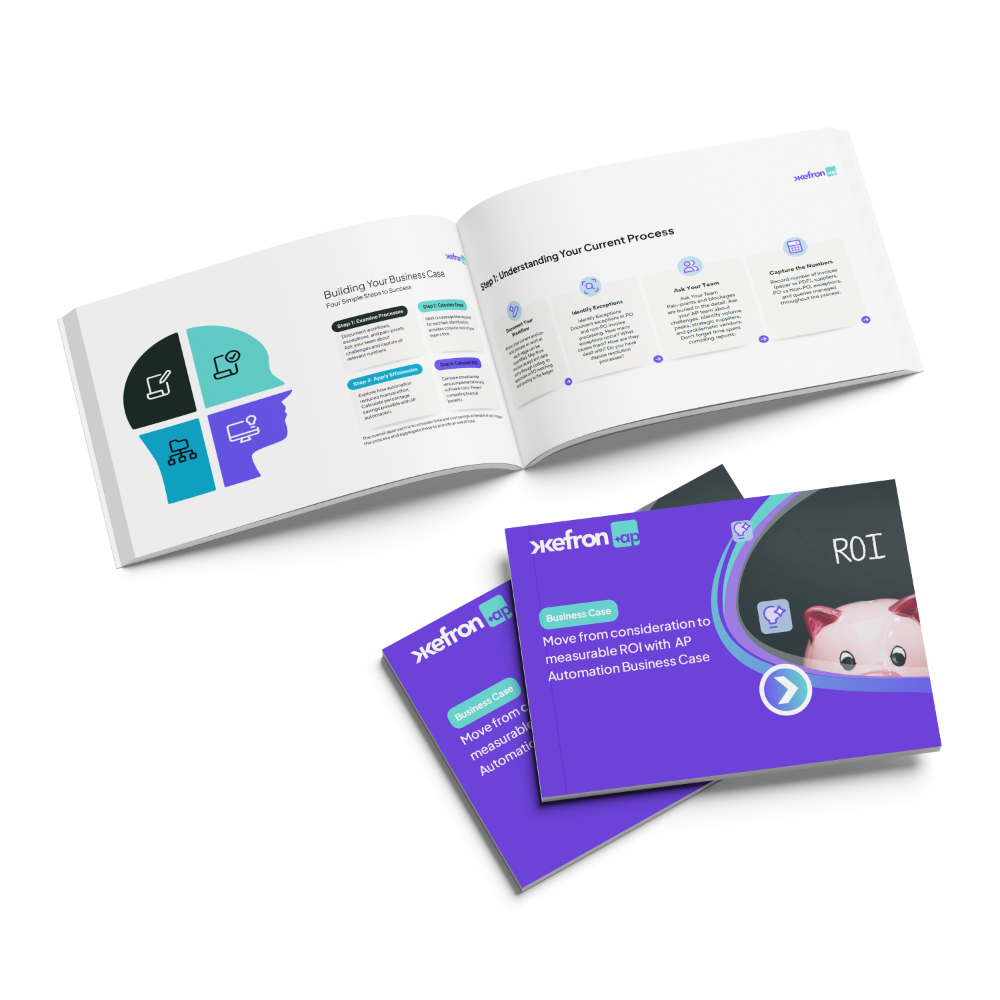
Guide:
Build a Strong AP Automation Business Case with Confidence
Unlock how modern businesses choose the right invoice automation and implement an automated invoice system that delivers measurable operational gains.
This invoice automation buyers' guide breaks down:
-
The core benefits of automation vs manual invoice processing
-
How to evaluate invoice processing software features
-
What to look for in an automated invoice system vendor
-
Practical checklists to compare solutions side by side
-
Questions to ask when reviewing proposals
Download this guide:
30%
of invoice processing time saved

67%
reduction in invoice approval time

99%
data extraction accuracy

12 months
data extraction accuracy

100%
paperless invoice processing

32 hours
per month saved on data entry


Why Building an AP Automation Business Case Matters
Modern finance teams are under pressure to reduce costs, free up capacity, and improve decision-making – yet Accounts Payable remains one of the most manual and overlooked functions. To secure investment, AP leaders need a clear, evidence-based AP automation business case that demonstrates real savings and long-term impact. The insights here help you assess your current process, uncover inefficiencies, and show the strategic value automation can deliver.
What Global Finance Leaders Are Saying

Key Factors That Strengthen Your AP Automation Business Case
Manual AP processes hide significant inefficiencies. These capabilities illustrate where automation delivers measurable ROI and why teams build a business case for AP automation around them.

Supplier Self-Service Portal
Suppliers can track invoice status, submit queries, and access information without contacting your team, reducing interruptions and freeing AP staff for higher-value work.

Touchless Invoice Processing
AI-driven data capture removes the majority of manual entry, increasing accuracy and enabling invoices to move through the process with minimal human intervention.

Fast, Measurable ROI
Automation cuts time spent on data entry and validation, making it easier to quantify savings and build a stronger accounts payable automation business case.

Automated Workflows
Invoices are routed automatically based on your existing rules, reducing approval delays, minimising errors, and making process bottlenecks easy to identify.

Statement & Duplicate Management
Automated cross-checking eliminates duplicate invoices and accelerates reconciliations, reducing financial risk and removing repetitive manual work on a daily basis.

ERP Integration
A modern AP automation solution connects directly to your finance system, ensuring accurate data flow and supporting the ROI model you present in your AP automation business case.

Build a Clear, Evidence-Based Business Case for AP Automation
See how leading organisations quantify savings, reduce manual work, and demonstrate real financial impact. Use the insights and ROI frameworks inside the guide to support your case with confidence.
Frequently asked questions:

What is an AP Automation Business Case?
AP Automation Business Case refers to the rationale and strategic approach behind implementing accounts payable automation in an organization. It encompasses the benefits, cost-savings, efficiency gains, and strategic advantages of adopting AP automation.
Why is building a business case for AP Automation important?
Building a business case for AP Automation is crucial for securing buy-in from stakeholders, understanding the financial and operational impacts, and ensuring a smooth and successful implementation.
What are the key components of an AP Automation Business Case?
Key components include a cost-benefit analysis, an overview of process improvements, risk assessment, projected ROI, and a roadmap for implementation.
How can I start building an AP Automation Business Case?
Begin by assessing your current AP processes, identify areas for improvement, calculate potential savings, and consider the strategic benefits automation can bring to your business.
How do I calculate the ROI of AP automation?
ROI can be estimated by comparing current AP labour costs, time spent on manual tasks, error rates, and duplicate payments against the projected efficiencies of automation. Many organisations use a simple AP automation ROI calculator that models these reductions to produce a realistic annual savings estimate.
Who should be involved in approving an AP automation business case?
Typically, Finance Directors, CFOs, AP Managers, Procurement, and IT stakeholders play a role. A strong accounts payable automation business case includes financial justification, IT feasibility, and operational impact, enabling each stakeholder group to evaluate the proposal from their perspective.