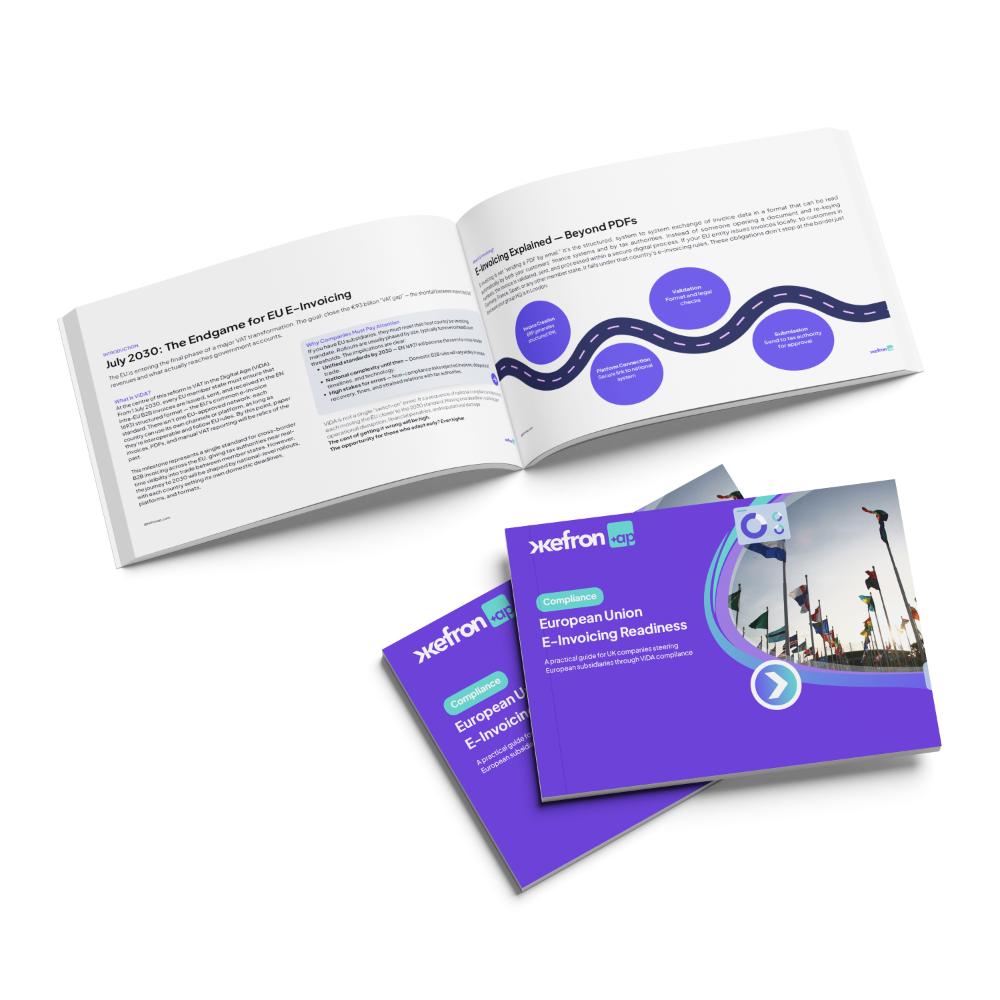
Guide:
ViDA Compliance for EU Finance Teams: What You Need to Know
The EU’s ViDA reform is changing invoicing across Europe. This guide explains EU e-invoicing deadlines, the risks and how finance teams can prepare.
In our guide “ViDA Compliance for EU Finance Teams”, you’ll:
- Track EU e-invoicing deadlines by country.
- Understand EN16931 invoice standards.
- See how PEPPOL supports ViDA compliance.
- Identify risks of non-compliant invoices.
- Build a ViDA rollout plan for subsidiaries.
Download this guide:

Why ViDA Compliance Matters Now
Across Europe, governments are bringing in e-invoicing mandates to make tax clearer and close the €93 billion VAT gap. Each EU country sets its own deadlines, formats and reporting rules. If you work in several countries, preparing early cuts risk, avoids rejected invoices and keeps payments on track.
What Global Finance Leaders Are Saying

How Finance Teams Manage ViDA Compliance
Kefron helps finance teams reach ViDA compliance with invoice checks, platform connections and secure archiving across EU countries.

Country Compliance Mapping
Track EU e-invoicing mandates, deadlines and platforms for every subsidiary in one plan.

EN16931 Invoice Validation
Generate and validate structured invoices aligned with EN16931 standards and local formats required for EU compliance.

PEPPOL Connectivity
Send invoices through PEPPOL and national tax platforms, safely and in line with the rules.

Real-Time Invoice Visibility
Track submissions, checks and delivery across EU platforms so you stay in control.

Compliant Invoice Archiving
Store invoices safely in a compliant e-archive for audits, VAT reporting and legal retention.

ERP-Ready Integration
Connect your finance systems once and manage EU e-invoicing compliance across multiple countries without complex rebuilds.

Start Preparing for ViDA Compliance Today
Download the guide to understand EU e-invoicing deadlines, ViDA compliance requirements, and the steps finance teams can take to prepare.
Frequently asked questions:

What is ViDA compliance?
ViDA compliance means meeting the rules of the EU’s VAT in the Digital Age (ViDA) reforms. They bring VAT reporting up to date and add structured EU e-invoicing compliance in every member state. You must create invoices in approved formats, send them through approved networks and keep secure digital records that meet each tax authority’s rules.
When will EU e-invoicing become mandatory?
Under ViDA, the EU plans one standard for cross-border B2B e-invoicing by July 2030. But many countries are bringing in their own mandates much sooner. EU e-invoicing deadlines differ by country and sometimes by company size, so businesses across Europe have to track several timelines at once.
What is EN16931 and why does it matter?
EN16931 is the European standard for structured e-invoices. It sets out how invoice data should be laid out so accounting systems and tax platforms can read it automatically. Many EU e-invoicing mandates require EN16931 formats, so invoices work across countries and networks.
What role does PEPPOL play in e-invoicing?
PEPPOL is a secure network for sending structured documents, such as invoices, between organisations. It uses a four-corner model: each business connects through a certified access point. Many EU countries use PEPPOL e-invoicing to meet national mandates and future ViDA rules.
Do UK companies need to comply with ViDA rules?
Yes. The UK is no longer in the EU VAT system, but UK companies with subsidiaries in EU countries must follow each country’s e-invoicing rules. Those entities must meet local formats, platforms and reporting rules under national ViDA-aligned mandates.
What happens if invoices are not compliant?
Tax platforms or your customers’ systems may reject invoices that don’t comply. That can delay payment, disrupt VAT reporting and create bottlenecks. Repeat problems can also lead to fines, audits or closer checks.
How can finance teams prepare for ViDA compliance?
Start by listing which subsidiaries fall under national e-invoicing mandates and noting the next EU e-invoicing deadlines. Then check your invoice formats, ERP links and connections to PEPPOL or national tax portals. The aim is to create, check, send and store every invoice the right way.
Why are governments introducing e-invoicing mandates?
E-invoicing mandates give tax authorities a near real-time view of transactions. That makes tax clearer and cuts fraud. The reforms aim to close the EU’s €93 billion VAT gap and help businesses move to faster digital invoicing with less admin.